
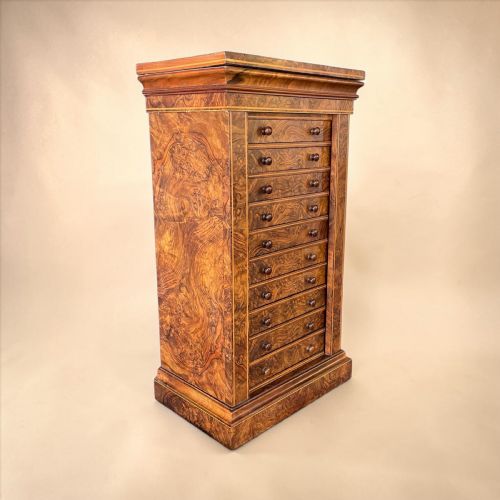
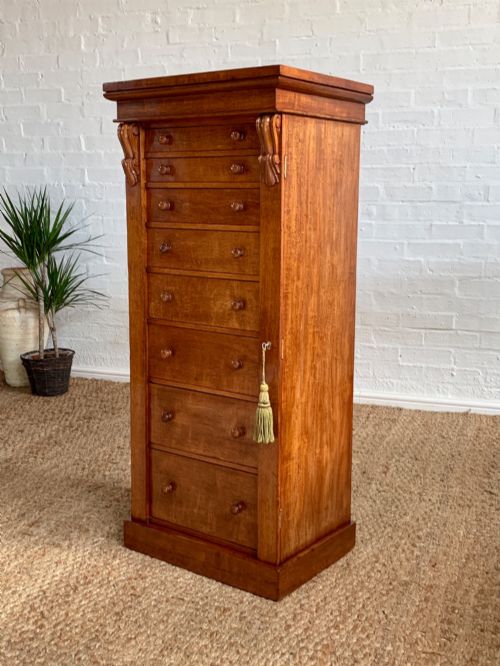
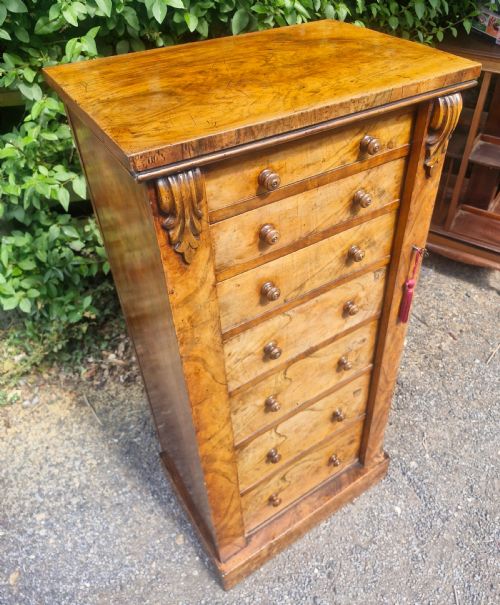
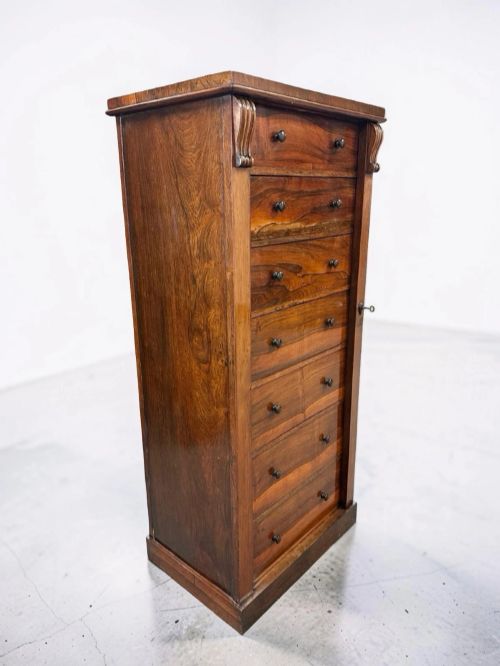


Collectors Locking Drawer Chest
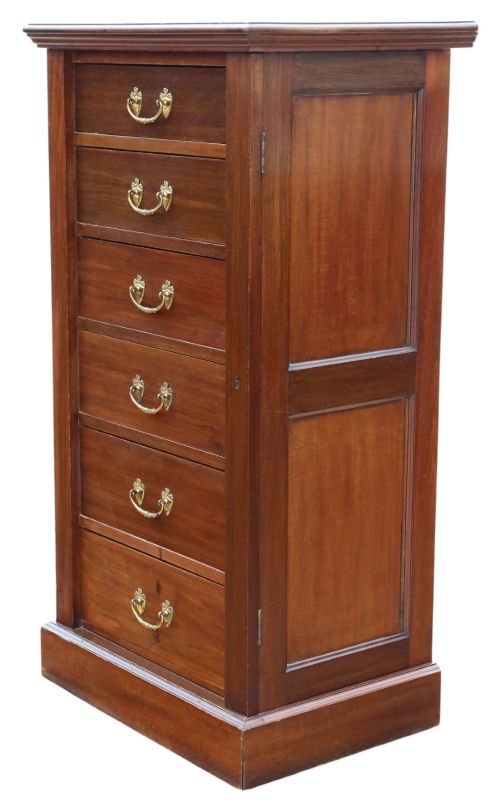
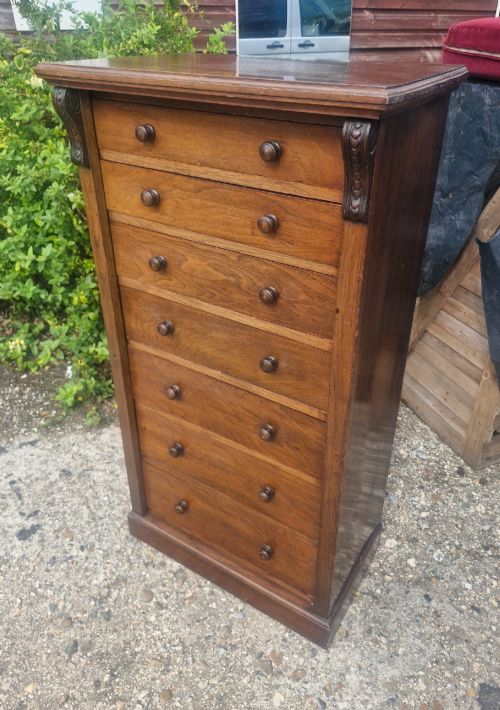
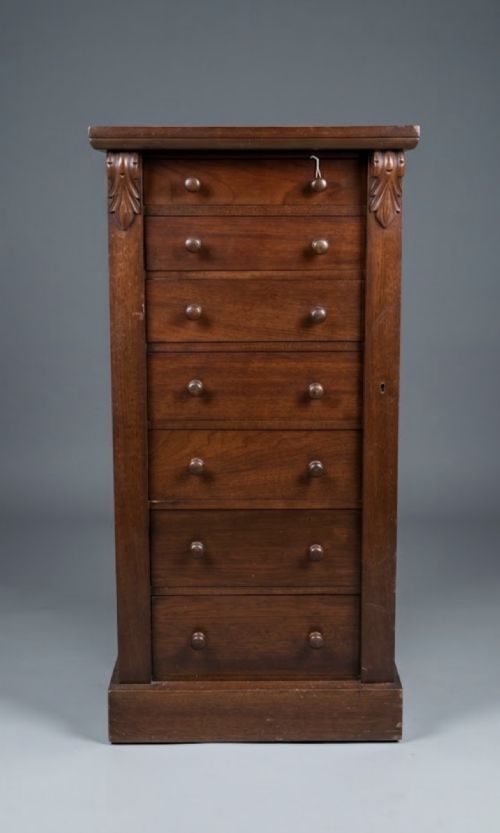
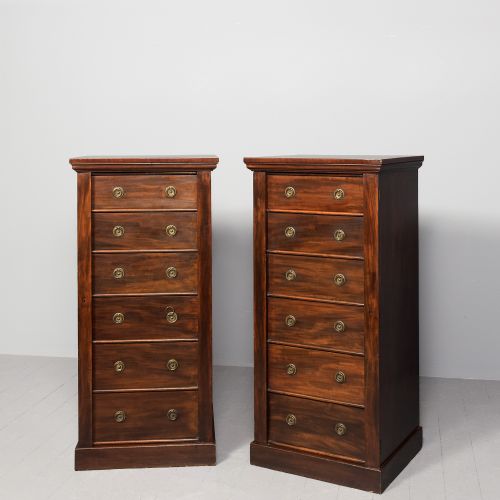
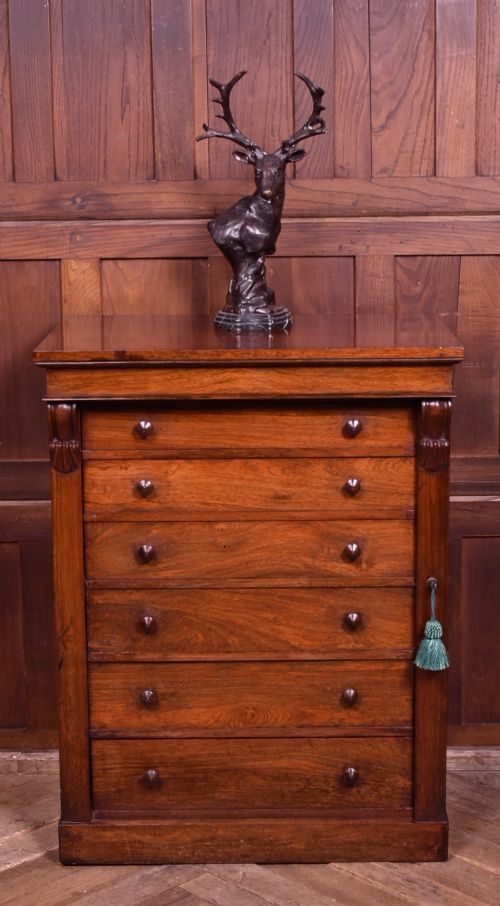
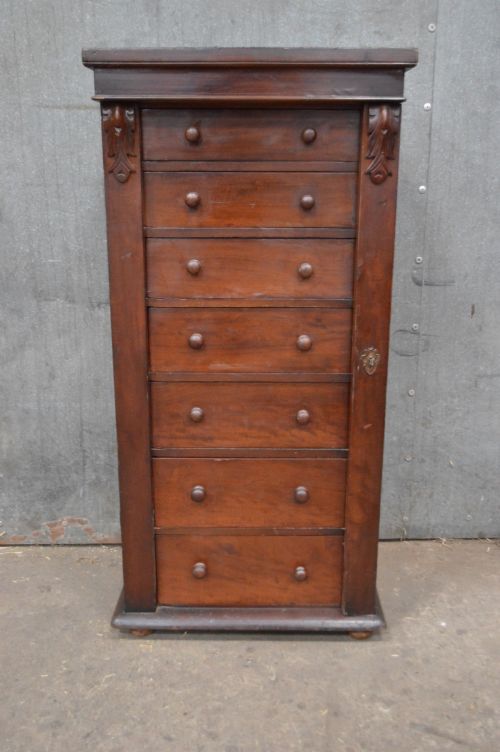
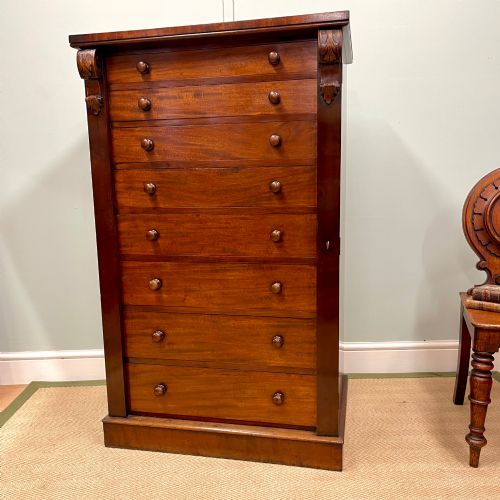
A collectors locking drawer chest offers secure storage for specimens and small valuables, combining tall, slender proportions with a hinged locking stile.
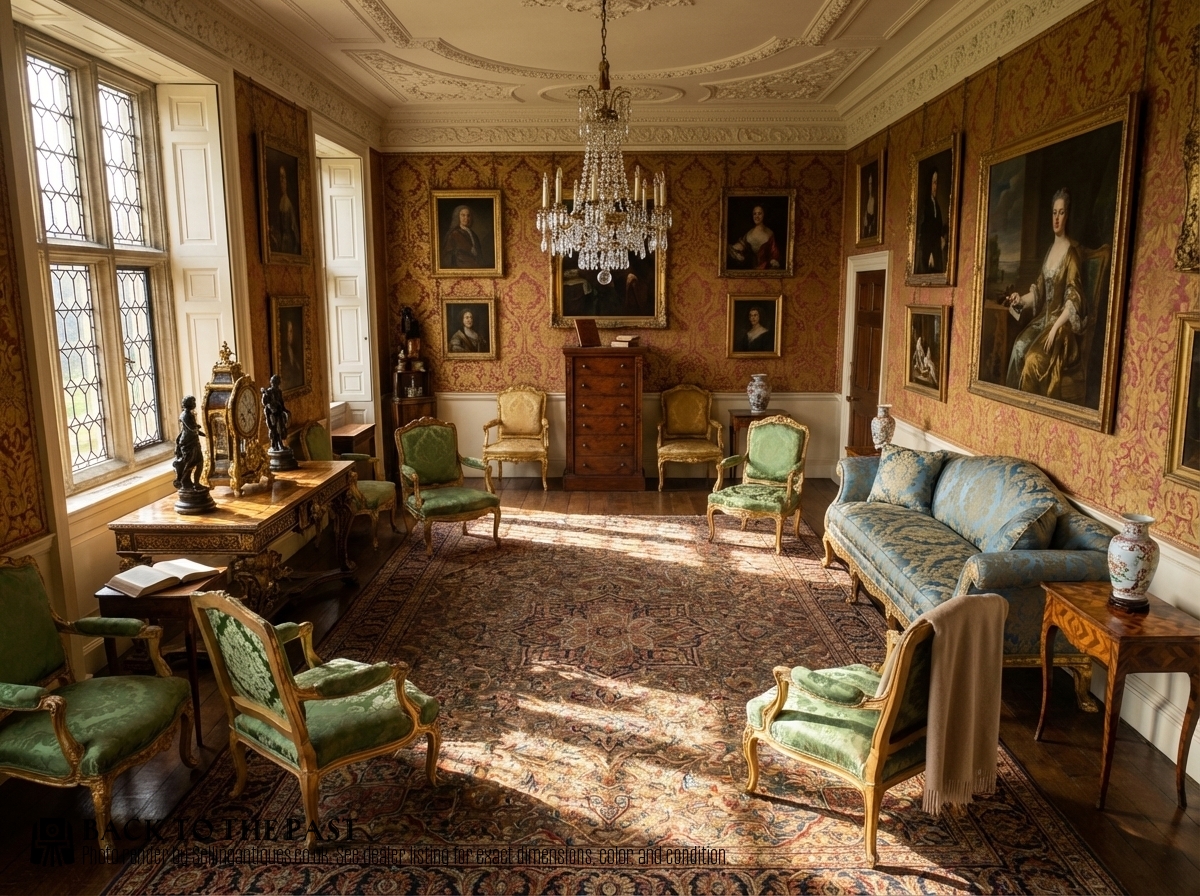
Collectors Locking Drawer Chest
When searching for a collectors locking drawer chest, buyers encounter tall, narrow case pieces designed to secure multiple small drawers behind a single locking bar or stile. The pieces seen here span the Victorian, Edwardian, and Regency periods, with nineteenth-century mahogany and walnut examples appearing most frequently.
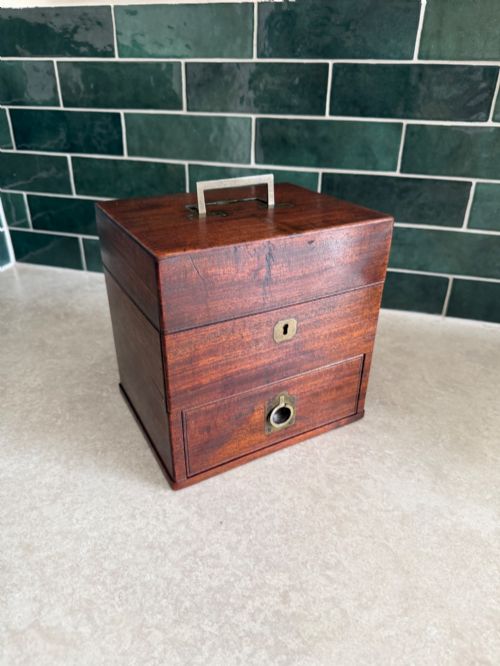
Beyond standard chests of drawers, the selection includes apothecary boxes, miniature chests, and specimen cabinets equipped with keys. These variations share the defining characteristic of a hinged pilaster that fastens over the drawer edges to secure the contents.
Materials and construction
Cabinetmakers utilised dense timbers such as mahogany, walnut, rosewood, and oak, frequently applying flame mahogany veneer, burr walnut, or fiddleback mahogany to the primary visible surfaces. Brass fixtures appear on handles, escutcheons, and locking mechanisms.
Construction relies on solid secondary woods for internal drawer carcasses, with finely dovetailed joints securing the drawer boxes. The distinguishing locking mechanism uses a hinged pilaster on one side of the chest that is held in place by a working lock and key, securing every drawer simultaneously.
Listings feature woods including mahogany, walnut, rosewood, oak, satinwood, and pine, alongside burr walnut and flame mahogany veneers.
Distinctions in quality
Quality in these chests rests upon the selection and matching of wood veneers, such as figured walnut or flame mahogany, across the drawer fronts. Finer examples display continuous grain patterns flowing downwards across multiple drawers.
The precision of the locking mechanism and the retention of the original turning knobs, brass hardware, and working keys separate standard production pieces from superior workshops.
S. Mordan & Co·Gillows of Lancaster·Maple & Co
The Collectors Locking Drawer Chest Glossary
- Wellington chest
- A tall, narrow chest of drawers characterised by a hinged locking bar on the right side that secures the drawers when locked. The design gained popularity during the nineteenth century.
- Specimen cabinet
- A specialised cabinet or chest designed for housing natural history collections, coins, or small artefacts in shallow drawers. These often feature dust-proof internal construction.
- Secretaire
- A piece of furniture incorporating a writing surface, sometimes integrated into the drawer arrangement of a tall chest. It allows the user to write while keeping the contents concealed.
- Escutcheon
- A protective plate surrounding a keyhole, usually made of brass. It prevents the surrounding wood from wearing down through repeated use of the key.
- Fiddleback
- A figure in timber grain that exhibits a shimmering, undulating pattern resembling the back of a violin. It is most commonly found in mahogany.
Collectors Locking Drawer Chest: Frequently Asked Questions
What is a Wellington chest?
A Wellington chest is a tall, narrow set of drawers featuring a hinged locking stile on one side. This wooden bar fastens over the drawer edges, securing the entire column of drawers with a single key.
First appearing in the nineteenth century, these chests were designed to maximise storage in compact floor spaces while keeping valuable items secure.
How were these chests used?
These chests served primarily for storing personal valuables, documents, jewellery, or scientific specimens. The shallow drawers kept delicate items organised and protected from dust.
Collector variants specifically housed natural history specimens, coins, or small antiques, utilising the locking mechanism to safeguard fragile collections.
Where should I place one at home?
Due to their tall and narrow proportions, these chests fit well in alcoves, hallways, or smaller bedrooms where floor space is limited. They provide substantial vertical storage without dominating a room.
Keep them away from direct heat sources and strong sunlight to protect polished wood surfaces and delicate veneers from drying out.
How do I date a Victorian piece?
Dating relies on timber choices, construction methods, and hardware styles. Nineteenth-century examples often feature solid mahogany or walnut, hand-cut dovetails, and turned wooden knobs.
Comparing the secondary woods inside the drawers and examining the complexity of the locking mechanism helps narrow down the decade of manufacture.