
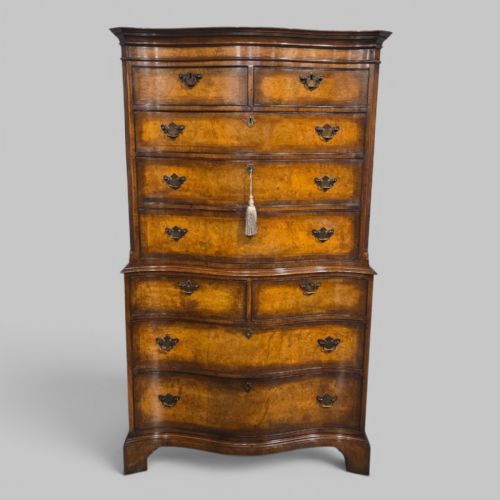


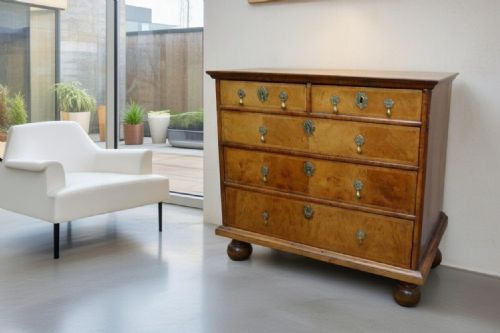


Golden Walnut Tallboy
A golden walnut tallboy brings warmth and towering presence to a room, offering generous storage through stacked drawers and cabinets.
Golden Walnut Tallboy
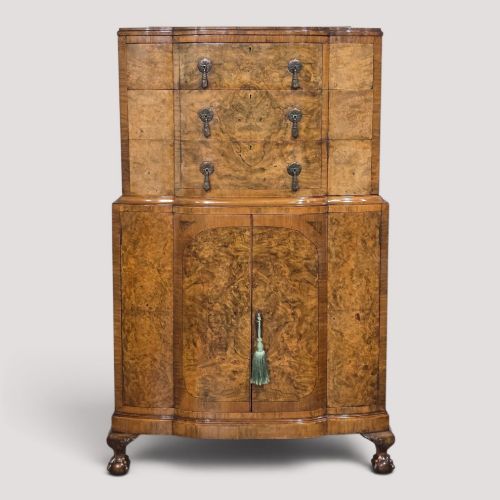
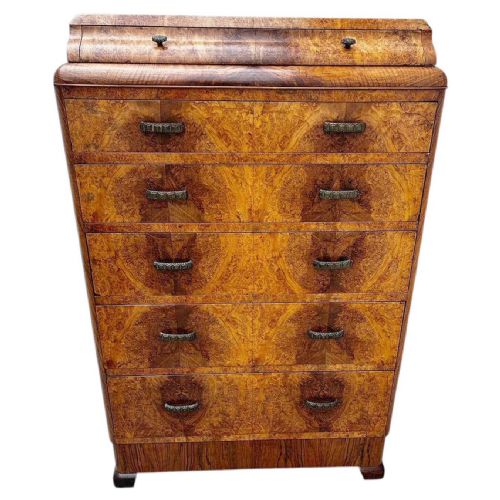
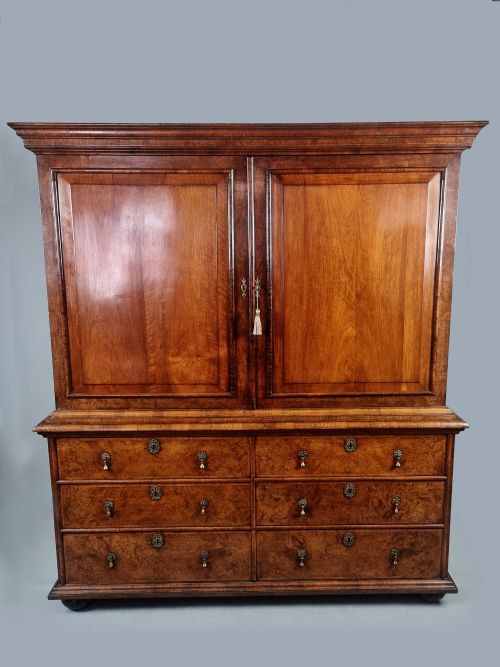
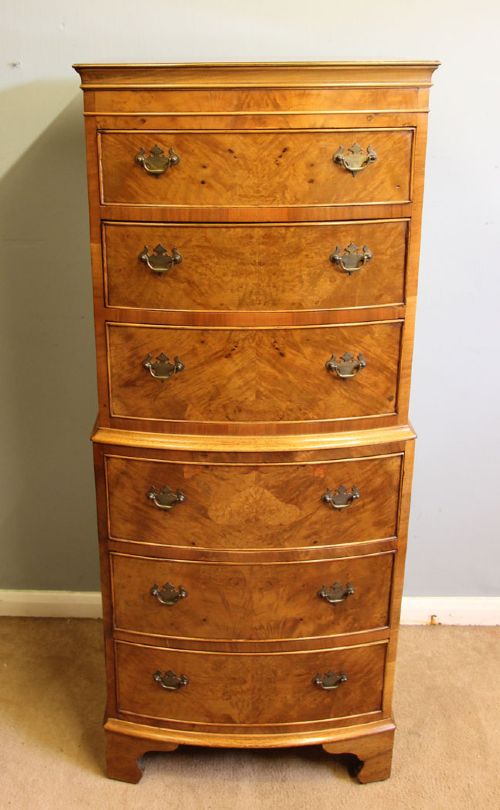
When you search for a golden walnut tallboy, you are looking at tall storage furniture primarily constructed from walnut, burr walnut, and satin walnut, often featuring rich grain patterns and warm honey tones. These pieces range from early examples dating to the seventeenth and eighteenth centuries down to twentieth-century interpretations, including Art Deco designs and Edwardian productions.
The forms on this page span chests of drawers, chests on chests, cabinets on chests, linen presses, and Wellington chests. You are most likely to encounter twentieth-century Art Deco pieces alongside eighteenth-century press cupboards and nineteenth-century chests, reflecting a broad chronological sweep of British, Swedish, and English craftsmanship.
Materials and construction
These pieces rely heavily on solid timber foundations surfaced with walnut and burr walnut veneer to display swirling, decorative grain patterns. More specialised examples incorporate burr amboyna veneer or satin walnut, matched with brass handles, keyplates, and metal internal mechanisms.
Joinery techniques span traditional carcase construction for early cabinets on chests and dovetail joints for drawer boxes, paired with specialised veneering methods that preserve the natural figures of the wood across large vertical surfaces.
Object forms represented across these pages include chests of drawers, cabinets on chests, linen presses, and Wellington chests.
What separates the finest pieces
The distinction between standard and exceptional examples rests upon the selection and matching of the timber veneers. The most accomplished pieces display symmetrical burr walnut figures that wrap harmoniously across drawer fronts and cornices.
Quality also shows in the crispness of proportion, the subtlety of the colouration within the walnut, and the integrity of the brass hardware and original internal fittings such as sliding trays or clothes presses.
Heals
The Golden Walnut Tallboy Glossary
- Tallboy
- A tall chest of drawers, often constructed in two sections with an upper chest sitting upon a lower chest or stand. This vertical form maximises storage whilst occupying a smaller floor footprint.
- Burr walnut
- Timber taken from a growth on a walnut tree, yielding highly figured, swirling grain patterns. It is sliced into thin veneers for decorative furniture surfaces.
- Press cupboard
- A large piece of furniture comprising an upper cupboard for storing linen or garments above a base of drawers. Early examples often feature panelled doors and substantial cornices.
- Cabinet on chest
- A case piece consisting of a distinct upper cabinet resting on a lower chest of drawers. This form allows for specialised interior compartments behind the upper doors.
Golden Walnut Tallboy: Frequently Asked Questions
What is a golden walnut tallboy?
A golden walnut tallboy is a tall storage unit, such as a chest on chest or linen press, made from walnut timber and decorative veneers.
These pieces use the natural golden and amber tones of the wood to create an imposing yet warm focal point in a room.
How were tallboys used historically?
Historically, these tall units served to store folded linens, garments, and personal valuables in bedrooms and dressing rooms.
The stacked design provided maximum capacity while keeping floor space usage to a minimum.
How do I live with a tall tallboy?
Living with a tall piece requires securing it to a wall for stability, given its height and weight. Position it away from direct sunlight to protect the walnut veneer from fading.
Keep the timber nourished with appropriate wax to maintain the golden lustre of the grain.
How do I tell periods apart?
Early periods like the seventeenth and eighteenth centuries show distinct construction methods, hand-cut dovetails, and architectural cornices. Twentieth-century pieces, such as Art Deco items, favour streamlined surfaces and geometric veneering.
Examining the internal timbers, hardware style, and secondary woods helps clarify the date of manufacture.