
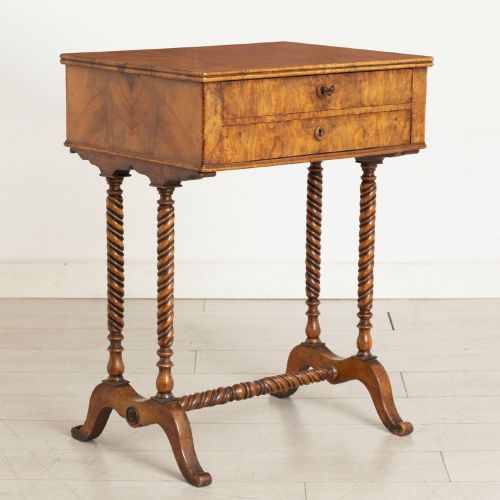
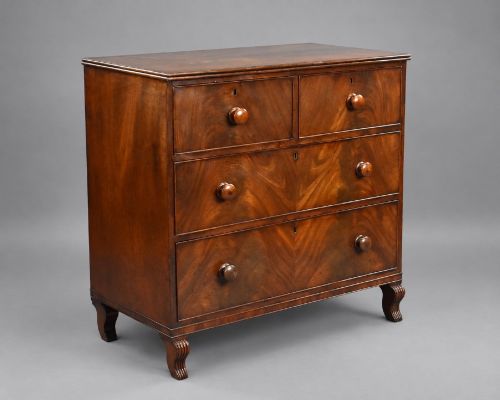
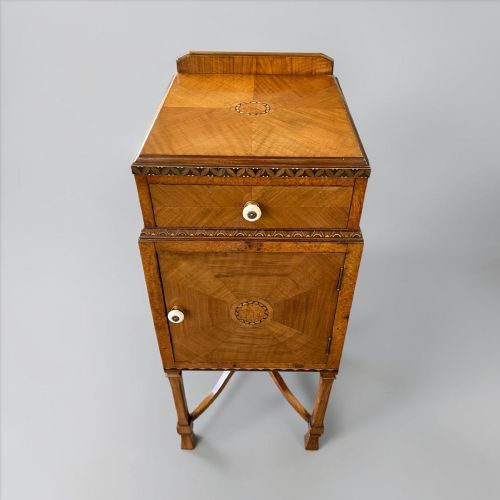
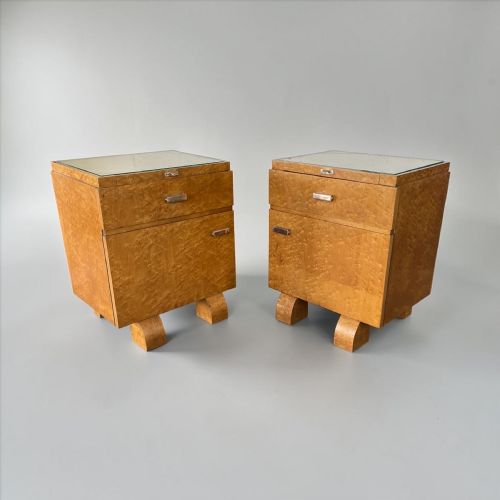

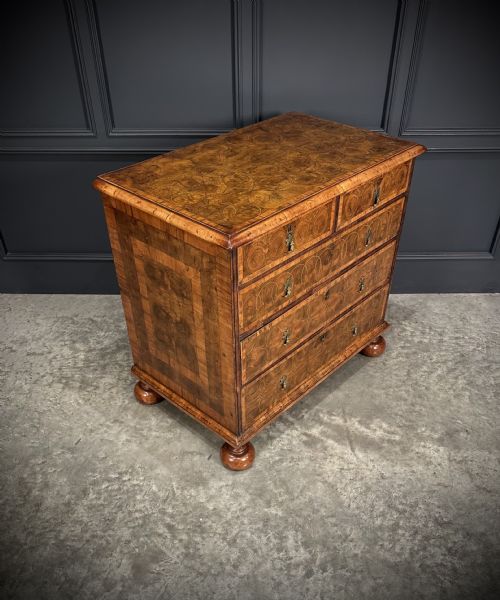


Veneered Wood Drawers
Veneered wood drawers combine decorative grain patterns with structural timber, offering storage shaped by centuries of cabinet-making skill.
Veneered Wood Drawers
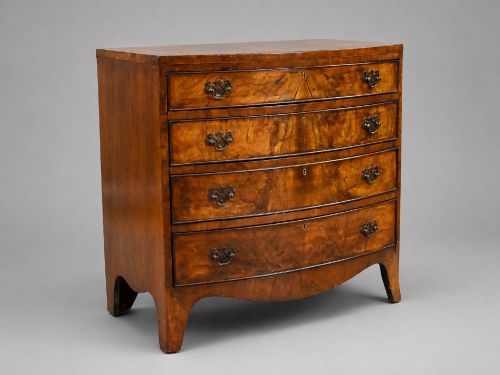
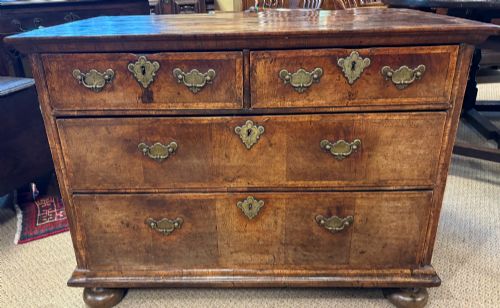
Veneered wood drawers encompass chests of drawers, commodes, bedside tables, and desks spanning from the late seventeenth century through the Art Deco period. These pieces rely on thin slices of decorative timber applied to secondary carcases to display striking grain patterns.
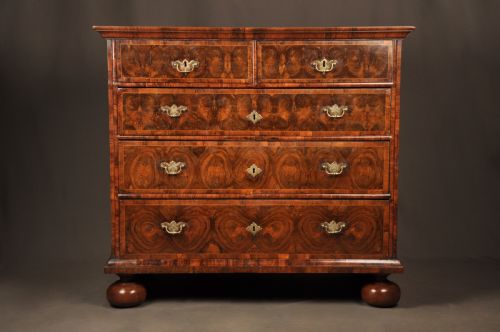
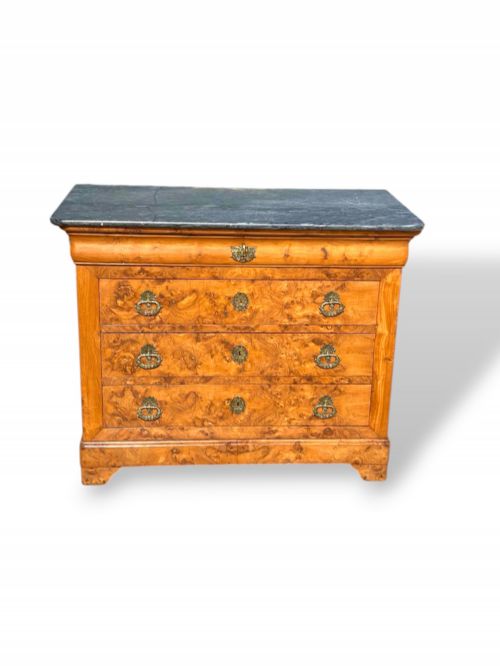
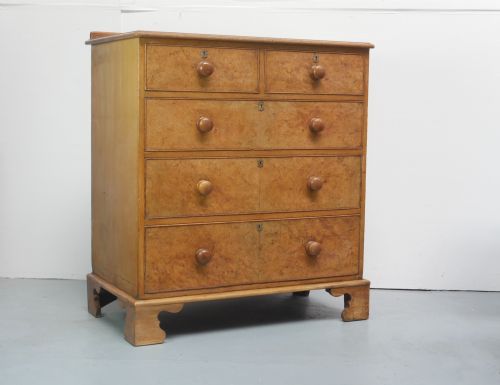
The selection on this page ranges from compact William and Mary oyster-cut designs to nineteenth-century continental commodes and twentieth-century walnut or elm pieces. Chests of drawers dominate the listings, alongside smaller occasional tables and bedside cabinets.
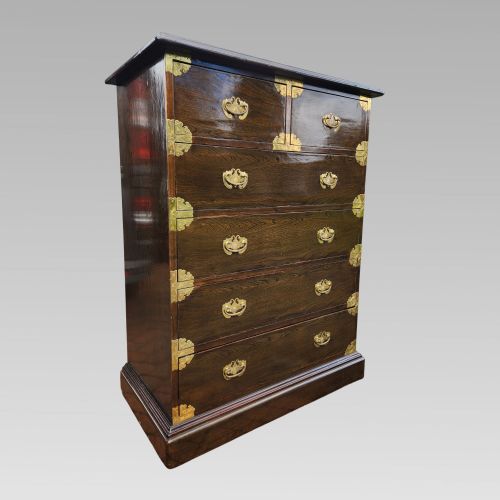
Origins stretch across Britain, France, Sweden, and Korea, bringing together diverse regional timbers and local cabinet-making traditions. Buyers encounter everything from seventeenth-century olive and laburnum to twentieth-century figured walnut and amboyna.
How they were made
Cabinet-makers applied thin decorative veneers of walnut, ash, laburnum, or mahogany onto stable secondary woods such as oak, pine, or deal. This technique allowed workshops to utilise costly or highly figured timbers efficiently while preventing the warping common in solid boards of equal width.
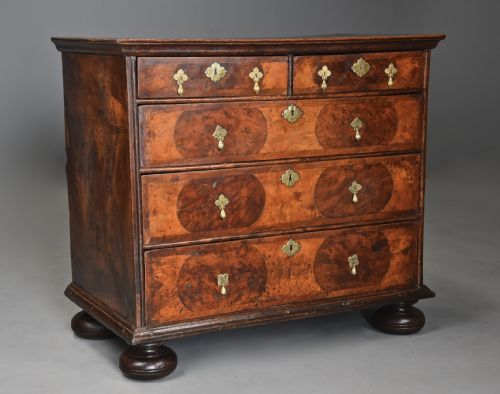
Early periods relied on transverse slice-cutting known as oyster veneering, arranging small circular sections of olive, laburnum, or yew to create rhythmic geometric surfaces. Later nineteenth and twentieth-century makers utilised rotary-cut burrs and book-matched flame mahogany to achieve symmetrical patterns across drawer fronts.
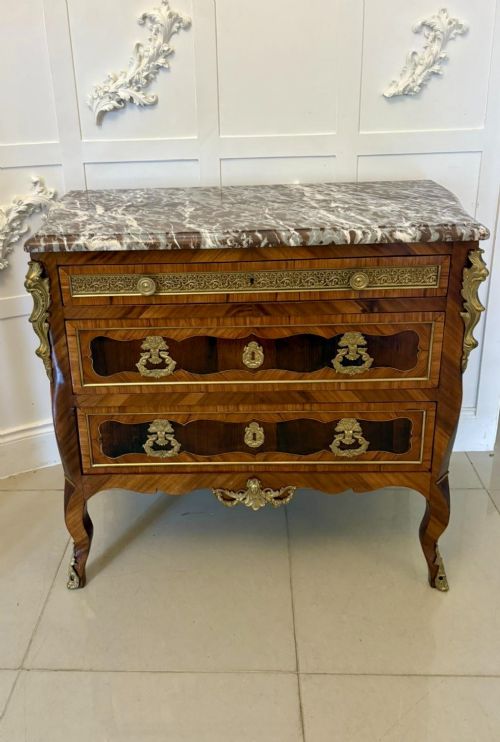
Listings feature seventeeth-century William and Mary designs alongside nineteenth-century French commodes and Art Deco walnut pieces.
What varies in quality
Quality rests upon the selection and matching of the timber veneers, alongside the structural integrity of the carcase beneath. Pieces displaying continuous grain flow across multiple drawers or precise geometric parquetry demonstrate superior craftsmanship.
The retention of original brass hardware, stable timber movement without excessive splitting in the veneer panels, and well-fitted drawer linings distinguish exemplary examples from altered or heavily restored pieces.
Bowman Brothers
The Veneered Wood Drawers Glossary
- Veneer
- A thin slice of decorative wood applied to a structural timber carcase. This technique permitted the display of figured grains that would prove unstable if used in solid construction.
- Oyster veneer
- Cross-sections cut transversely from small branches or roots, producing circular or oval patterns resembling oyster shells. Seventeenth-century English and continental makers utilised this method extensively.
- Burr
- A growth deformity on a tree producing intricate, swirling knot clusters. Cabinet-makers prized burr ash, walnut, and elm for their decorative surfaces.
- Commode
- A low chest of drawers or cabinet originating in France during the eighteenth century. These pieces frequently incorporate marble tops and decorative mounts.
- Parquetry
- Geometric patterns constructed from small pieces of veneer fitted together. This technique often appears on tabletops and drawer fronts from the nineteenth and twentieth centuries.
Veneered Wood Drawers: Frequently Asked Questions
How do I care for antique veneer?
Antique veneer requires stable indoor humidity and protection from direct sunlight to prevent the timber from drying and lifting. Regular dusting with a dry cloth keeps the surface clean without moisture damage.
Avoid placing these items near radiators or heat sources, as extreme temperature shifts cause the glue beneath old veneers to fail.
Are these pieces made of solid wood?
The structural carcase is typically built from secondary timbers such as oak, pine, or deal, while decorative veneers form the visible exterior surfaces. This construction method prevented warping while displaying costly grain patterns.
Examining the drawer edges and interior carcase reveals the underlying timber beneath the decorative outer layer.
How do I identify a William and Mary chest?
William and Mary chests date from roughly the late seventeenth to early eighteenth century and often feature geometric oyster veneers, herringbone banding, and cushion-moulded drawers. They frequently stand on bun feet or early bracket supports.
Oak and pine secondary woods support the walnut or fruitwood veneers, accompanied by hand-beaten brass drop handles and escutcheons.