



Golden Walnut Sideboard
A golden walnut sideboard brings warmth and deep figure to a room, offering grand storage through decades of fine cabinet work.
Golden Walnut Sideboard
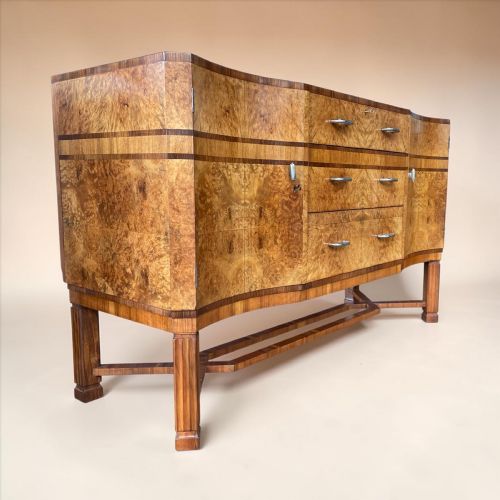
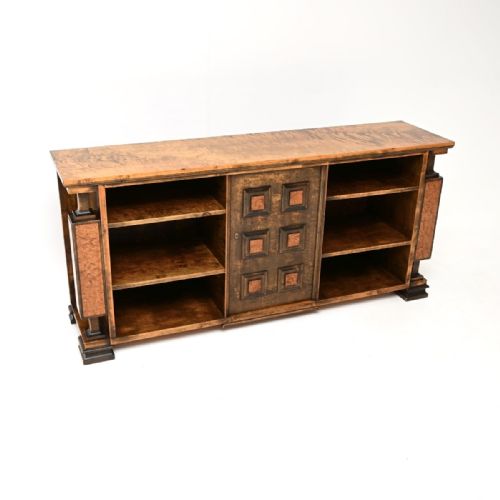
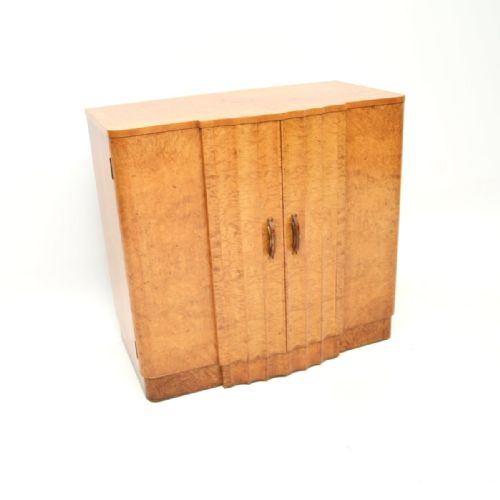
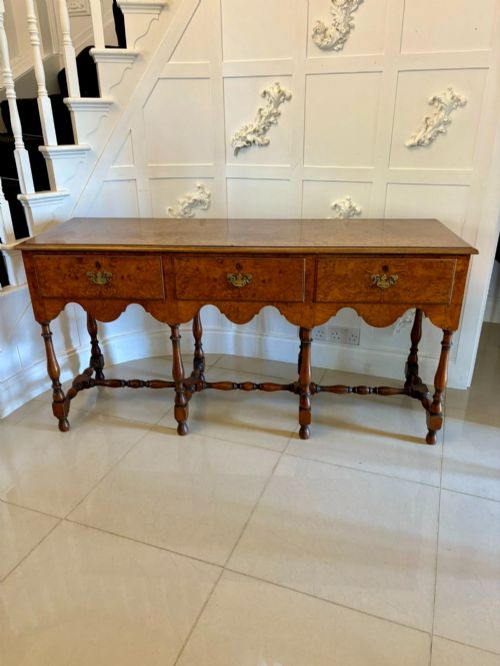
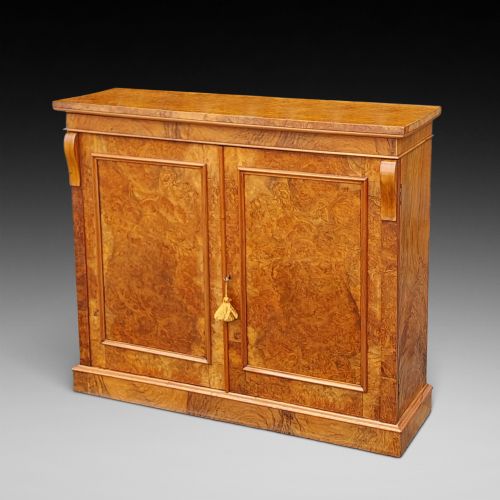
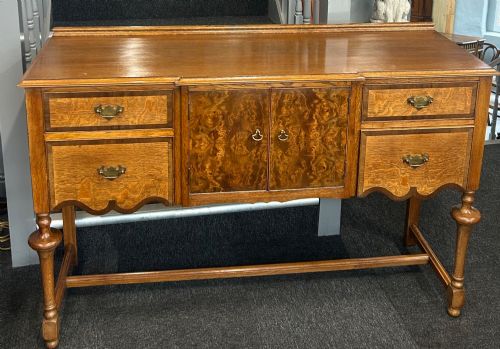
A golden walnut sideboard groups together large serving tables, credenzas, and cocktail cabinets spanning the nineteenth and twentieth centuries. Buyers searching for a golden walnut sideboard encounter pieces shaped in the Victorian and Edwardian eras alongside geometric Art Deco designs from the nineteen-thirties.
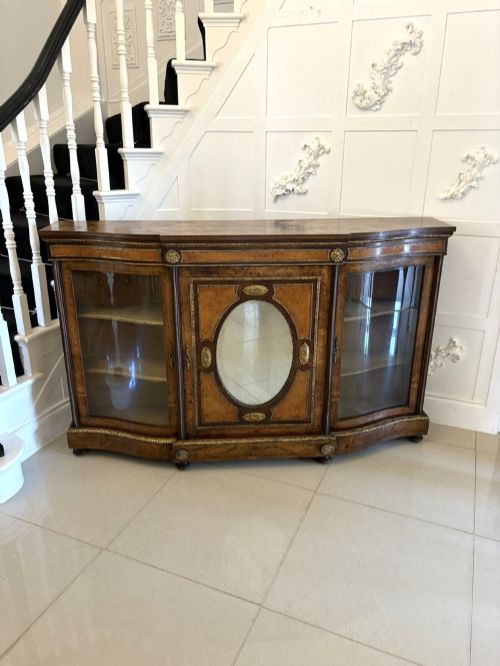
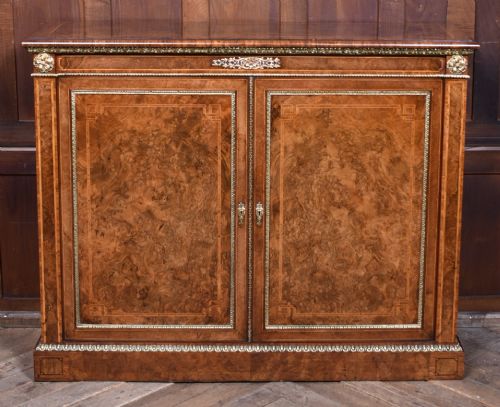
The selection ranges from elaborate mid-nineteenth century credenzas mounted in ormolu to sleek twentieth-century cocktail cabinets by prominent makers. These large case pieces served dining rooms and reception rooms as servers, display cabinets, and drinks cupboards.
Materials and construction methods
Cabinet makers utilised solid walnut and decorative burr walnut veneers applied over denser secondary timbers to create rich, swirling grain patterns across wide doors and top surfaces. The most striking visual effects rely on matched veneer leaves arranged symmetrically to draw the eye across the front of the cabinet.
Mounts in cast brass and gilded ormolu accent many of the Victorian and Edwardian examples, while glass panels and porcelain plaques appear on specific credenzas. Twentieth-century pieces shift toward clean surfaces where the natural figure of the wood provides the primary ornament without heavy cast metal additions.
Golden Walnut Sideboard Retail Price Guide 2026
Typical asking prices for golden walnut sideboard among the pieces listed under this phrase on Sellingantiques today, from the lower quarter to the upper quarter. They describe what is for sale here now, not the wider market.
Assessing cabinet quality
Quality rests upon the selection and matching of the walnut veneer, where master workshops chose burr sections with intense grain movement and laid them with precision. Lesser pieces rely on plain timber or show less careful alignment across drawer fronts and doors.
The sophistication of the internal fittings, such as specialised bottle racks, sliding trays, and velvet-lined compartments in cocktail cabinets, distinguishes standard production from exhibition-grade work. Original hardware, sound structural joinery, and crisp carving or crisp metal mounts further separate the finest examples from simpler utility furniture.
Harry and Lou Epstein
The Golden Walnut Sideboard Glossary
- Burr walnut
- A prized wood veneer harvested from the gnarled growths on walnut trees, creating swirling, highly decorative patterns. It forms the primary visual draw on many nineteenth and twentieth-century cabinet doors.
- Credenza
- A low cabinet, typically enclosed by doors, originating in Italy and popular during the Victorian period for display and storage. Many feature glass panels and decorative mounts.
- Ormolu
- Gilded bronze applied as decorative mounts, feet, or edging on nineteenth-century furniture. It provides bright contrast against dark walnut surfaces.
- Demi-lune
- A half-moon shape used for tables and small side cabinets designed to sit flush against a wall. This profile saves floor space while offering surface area.
- Amboyna
- An exotic timber with a spotted, dense grain often used alongside walnut for contrasting banding and inlay work. It appears on select Victorian credenzas.
Golden Walnut Sideboard: Frequently Asked Questions
What is a golden walnut sideboard?
A golden walnut sideboard is a large storage piece or serving table constructed from walnut timber or burr walnut veneer, encompassing styles from Victorian credenzas to Art Deco cocktail cabinets.
These items functioned as dining room servers or reception room display cabinets, combining large storage capacity with decorative wood grain.
How do I date a walnut cabinet?
Dating relies on stylistic clues, comparing the curved, carved ornamentation of nineteenth-century Victorian and Edwardian pieces with the geometric lines of nineteen-thirties Art Deco designs.
Secondary woods, construction methods, and hardware such as handles and hinges also help place a cabinet within its specific period of origin.
Where should I place a credenza?
A credenza suits dining rooms as a serving surface, or living spaces where its internal shelves can hold glassware, linens, or books.
Because many examples feature finished backs or decorative sides, they work well positioned along open walls where their wood grain remains fully visible.
How do I care for burr walnut veneer?
Burr walnut requires protection from direct sunlight and excessive heat fluctuations to prevent the delicate veneer from drying out or lifting over time.
Routine maintenance involves dusting with a soft, dry cloth and applying appropriate wax polish sparingly to nourish the wood surface.