


Golden Walnut Bureau
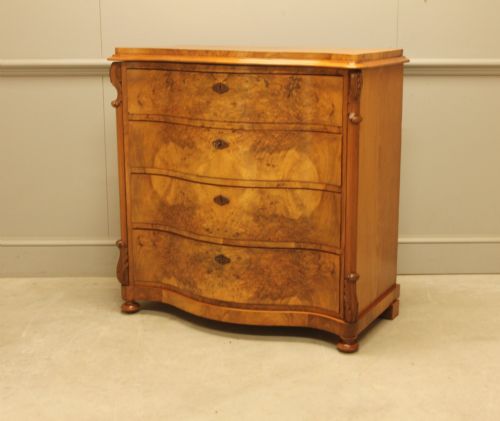
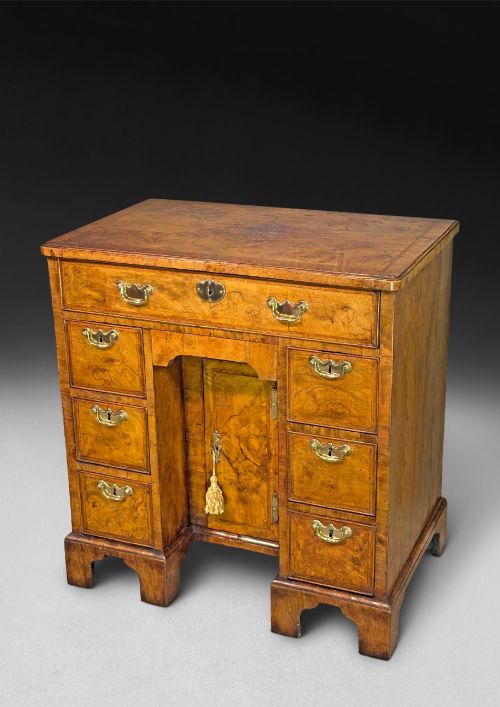
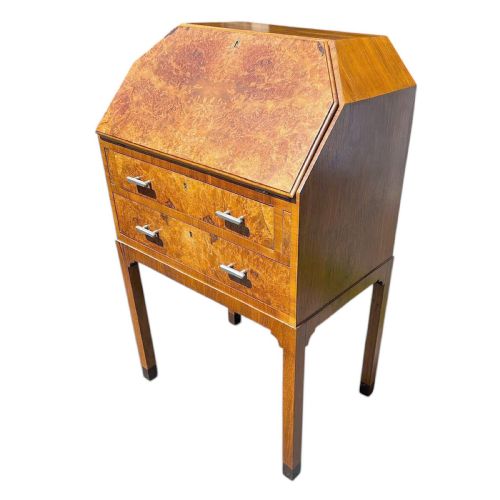
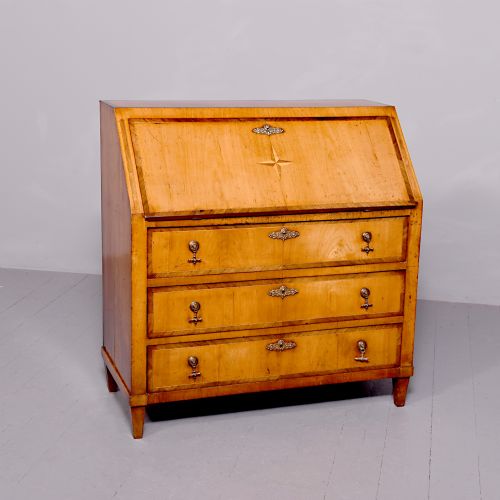
These golden walnut bureau pieces combine rich timber tones with practical writing compartments, offering a classic focal point for any study.
Golden Walnut Bureau
A golden walnut bureau is a writing desk featuring a sloping lid or a dedicated writing surface, often accompanied by internal compartments and drawers for storage. When you search for a golden walnut bureau, you encounter a range of forms including kneehole desks, writing tables, and compact Davenport desks.
The pieces listed on this page span several distinct periods, notably the Georgian era, the nineteenth century, and the Art Deco period of nineteen thirty. You will find examples influenced by George I design, Queen Anne revival, French Louis XV revival, and Victorian craftsmanship.
Makers and workshops across Britain and Continental Europe produced these writing desks, utilising distinct regional characteristics. From English figured walnut writing desks to French bonheurs du jour, the selection represents diverse cabinet-making traditions.
Materials and construction methods
Cabinet makers built these pieces primarily using walnut and burr walnut, sometimes enhanced with rosewood, oak, and blonde walnut veneers. Timber selection focused on grain pattern and natural colour variation to achieve a rich, golden appearance.
Constructive details incorporate brass hardware, ormolu mounts, and glass elements where appropriate for display or protection. Marquetry and wood inlay appear frequently, demonstrating skilled hand-cutting and fitting of contrasting veneers.
Many bureau interiors conceal hidden compartments behind sliding pigeonholes, designed for keeping secret correspondence safe from prying eyes.
Factors that distinguish quality
The quality of a golden walnut bureau rests heavily on the selection and matching of the burr walnut veneer. Superior examples display symmetrical grain patterns and careful timber alignment across the fall front and drawer faces.
Interior architecture and secondary woods indicate the standard of production. Finer pieces feature well-executed pigeonholes, secret compartments, and solid drawer linings rather than simpler secondary timbers.
Morison of Edinburgh·Maples of London
The Golden Walnut Bureau Glossary
- Burr walnut
- A veneer taken from the wart or burl of a walnut tree, prized for its swirling, highly figured grain patterns. It provides the distinct golden, mottled surface seen on many antique writing desks.
- Bureau
- A desk with a sloping lid that opens to reveal a writing surface and small drawers. This form has served as a domestic writing and storage station for centuries.
- Bonheur du jour
- A small, light lady's writing desk originating in France, typically featuring a raised cabinet or tier of pigeonholes above the main writing surface. These often incorporate fine marquetry or ormolu mounts.
- Marquetry
- The art of applying decorative pieces of veneer to a structure to form intricate patterns or pictures. Craftsmen utilise various timber tones to create contrast without relying on paint.
- Kneehole desk
- A flat-topped desk with a recessed central space for the user's knees, flanked by pedestals of small drawers. This form dates back to the Georgian period and offers symmetrical storage.
Golden Walnut Bureau: Frequently Asked Questions
How do I date a walnut bureau?
Dating involves examining the construction methods, secondary timbers, hardware, and stylistic influences present in the piece. Georgian examples differ significantly in internal configuration and joinery from Victorian or later nineteenth-century revivals.
Looking at the drawer linings, dovetail joints, and lock mechanisms provides further clues regarding the period of manufacture.
Where were these desks made?
These writing desks originated in workshops across England, Scotland, and Continental Europe. British makers often produced restrained forms in walnut and burr walnut, while Continental pieces frequently incorporated marquetry and ormolu.
Specific retailers and cabinet-makers, such as those in Edinburgh and London, retailed high-quality examples to affluent households.
How do I care for antique walnut?
Maintaining antique walnut involves keeping the wood away from direct sunlight and extreme temperature fluctuations to prevent the veneer from drying out or splitting. Gentle cleaning with appropriate wax helps preserve the timber's natural golden lustre.
Avoiding excessive moisture and using soft cloths ensures the polished surface remains protected over time.