






Golden Satinwood Nightstand
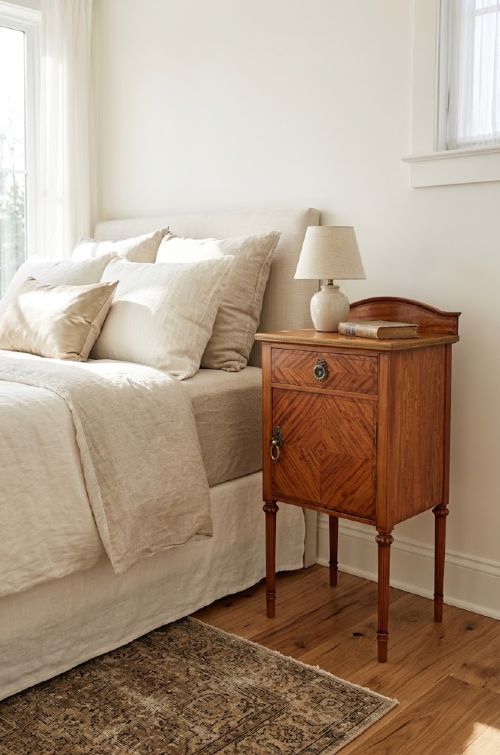
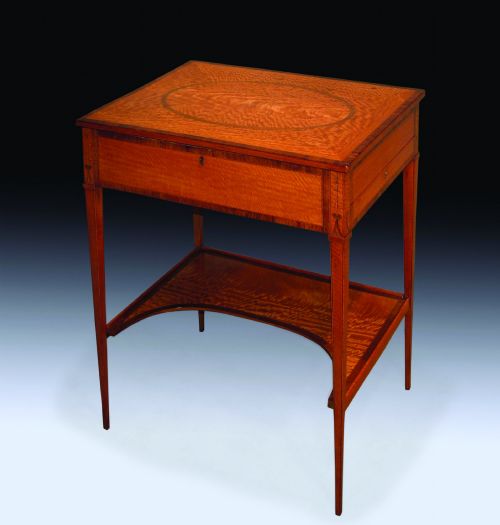
A golden satinwood nightstand brings a luminous grain and refined warmth to the bedside, offering both a practical surface and a striking period accent.
Golden Satinwood Nightstand
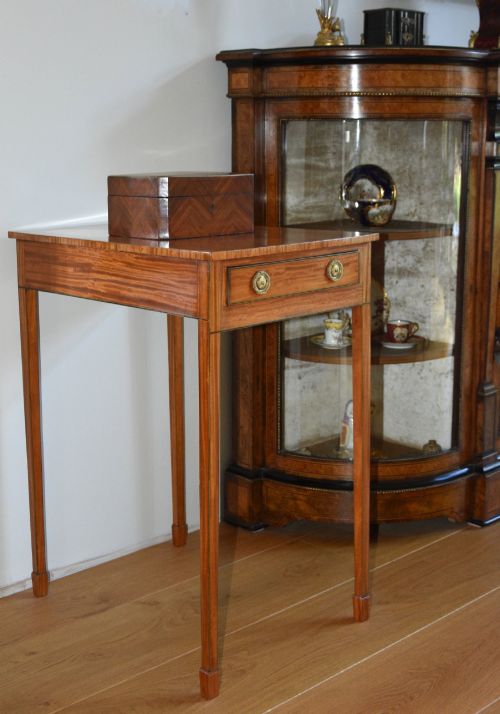
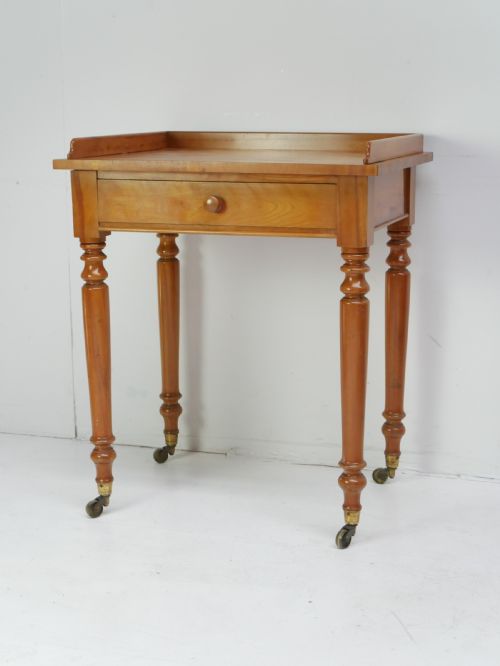
When searching for a golden satinwood nightstand, one encounters a range of forms designed to sit beside the bed, including bedside cabinets, bedside tables, and occasional tables. These pieces span several distinct periods, from the Georgian era and the nineteenth century through to Edwardian revivals and Art Deco designs.
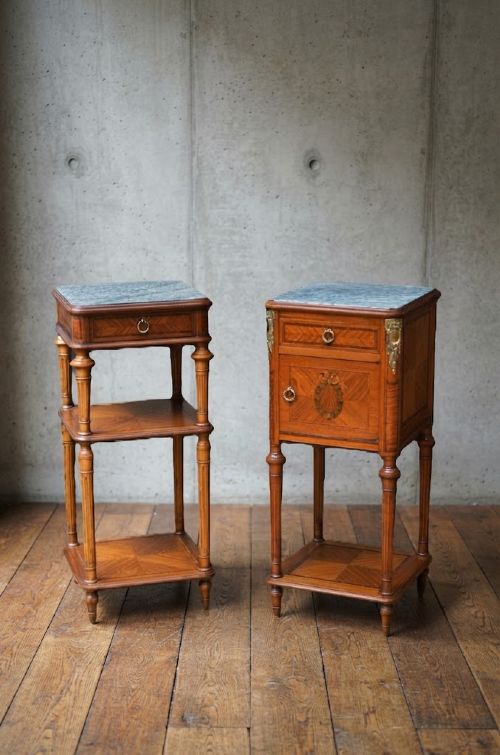
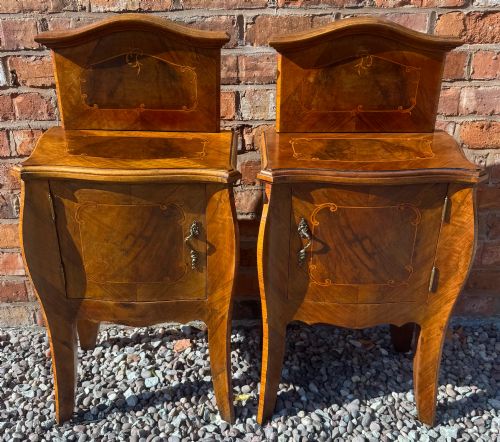
The most common examples on this page are Edwardian and nineteenth-century bedside cabinets, often featuring inlaid details or bow fronts. Alongside these traditional cupboards, buyers find side tables and pairs of pedestals in satinwood and related timbers.
Origins range across English cabinet-making traditions, incorporating revivalist styles such as Sheraton, Louis XVI, and Neo-Classical alongside clean-lined Art Deco forms. Each piece reflects the enduring appeal of light, figured timbers in private chambers.
How they were made
Cabinet-makers constructed these pieces primarily from satinwood, occasionally pairing it with contrasting walnut or substituting satin birch. Boxwood and hand-painted detailing provided delicate linear decoration and surface ornamentation.
Structural elements frequently incorporated timber framing with figured veneer panels applied to the carcase and drawer fronts. Marble tops also appeared on selected Victorian and Edwardian cabinets, adding a durable and contrasting surface.
Brass hardware such as handles and hinges completed the construction, while marquetry and inlay techniques defined the revivalist and Sheraton styles.
What varies in quality
The standard of a piece depends heavily on the crispness of its marquetry and the figuration of the satinwood grain. Superior examples exhibit tightly matched veneers and finely executed boxwood stringing that remains intact.
Construction methods also separate the finer items from simpler utilitarian versions, seen in the precision of the drawer dovetails and the integrity of the internal carcass. The inclusion of matching pairs further elevates the desirability of these bedroom pieces.
Gillows
The Golden Satinwood Nightstand Glossary
- Satinwood
- A dense, lustrous tropical timber prized for its golden colour and reflective sheen. It forms the primary visual surface for the finest cabinet work.
- Marquetry
- The art of applying pieces of veneer to a structure to form decorative patterns and pictures. This technique defines the revival styles seen on many cabinets.
- Bowfront
- A convex, curved front profile popular in Georgian and Victorian case furniture. It softens the silhouette of a bedside cabinet.
- Stringing
- A narrow strip of contrasting wood inlaid into the surface of a piece to create a border or linear pattern. Boxwood is frequently used for this purpose.
- Pedestal
- A tall, freestanding column or cabinet base designed to support a lamp or hold bedroom items. These often appear in matched pairs.
Golden Satinwood Nightstand: Frequently Asked Questions
How do I style a satinwood cabinet?
These cabinets work well in both traditional bedrooms and contemporary spaces as accent tables. Their light tone complements neutral walls and contrasting dark woods.
Pair them with simple lamps to let the natural grain and marquetry remain the focal point.
Are these nightstands usually found in pairs?
Many listings feature matched pairs of bedside cabinets from the Edwardian and Art Deco periods. Single tables also appear frequently among the nineteenth-century selections.
Pairs are particularly sought after for balancing twin bed arrangements.
What is the difference between satinwood and satin birch?
Satinwood is a dense exotic timber with a natural golden sheen and high reflectivity. Satin birch is a native or European alternative with a similar light appearance and figured grain.
Both materials were utilised to achieve a bright, elegant finish in bedroom furniture.