


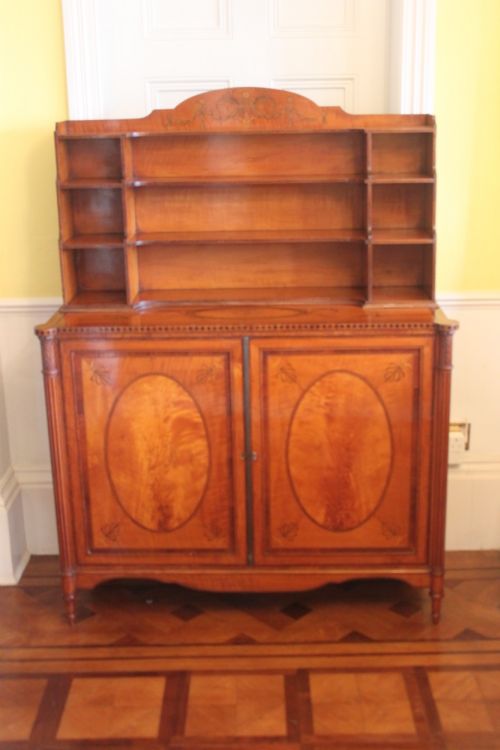
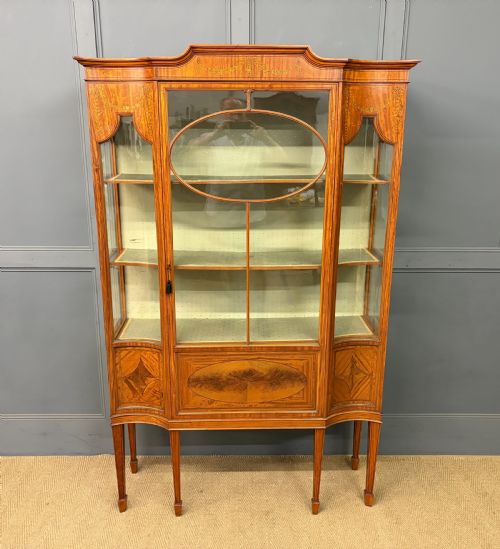
Golden Satinwood Cupboard
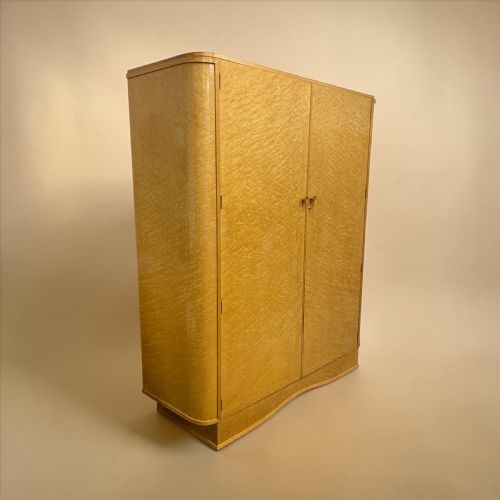
A golden satinwood cupboard brings a luminous warmth to a room through finely figured timbers and classical revival design.
Golden Satinwood Cupboard
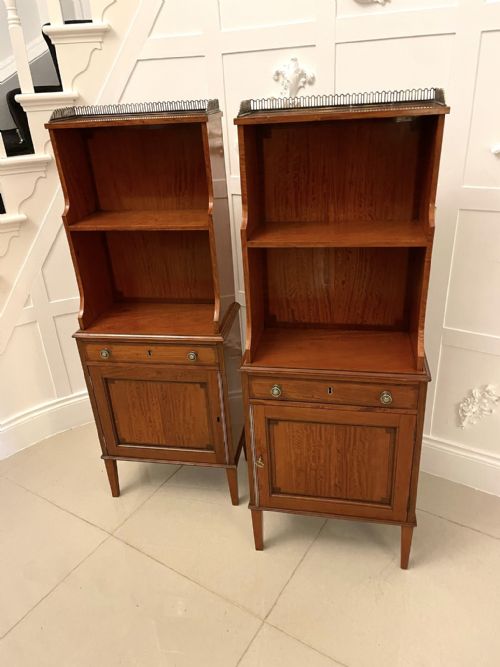
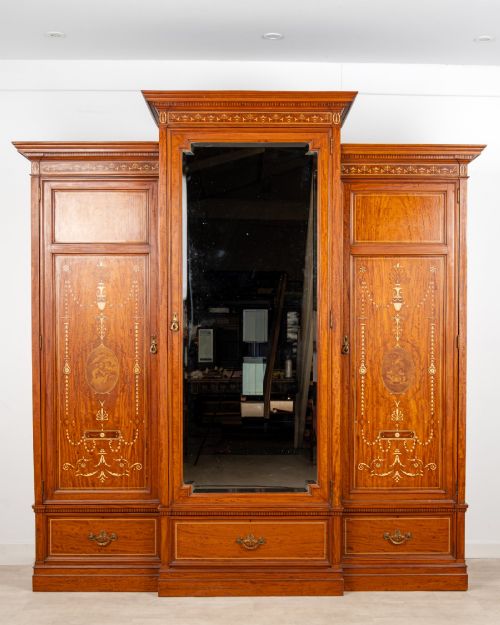
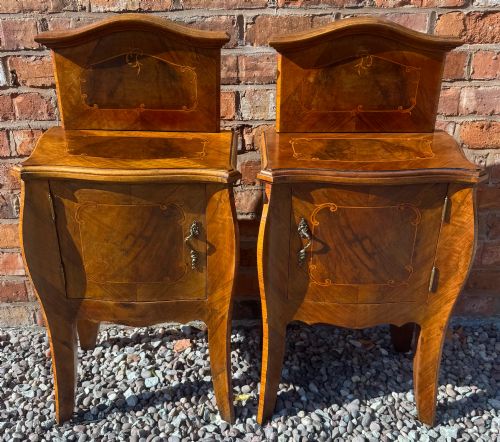
A golden satinwood cupboard encompasses a diverse range of furniture forms, from compact bedside cabinets and commodes to expansive display cabinets and wardrobes. When searching for a golden satinwood cupboard, buyers frequently encounter Edwardian and late nineteenth-century examples executed in the Sheraton Revival or Neoclassical styles.
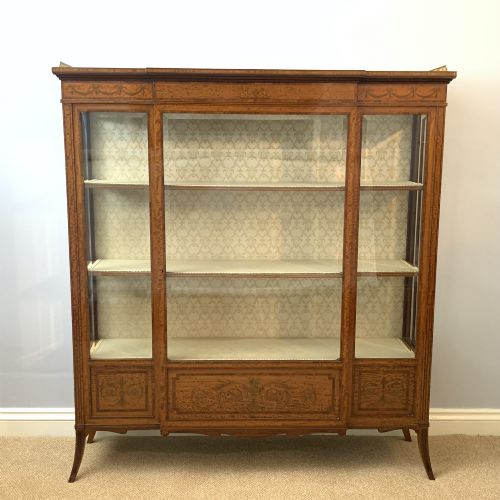
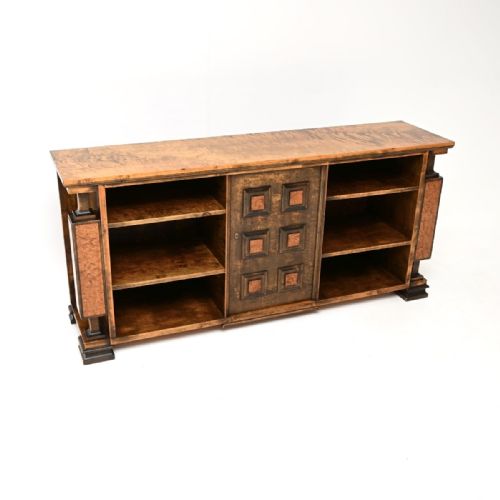
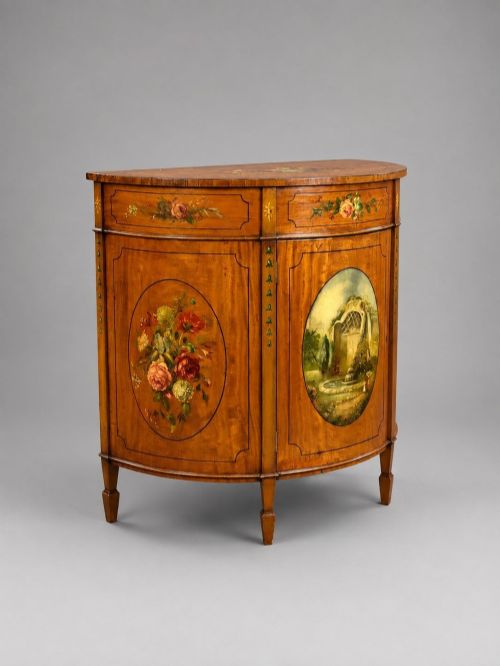
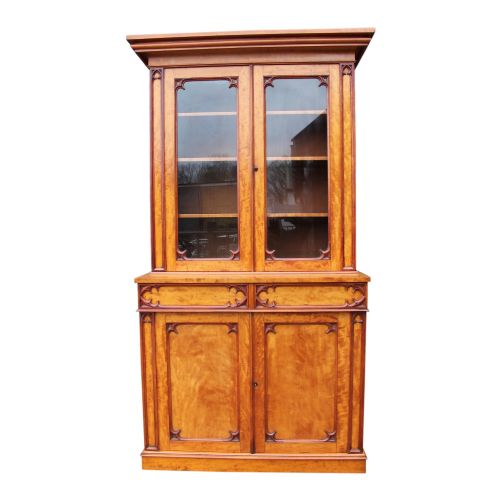
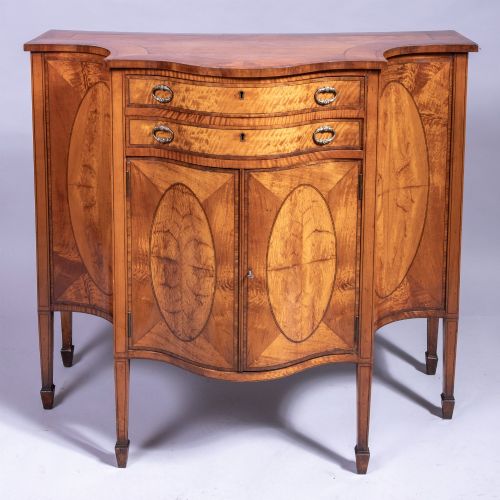
The selection ranges from smaller bedside chests and demi-lune side cabinets to tall bookcases and vitrines. Many pieces incorporate marquetry, painted panels, or contrasting timbers such as walnut and mahogany to frame the pale, reflective grain.
Origins span standard English workshop production to specific cabinet-makers, alongside occasional continental pieces. The overarching characteristic remains the pale, golden tone of the primary wood, whether utilised for storage in a bedroom or display in a drawing room.
How they were made
Construction relies upon veneers applied to stable secondary woods, or occasionally solid timbers in regional pieces, allowing craftsmen to create curved demi-lune shapes and smooth bowfronts. Satinwood provides a pale, lustrous canvas that is frequently enhanced with delicate marquetry, banding in darker woods, and hand-painted classical motifs.
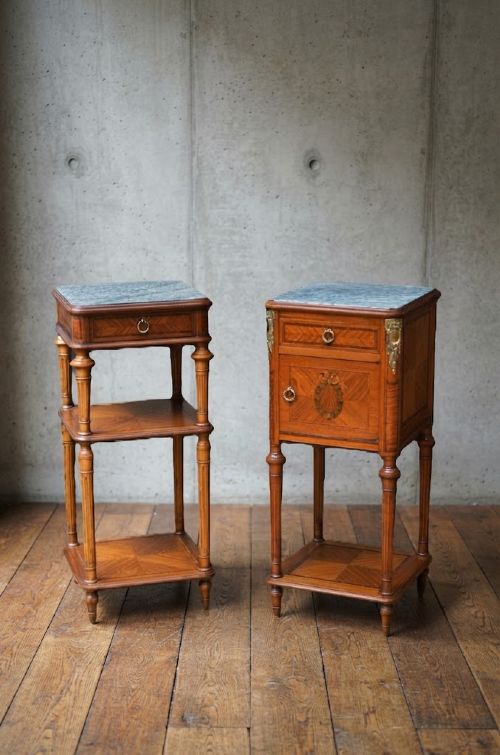
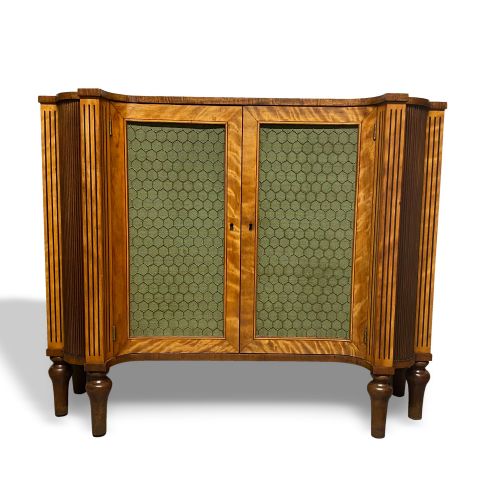
Secondary materials such as brass for handles and key escutcheons, glass for display doors, and marble for tabletops appear across the various forms. Cabinetmakers employed precise joinery for casework and utilised fabric linings inside glass-fronted vitrines and display cabinets.
Listings span the eighteenth, nineteenth, and early twentieth centuries, featuring materials such as satinwood, mahogany, marble, and brass.
What varies in quality
Quality rests upon the selection and figure of the satinwood veneer, the crispness of the marquetry inlay, and the finesse of any painted decoration. The best examples exhibit harmonious grain matching across the doors and drawers, alongside robust internal construction that ensures doors hang true.
Finer pieces demonstrate attention to detail in the mounts, hardware, and secondary timbers used for drawer linings and carcases. The relative restraint or ambition of the design, whether a simple Edwardian bedside chest or an intricate Sheraton Revival display cabinet, dictates the standard of execution.
Edwards & Roberts·Gillows·Ince & Mayhew·Maple & Co·Waring & Gillow
The Golden Satinwood Cupboard Glossary
- Satinwood
- A dense, lustrous tropical timber known for its pale golden colour and reflective, chatoyant grain.
- Sheraton Revival
- A late nineteenth and early twentieth-century design movement inspired by the neoclassical furniture of George Sheraton, characterised by light proportions, satinwood veneer, and painted details.
- Demi-lune
- A half-moon shape commonly found in commodes and side cabinets designed to sit flush against a wall.
- Marquetry
- The art of applying pieces of veneer to a structure to form decorative patterns and pictorial designs.
- Vitrine
- A glass-fronted cabinet or display case used for exhibiting porcelain, glass, and small objects.
- Commode
- A low decorative chest of drawers or cabinet, often featuring curved fronts and elaborate inlay.
Golden Satinwood Cupboard: Frequently Asked Questions
What is satinwood?
Satinwood is a dense hardwood valued for its pale, golden yellow colour and high natural sheen. It provides a luminous surface that catches the light differently depending on the angle of the grain.
In antique furniture, it was frequently used as a veneer on casework, allowing craftsmen to cover large surfaces with decorative figuring and contrasting borders.
How do I date a satinwood cabinet?
Dating relies upon a combination of stylistic cues, construction methods, and materials. Pieces from the Georgian period tend to show restrained classical lines, whereas late nineteenth and early twentieth-century Sheraton Revival examples often feature painted decoration and lighter proportions.
Secondary timbers inside drawers and the type of fixings used also help narrow down the period of manufacture.
Where should I place a bedside cabinet?
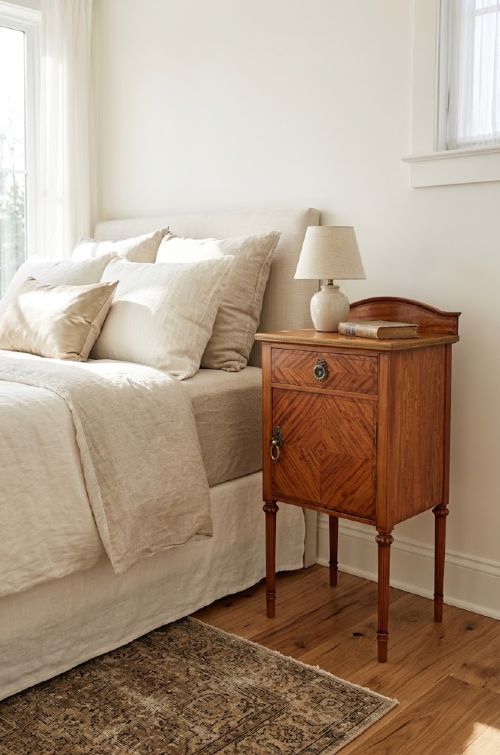
Bedside cabinets and chests offer enclosed storage next to a bed while introducing the golden warmth of satinwood to a bedroom scheme. Pair examples with marble tops benefit from a durable surface for lamps and everyday items.
They work equally well in smaller spaces where a full-sized chest of drawers would overwhelm the room.
What is the difference between a commode and a side cabinet?
A commode typically refers to a low decorative cabinet or chest of drawers, often built with a curved or demi-lune front shape. They were designed for formal reception rooms and bedrooms as both storage and display surfaces.
A side cabinet encompasses a broader range of rectangular storage forms intended to stand against a wall.