



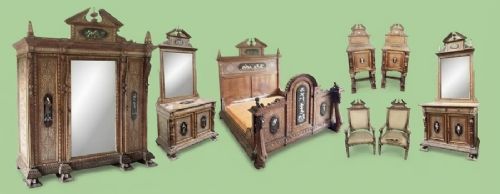
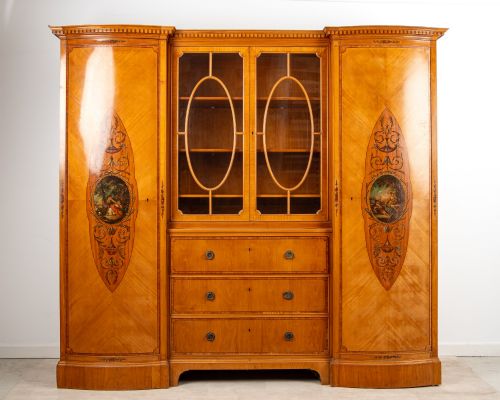
Satinwood Bedroom Cabinet
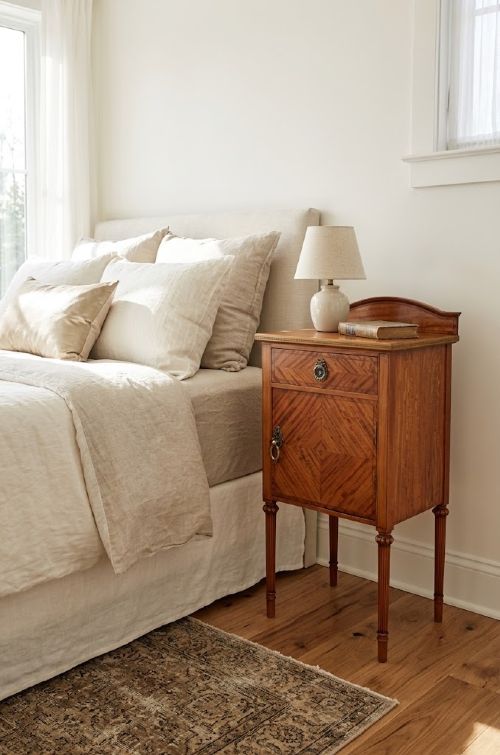
A satinwood bedroom cabinet brings pale, lustrous timber and refined grain into sleeping quarters, offering both intimate storage and decorative warmth.
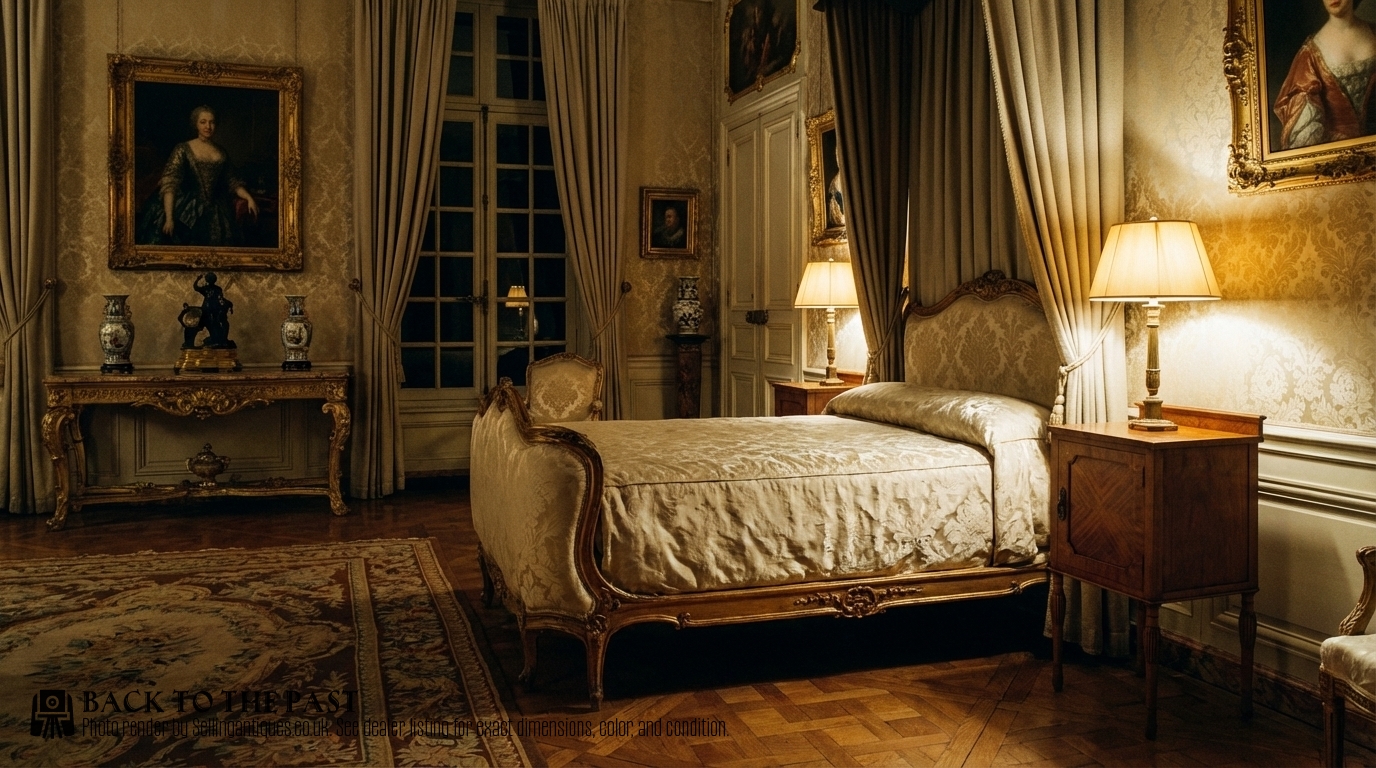
Satinwood Bedroom Cabinet
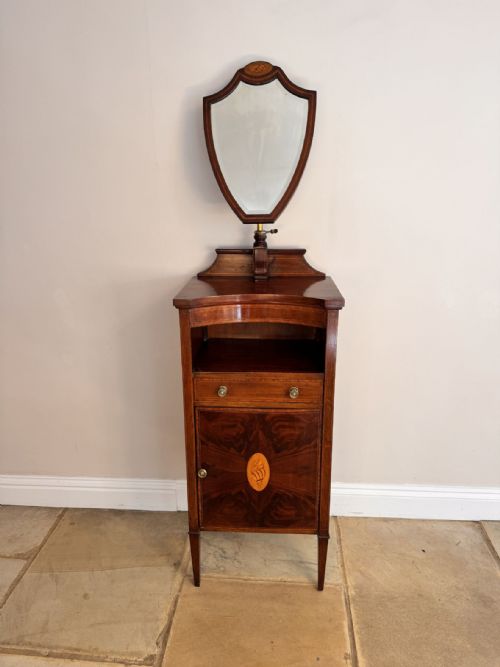
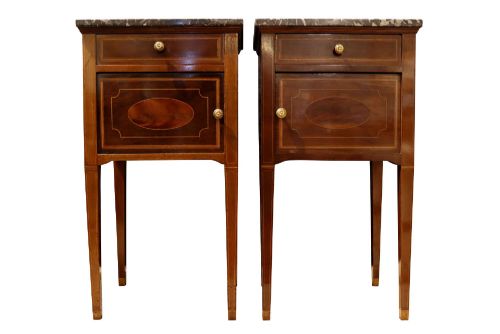
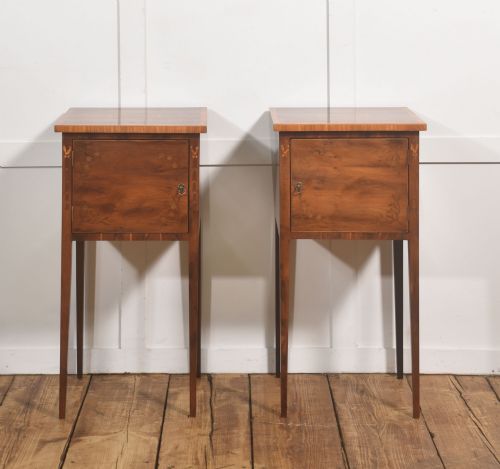
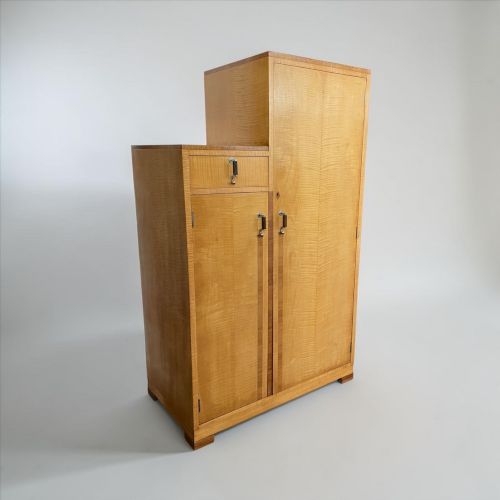
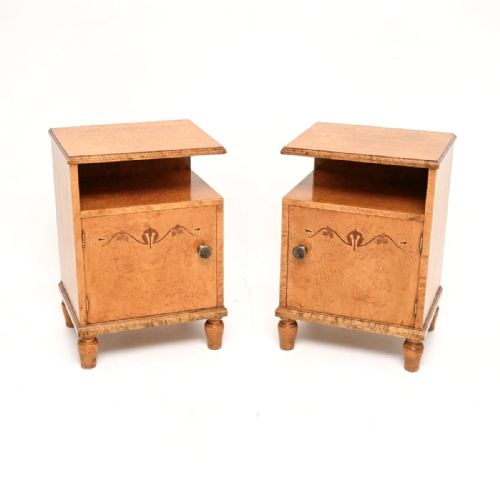
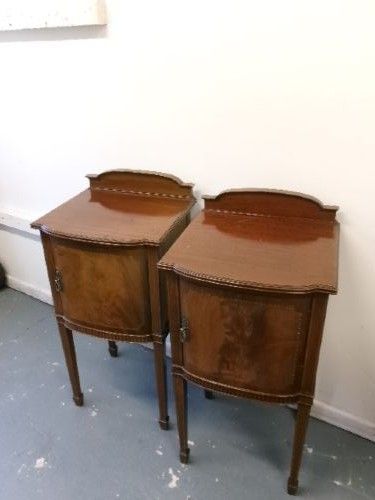
When you search for a satinwood bedroom cabinet, you encounter a variety of forms designed for domestic storage and bedroom utility. The selection spans compact bedside tables and cupboards, larger chests of drawers, tallboys, and comprehensive wardrobes.
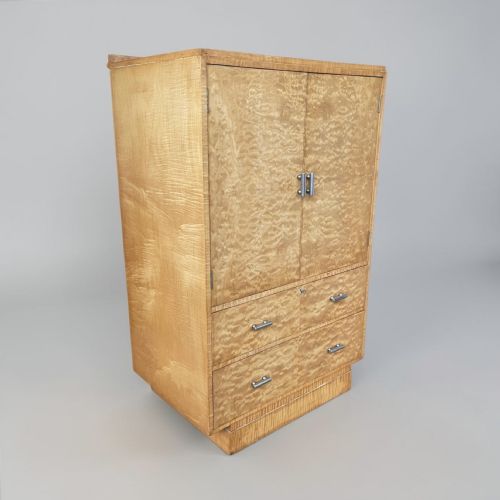
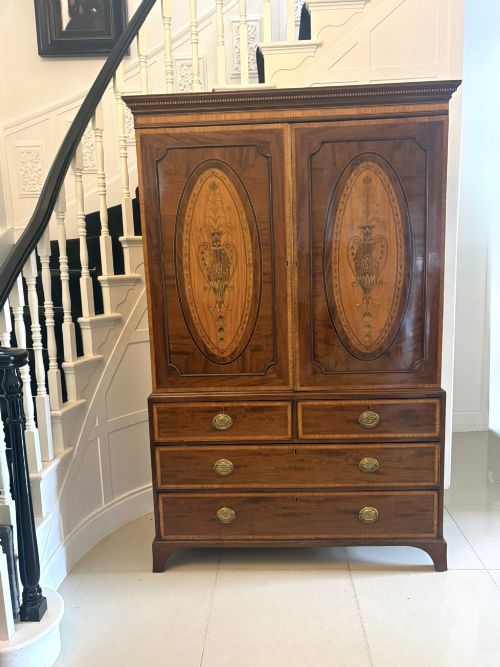
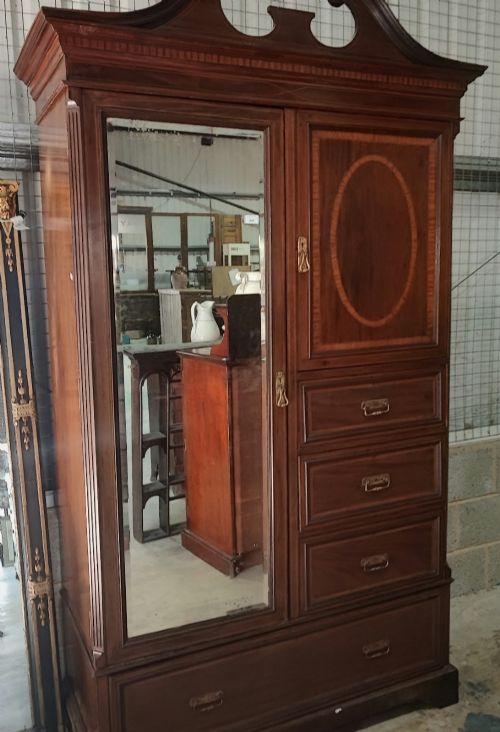
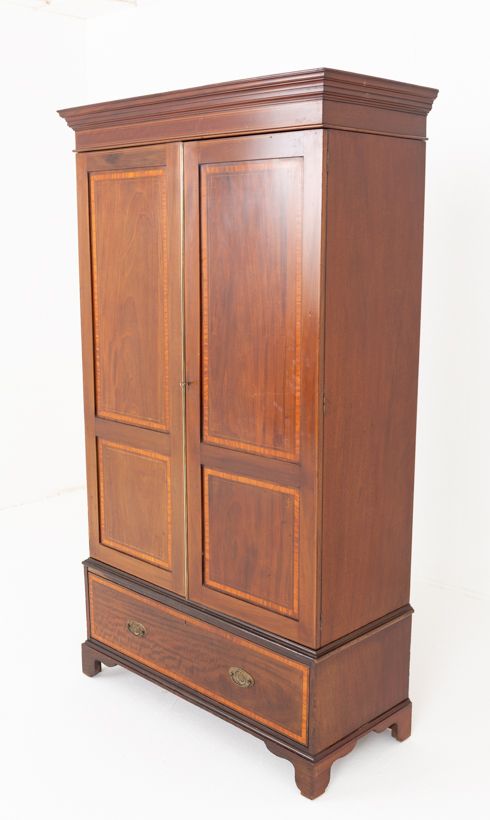
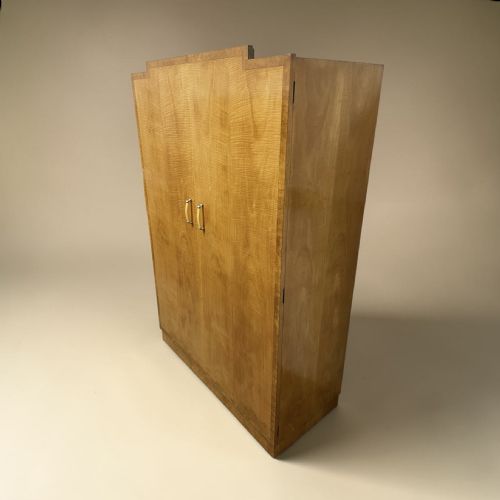
The pieces you meet most frequently on this page date from the Victorian and Edwardian eras, alongside pieces from the 1930s Art Deco period. They range from small bedside cabinets to substantial linen presses and compactum wardrobes.
How they were made
Craftsmen utilised satinwood alongside secondary timbers such as mahogany and walnut, frequently applying contrasting stringing and boxwood inlay to accentuate the drawer fronts and doors. Marquetry, hand-painted panels, and crossbanding appear across several pieces, demonstrating detailed surface decoration.
Structural elements incorporate brass hardware, metal fittings, and occasionally marble tops, particularly on washstands and commodes. Cabinetmakers combined solid construction methods with decorative veneers to achieve both durability and visual contrast.
Satinwood Bedroom Cabinet Retail Price Guide 2026
Typical asking prices for satinwood bedroom cabinet among the pieces listed under this phrase on Sellingantiques today, from the lower quarter to the upper quarter. They describe what is for sale here now, not the wider market.
Listings feature items spanning the Victorian, Edwardian, and 1930s Art Deco periods, utilising satinwood, mahogany, walnut, and marble.
What varies in quality
The standard of a satinwood bedroom cabinet rests on the selection of timber veneers and the precision of the inlay work. Finer examples display carefully matched grain patterns and crisp, untorn boxwood stringing.
Maker attribution and the complexity of the design also set pieces apart. Pieces bearing documented workshop stamps or featuring hand-painted panels and marquetry represent the more ambitious end of the production scale.
Edwards and Roberts·Waring and Gillows·Druce and Co·Bath Cabinet Makers·Heal's·Harris Lebus·Maple and Co
The Satinwood Bedroom Cabinet Glossary
- Satinwood
- A hard, yellow-brown timber with a natural sheen that resembles satin, used extensively for cabinetmaking and decorative veneers.
- Compactum
- A large fitted wardrobe or multi-compartment cupboard designed to hold a wide variety of clothing within a single unit.
- Linen Press
- A tall piece of furniture featuring upper sliding trays for textiles and lower drawers for bulkier garments.
- Crossbanding
- A narrow strip of veneer applied to the edges of a surface, arranged so the grain runs at right angles to the central panel.
- Stringing
- Thin lines of contrasting wood inlaid into grooves on a furniture surface to create geometric borders.
Satinwood Bedroom Cabinet: Frequently Asked Questions
What is a satinwood bedroom cabinet?
A satinwood bedroom cabinet is a storage piece constructed from or veneered in pale, glossy satinwood, ranging from small bedside cupboards to larger chests.
These items were built to provide enclosed bedside or chamber storage while introducing a bright, reflective timber surface to bedroom interiors.
How do I date a satinwood cabinet?
Dating relies on observing stylistic markers such as Victorian proportions, Edwardian stringing, or 1930s Art Deco geometric forms, alongside construction methods.
Cabinet construction, handle styles, and secondary woods like mahogany or walnut also help place a piece within the nineteenth or early twentieth century.
Were these cabinets used beside beds?
Many smaller cupboards and tables functioned as bedside companions for holding night-time items, while larger cabinets served general chamber storage.
Their sizing and internal shelving configurations determined whether they sat next to a bed or stood against a primary bedroom wall.
How should I care for satinwood?
Satinwood benefits from dusting with a soft, dry cloth and protection from direct sunlight to preserve the pale timber colour and polished finish.
Avoiding excessive moisture and maintaining stable room humidity keeps the veneers and delicate boxwood inlay stable over time.