


Gold Table Lamp
A gold table lamp brings warm metallic illumination to a room, drawing on periods from the Victorian era to Art Deco.
Gold Table Lamp
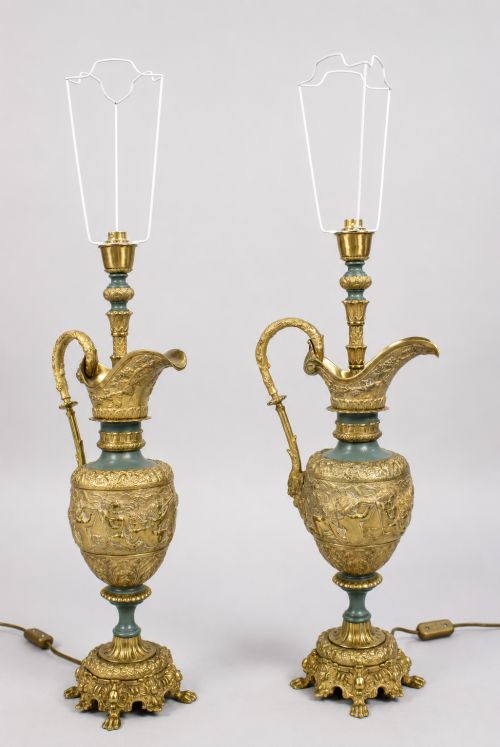
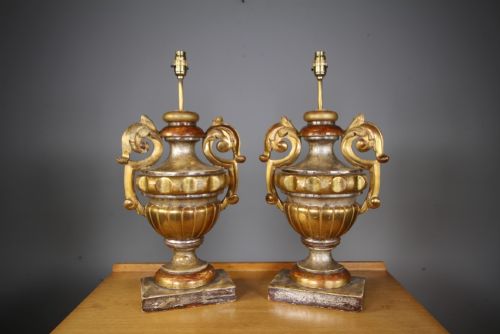
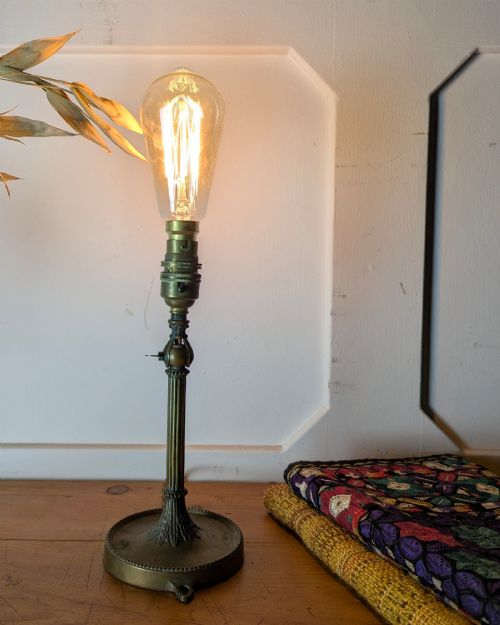
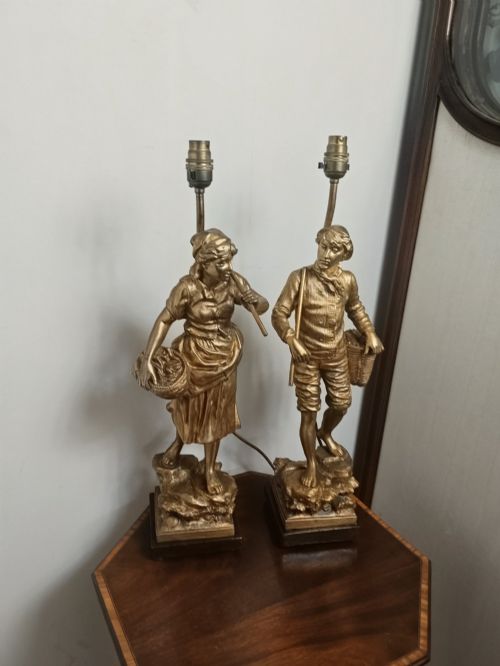
When searching for a gold table lamp, buyers encounter pieces fashioned from gilded bronze, brass, and carved giltwood spanning the nineteenth and early twentieth centuries. The selection includes column forms, figural bases, and converted candelabra from Victorian and Edwardian makers.
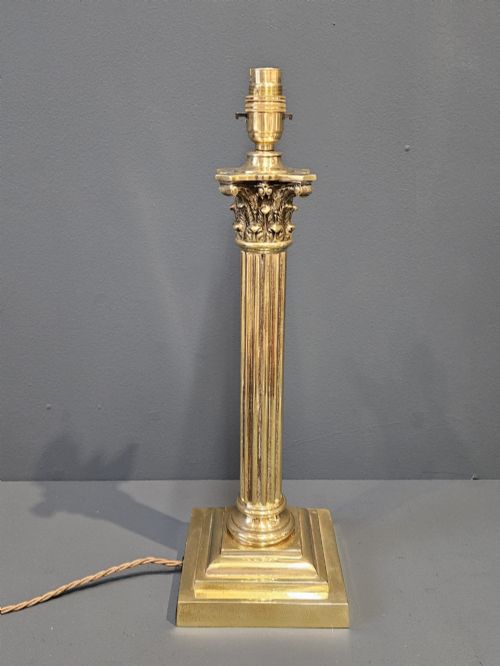
French neoclassical designs and ornate ormolu fixtures sit alongside British brass reeded columns and Kashmiri twist lamps. This variety reflects diverse historical revivals, from early Gothic styles to Romanesque interpretations.
Materials and construction
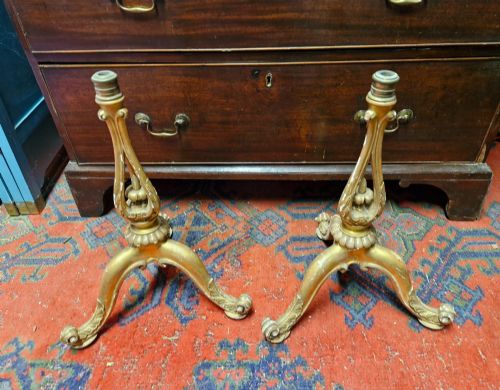
Makers utilised cast brass, gilt bronze, and carved pine finished with gold leaf to achieve durable metallic surfaces. Structural integrity often relied on heavy weighted bases of marble or onyx to support taller columns and fabric shades.
Surface ornamentation involved intricate chasing, cold-painting on bronze, and lacquered wood applied in distinct regional workshops. Electrical rewiring is common on older examples to ensure modern safety standards while retaining the original metalwork.
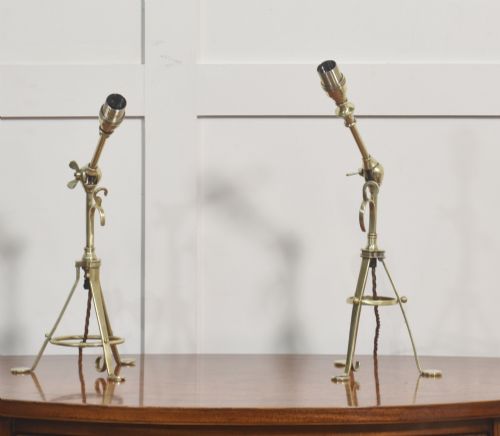
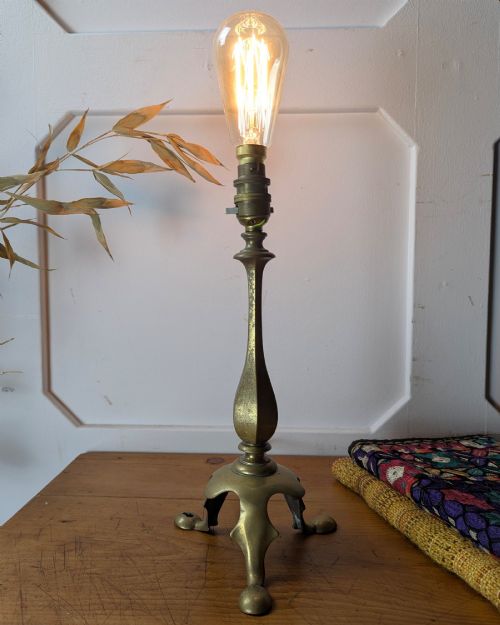
Listings feature nineteen-twenties Kashmiri twist lamps alongside Victorian brass reeded columns and French ormolu fixtures.
Assessing quality in period lighting
The distinction between standard production and exceptional quality rests on the crispness of the cast detailing and the depth of the gilding. Fine pieces exhibit hand-finished chasing on ormolu and bronze, whereas simpler items rely on plain spun brass.
Proportion and material authenticity dictate the standing of a piece, with solid carved giltwood or heavy cast bronze commanding greater presence than lighter metal alloys. Original patination and intact structural mounts preserve the integrity of the design.
W.A.S. Benson·E Rousseau·Franz Bergman·L & F Moreau·The Goldsmiths & Silversmiths Co
The Gold Table Lamp Glossary
- Ormolu
- Gilded bronze, typically produced using a mercury amalgamation technique on decorative metalwork during the eighteenth and nineteenth centuries. This finish gives a warm, luminous surface to French neoclassical bases.
- Corinthian column
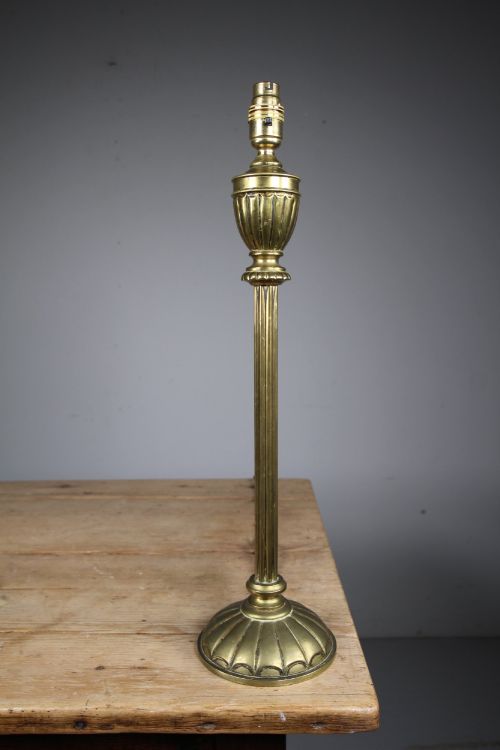
- A classical architectural column form featuring ornate acanthus leaves on the capital, frequently adapted for Victorian brass lamp standards. It provides a formal, symmetrical silhouette.
- Chinoiserie
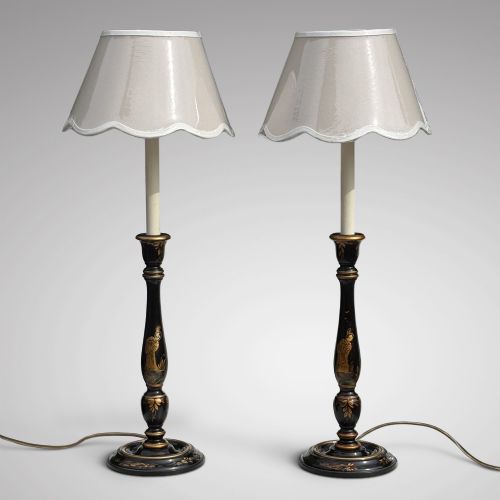
- European artistic style reflecting Chinese motifs, often seen on lacquered wood table lamps from the early twentieth century. These pieces display hand-painted oriental scenes in gold against dark backgrounds.
- Cold-painted bronze
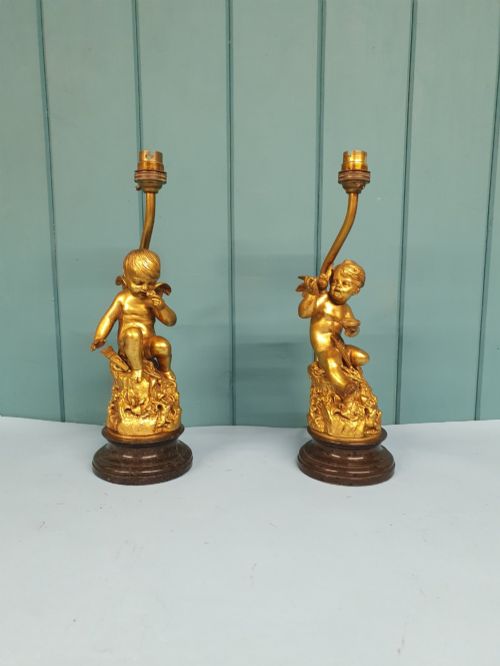
- Bronze sculpture finished with paint applied without heat, popular in Vienna and other European workshops around nineteen-ten. The technique yields detailed polychrome finishes on figural bases.
- Candelabra conversion
- A lighting fixture originally designed to hold wax candles that has been adapted to accept an electrical bulb holder. This process preserves antique metalwork while updating functionality.
Gold Table Lamp: Frequently Asked Questions
How do I date an antique brass lamp?
Dating relies on manufacturing techniques, wiring methods, and prevailing decorative styles seen across Victorian, Edwardian, and Art Deco periods. Cast components and screw thread types often provide clues to the exact decade of production.
Examining the wear on the metallic finish and any maker stamps helps confirm the chronological origin of the base.
Are converted candelabra safe to use?
Most converted pieces require professional rewiring to meet modern safety standards before regular daily use. Electric internal fittings are installed carefully to protect the historic metal structure.
Qualified electricians can update the internal wiring while preserving the external antique appearance.
How do I clean gilt bronze safely?
Gilt bronze and ormolu surfaces require gentle dusting with a soft, dry brush to prevent accumulation of dirt. Harsh chemical polishes should be avoided because they strip the thin layer of gold leaf or mercury gilding.
Professional conservation advice is recommended if deeper cleaning becomes necessary for tarnished metal.
What shade suits a column lamp?
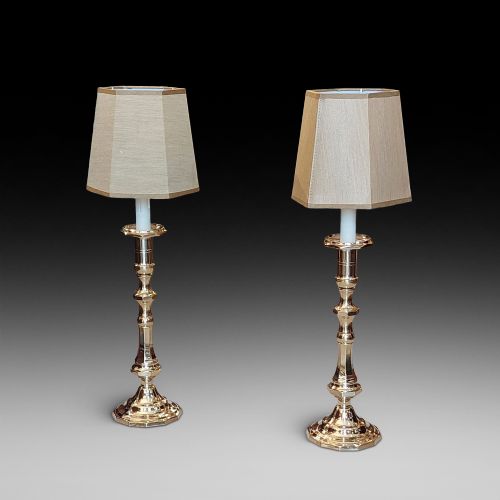
Tall columnar forms pair effectively with tailored fabric shades that balance the height and weight of the metal base. Neutral or patterned silk fabrics complement nineteenth-century brass and giltwood constructions.
Proportion remains key, ensuring the diameter of the shade matches the visual width of the lamp base.