




Gold Satsuma Pottery
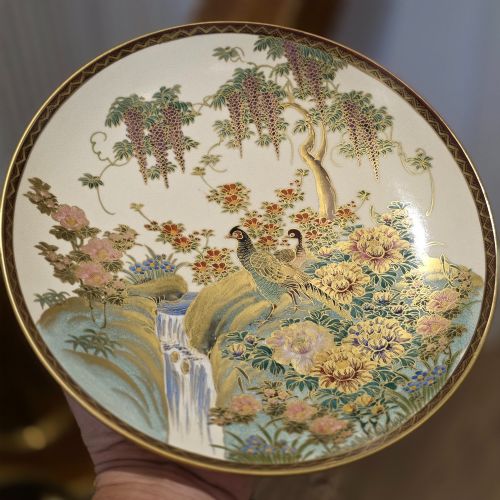
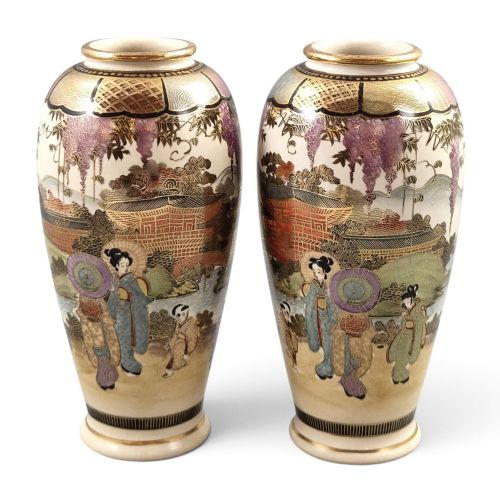
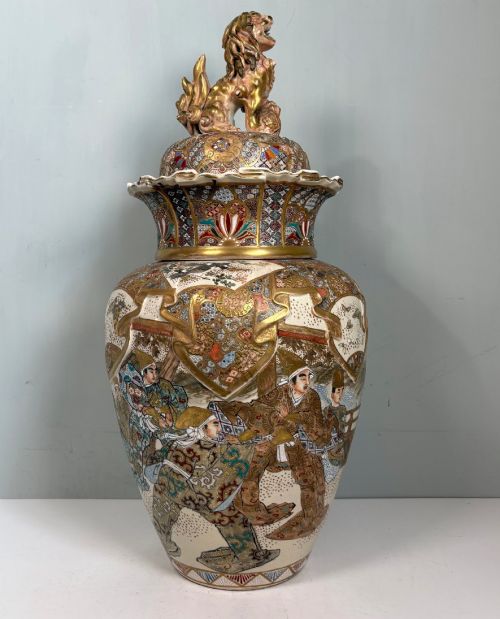
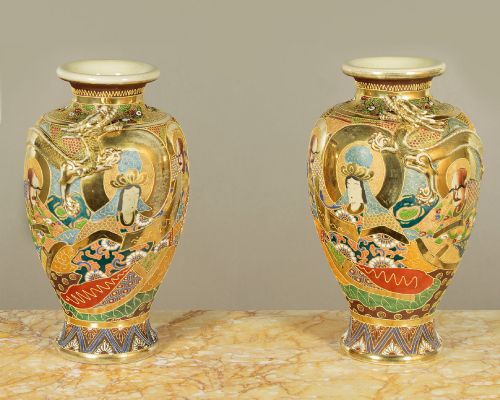
Gold satsuma pottery brings together fine earthenware and layered gilding, offering collectors intricate hand-painted scenes from the Meiji and Taisho periods.
Gold Satsuma Pottery
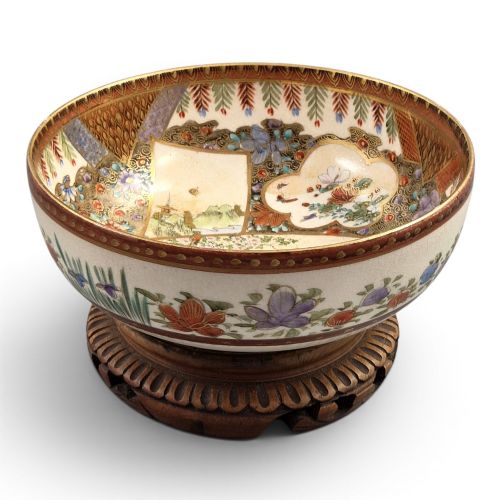
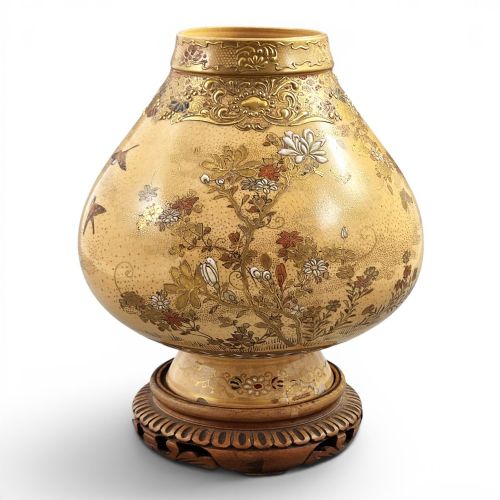
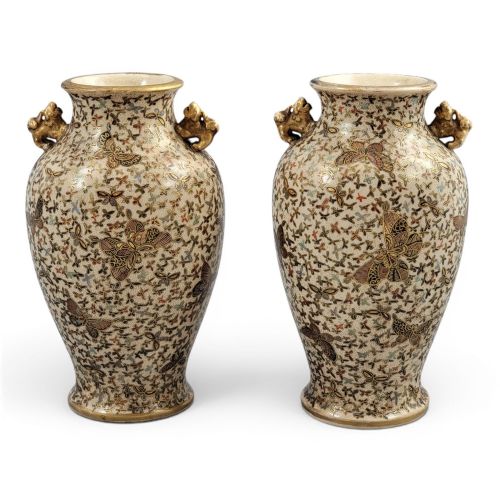
Gold satsuma pottery encompasses decorative vessels, bowls, incense burners, and figurines created primarily during the Meiji and Taisho periods.
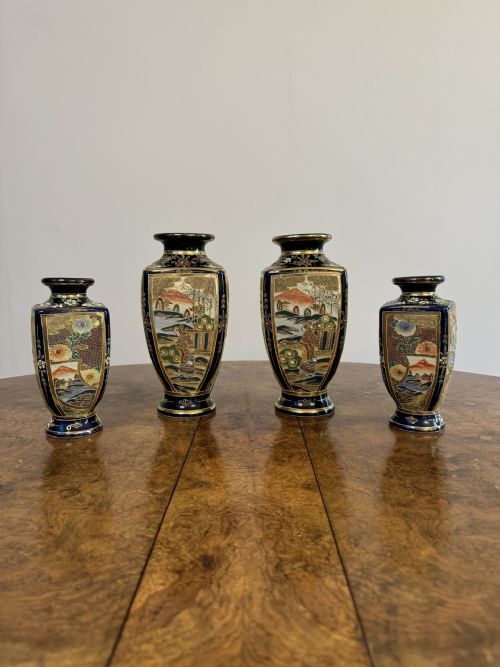
The pieces on this page range from monumental vases and garnitures down to delicate miniature vases and lidded boxes.
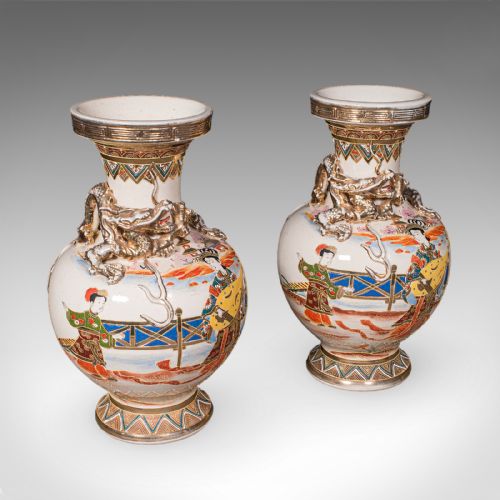
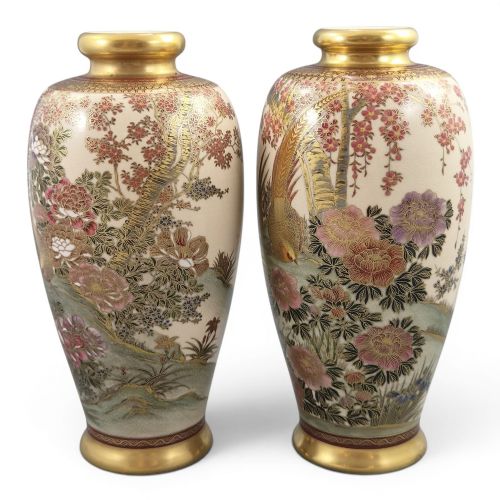
Makers utilised earthenware bodies as a canvas for complex figural processions, floral motifs, and dense landscapes enriched with gold leaf.
Materials and Techniques
The foundation of these items is typically a cream-coloured earthenware body covered in a finely crackled glaze.
Artists applied rich enamel colours alongside extensive gold leaf, gilt, and raised moriage details to build up textured surface patterns.
Listings feature earthenware vessels from the 19th century through the Taisho period, decorated with gold leaf, enamel, and cobalt blue.
Distinctions in Quality
Execution of the brushwork separates standard production items from pieces bearing master signatures from distinguished Kyoto and Yokohama workshops.
The density and precision of the gilt work, alongside the fineness of the enamel detailing, define the upper tier of these ceramics.
Koshida·Shozan·Manpei·Kozan·Kinkōzan·Hotoda·Kinzan·Toshozan·Chosei·Nanzan·Seiko-en Chokei·Nikko·Kizan·Hakusan·Kotobuki-do·Tokyo Taizan
The Gold Satsuma Pottery Glossary
- Moriage
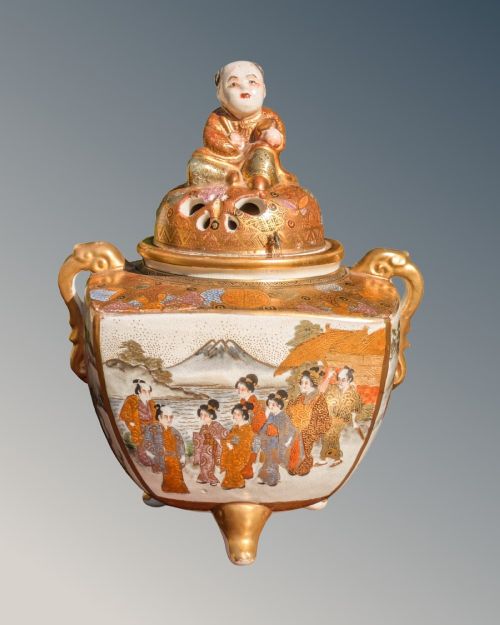
- A decorative technique using piped clay underglaze to create raised relief patterns before gilding. This adds tactile depth to robes and borders.
- Koro
- A traditional Japanese incense burner fitted with a pierced lid. These often feature three feet and intricate handles.
- Bijin
- A depiction of a beautiful woman, commonly found on Meiji period ceramics and okimono figures. These figures wear traditional layered garments.
- Shimazu Crest
- The heraldic badge of the Shimazu clan, frequently stamped on the base of authentic Satsuma wares. It displays a cross within a circle.
- Okimono
- A standalone display figurine meant for interior alcoves. These carved or modelled pieces depict historical figures and deities.
Gold Satsuma Pottery: Frequently Asked Questions
How do I identify a Meiji period piece?
Meiji period items typically display dense, intricate hand-painted enamel work combined with heavy gilding over a crackled earthenware glaze. Many pieces also carry artist signatures or workshop marks on the base.
Looking closely at the fineness of the figural painting helps distinguish late nineteenth-century examples from later Taisho and Showa productions.
What is moriage decoration?
Moriage refers to the technique of building up raised clay lines on the ceramic body prior to firing and gilding. This creates a textured, three-dimensional surface that catches the light.
Run your fingers gently across the gold details to feel the distinct ridges characteristic of this method.
Where were these ceramics made?
While the style originates from Satsuma province, major production centres emerged in Kyoto, Tokyo, and Yokohama during the late nineteenth century. Prominent workshops like Kinkozan operated extensively in Kyoto.
Regional variations appear in the tone of the glaze and the specific style of enamel painting.
How should I clean my gold satsuma pottery?
Dust these decorative pieces gently with a dry, soft brush to protect the delicate enamel and gold leaf. Avoid using water, chemical cleaners, or abrasive cloths.
Keeping them out of direct sunlight preserves the vibrancy of the colours over time.