





Gold Plaster Mirror
A gold plaster mirror brings warmth and reflective depth to a room through gilded plaster, gesso, and wood frames.
Gold Plaster Mirror
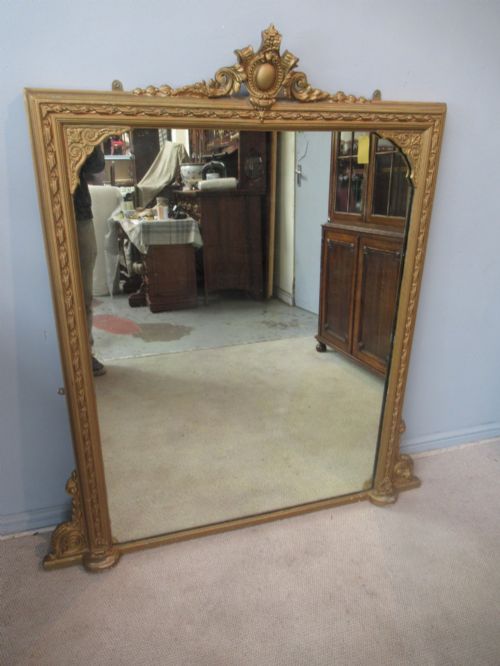
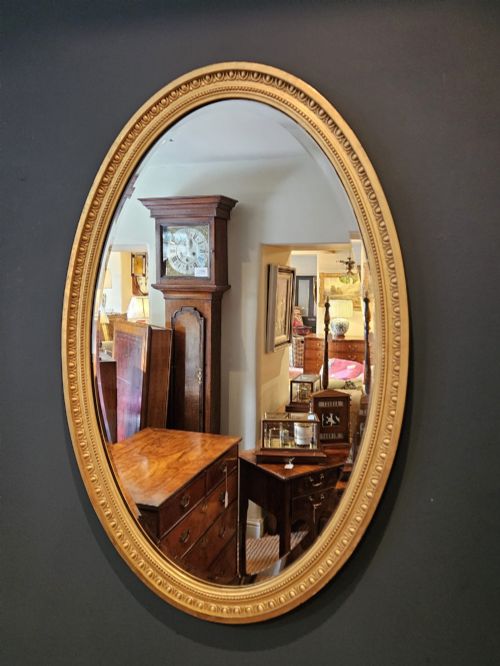
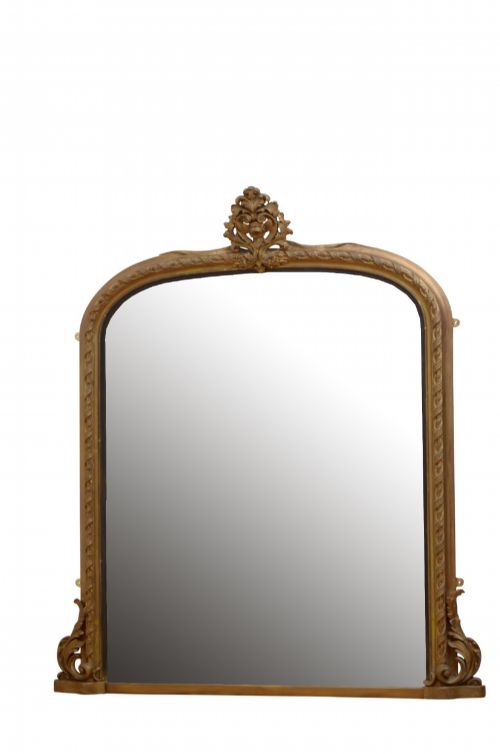
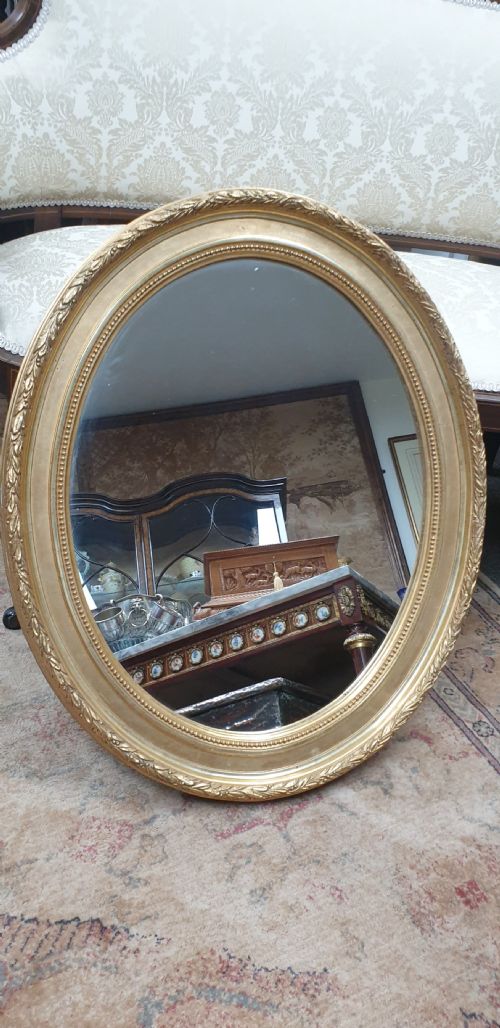
A gold plaster mirror is a wall or overmantel piece defined by a decorative frame finished in gilt, gesso, or gold leaf over a solid core. When searching for a gold plaster mirror, buyers encounter a range of nineteenth-century, Victorian, and Edwardian examples designed to hang above mantels or on principal walls.
The pieces appearing on this page span several distinct forms, from grand architectural overmantels to smaller oval wall mirrors. Many display classical French Chateau, Rococo Revival, or Neoclassical ornamentation, while others show simpler Victorian framing.
Most items rely on composition or gesso applied over wood to hold intricate moulded details before the application of gold leaf or surface gilding. Buyers most frequently meet large rectangular wall mirrors and arched overmantel formats suited to period interiors.
Materials and construction methods
Makers constructed the structural frames of these mirrors using timber foundations, upon which they layered composition material or gesso to build up ornate surface relief. This composite layer allowed artisans to impress detailed mouldings and scrollwork before finishing.
Surfaces received fine applications of gold leaf or gilt finishes over the prepared gesso and plaster base, creating the characteristic reflective metallic sheen. Mirror glass was then fitted into the rebate behind secure wooden backboards.
Gold Plaster Mirror Retail Price Guide 2026
Typical asking prices for gold plaster mirror among the pieces listed under this phrase on Sellingantiques today, from the lower quarter to the upper quarter. They describe what is for sale here now, not the wider market.
Listings feature nineteenth-century, Victorian, and Edwardian pieces constructed from gesso, giltwood, composition, and wood.
Distinguishing quality across examples
Quality in these mirrors rests primarily upon the crispness of the moulded ornament and the depth of the underlying gesso work. Finer examples retain sharp relief in their decorative motifs, whereas lesser pieces show softening from worn moulds or repeated over-gilding.
The condition of the original mirror glass and the stability of the heavy wooden frames also determine the merit of a piece. Uniformity in the gold leaf application and minimal loss to the plaster or composition enrichments distinguish superior items.
The Gold Plaster Mirror Glossary
- Gesso
- A plaster-like mixture applied to wood frames to create a smooth surface for gilding. It allows artisans to carve or mould intricate decorative details before applying gold leaf.
- Giltwood
- Timber that has been coated with gold leaf or a gold-coloured finish. This material forms the primary structure of many antique frames.
- Composition
- A mixture of whiting, resin, glue, and linseed oil pressed into moulds to create decorative ornaments. It is commonly applied over wooden frames in nineteenth-century mirrors.
- Overmantel Mirror
- A large mirror specifically designed to hang above a fireplace mantel. These pieces often feature wide horizontal proportions and architectural framing.
- Rococo Revival
- A nineteenth-century design style characterised by asymmetrical scrolls, shell motifs, and naturalistic curves. It frequently appears on ornate mirror frames from the period.
Gold Plaster Mirror: Frequently Asked Questions
How do I hang a heavy overmantel mirror?
These large frames require secure fixing directly into wall studs or masonry using heavy-duty brackets rated for the weight of wood and glass. Professional installation ensures the piece remains stable against the wall.
Position the mirror at a height that reflects natural light and balances the proportions of the surrounding mantel and furniture.
What is the difference between gesso and plaster?
Plaster provides a heavier base or structural element, whereas gesso acts as a fine preparatory layer mixed with glue to receive delicate surface carving and gilding. Both materials appear extensively in nineteenth-century frame construction.
Understanding these layers helps collectors appreciate the traditional techniques used by period craftsmen.
How do I date a Victorian mirror?
Examine the construction of the wooden backboards, the type of mirror glass, and the specific decorative motifs such as Rococo Revival scrolls or Neoclassical symmetry. Victorian pieces often display distinct label remnants, fastener types, or framing styles characteristic of the later nineteenth century.
Comparing the moulding techniques with known period examples confirms the era of manufacture.