
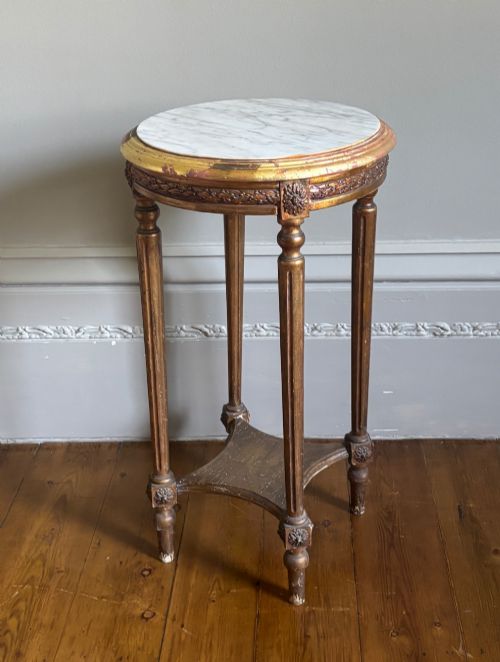


Gold Plant Pedestals
Gold plant pedestals bring elevated display and bright metallic presence to interiors through centuries of classical forms.
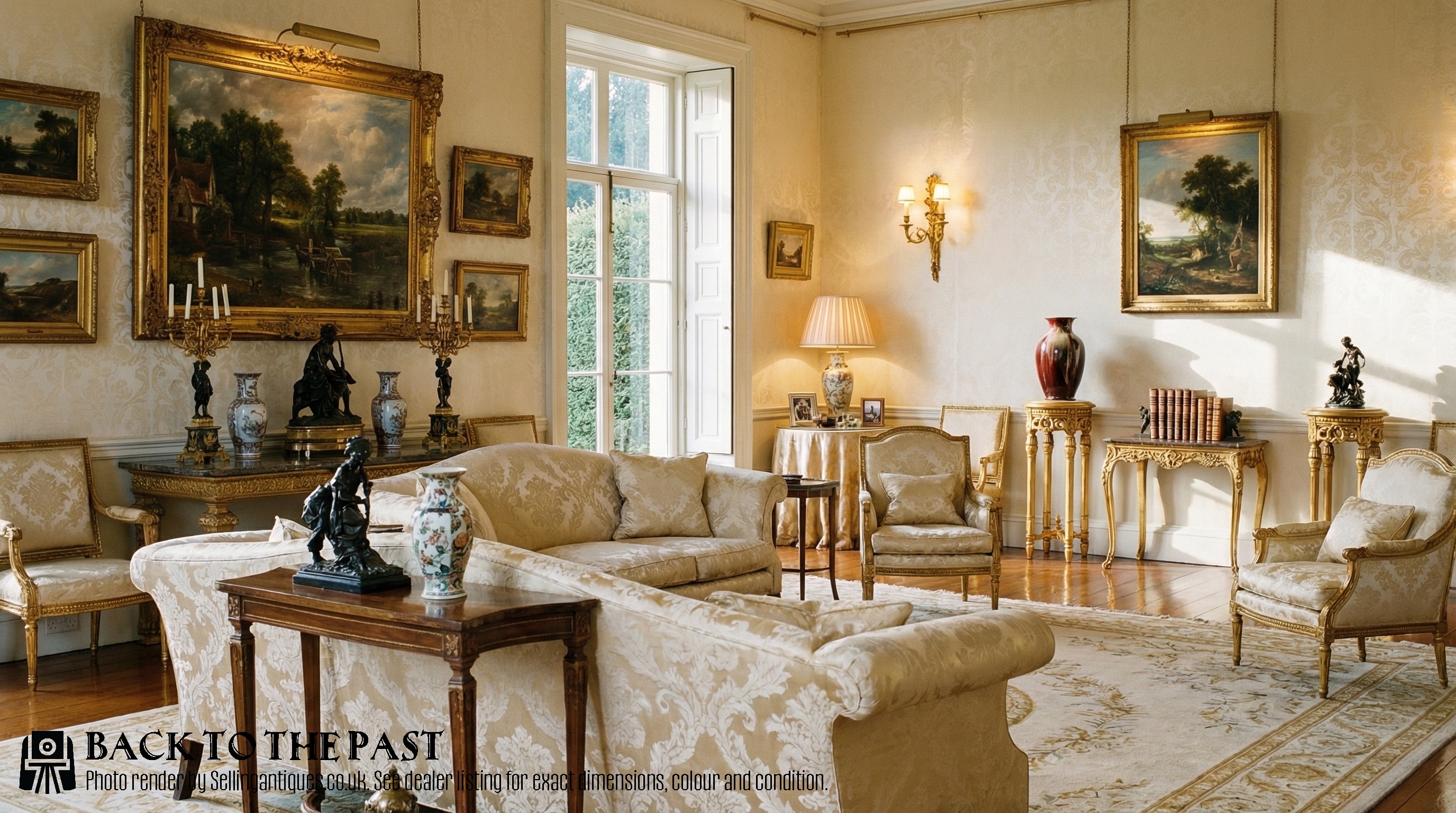
Gold Plant Pedestals
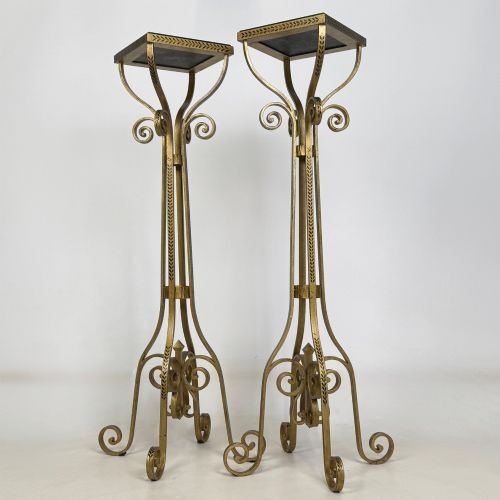
Gold plant pedestals encompass tall stands, torchères, columns, and occasional tables designed to elevate flora, urns, and decorative objects within a room. When buyers search for gold plant pedestals, they encounter pieces originating from the eighteenth, nineteenth, and early twentieth centuries.
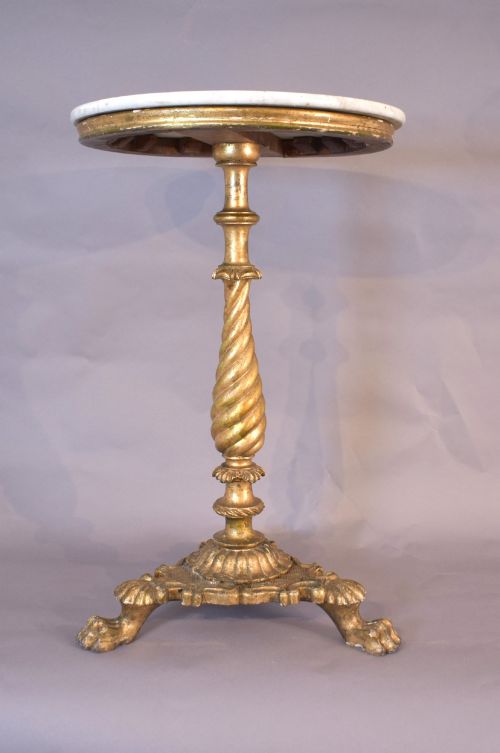
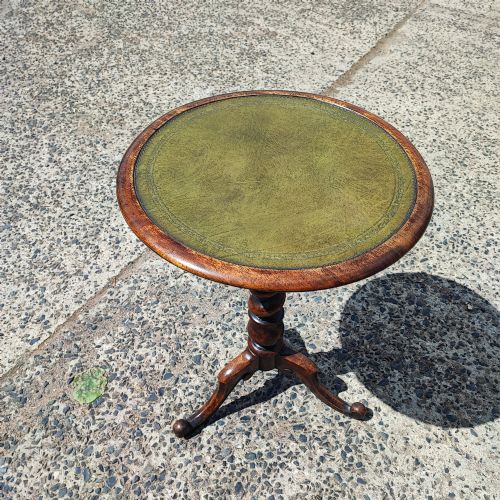
The selections available lean heavily toward nineteenth-century revival styles and Edwardian craftsmanship. Forms range from tripod tables and triform pedestals to classical torchères featuring circular marble or onyx tops.
How they were made
Maker workshops built the structural frames primarily from carved wood, utilising gesso to prepare intricate surface details before applying gold leaf or paint. Brass and cast metals also appear frequently, often combined with onyx or marble inset tops.
Surface ornamentation relies on traditional gilding techniques alongside pressed or chiseled brass work. Artisans deployed neoclassical motifs, floral mouldings, and structural turnings to give these stands architectural weight.
Listings span the 18th, 19th, and early 20th centuries, featuring materials such as giltwood, marble, brass, and gesso.
What varies in quality
Quality rests in the crispness of the carved wood or the precision of the cast metalwork supporting the top. Pieces finished with hand-applied gold leaf display a richer depth compared to simpler painted surfaces.
The integration of inset stone tops, such as genuine marble or onyx, distinguishes finer decorative stands. Structural stability across tripod bases and column shafts dictates how well a pedestal holds weight over time.
The Gold Plant Pedestals Glossary
- Torchère
- A tall, slender stand historically used to hold a candle or lamp, frequently repurposed for plants and urns.
- Gesso
- A plaster-like mixture applied to wood surfaces as a smooth base for subsequent gilding or painting.
- Triform
- Having three sides or feet, commonly seen in the stable tripod bases of classical pedestals.
- Ormolu
- Gilded bronze ornamentation applied to furniture mounts and decorative stands during the eighteenth and nineteenth centuries.
Gold Plant Pedestals: Frequently Asked Questions
How were gold plant pedestals used?
These tall stands served to elevate potted plants, jardinieres, and decorative urns into prominent positions within formal rooms. By lifting greenery off the floor, interiors gained vertical interest and better light exposure for display pieces.
They also functioned as torchères to hold lighting or as occasional tables for display objects. Their placement in corners or beside seating arrangements added structured focal points to period spaces.
How do I live with a gold plant pedestal?
Integrate these stands into modern or traditional rooms as sculptural accents that break up monotonous wall lines. Placing a trailing plant or a ceramic bowl on top allows the gilded surface to frame natural textures.
Ensure the stand rests on a level surface, particularly when supporting heavy marble or onyx tops. Regular dusting with a soft cloth preserves the delicate giltwood and metal finishes without abrasion.
How do I tell periods apart?
Eighteenth-century examples often display deep hand-carving and restrained classical proportions, while nineteenth-century pieces lean into exuberant revival styles. Victorian and Edwardian iterations frequently incorporate pressed brass, onyx, and eclectic revival motifs.
Looking closely at the joining techniques and the composition of the gesso or metalwork reveals the manufacturing decade. Neoclassical columns differ significantly in capital design from later Arts and Crafts or Aesthetic movement variants.
What materials make up these stands?
Construction materials primarily feature carved wood finished with gold leaf, giltwood, or painted surfaces. Gesso underlays provide the base for intricate moulded details on wooden frames.
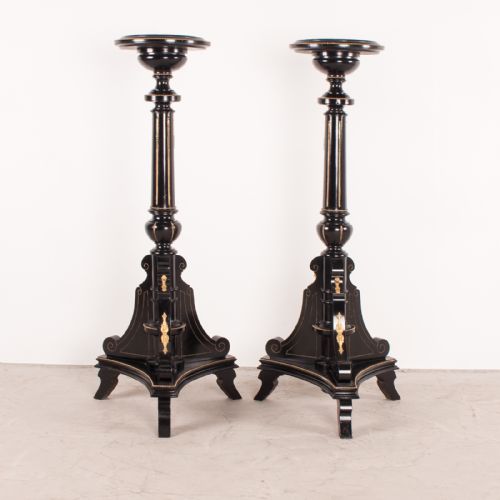
Metal stands utilise brass, cast brass, and ormolu, frequently paired with inset marble or onyx tops. Ebonised woods and contrasting brass components appear across later nineteenth and early twentieth-century examples.