



Gold Pedestal Side Table
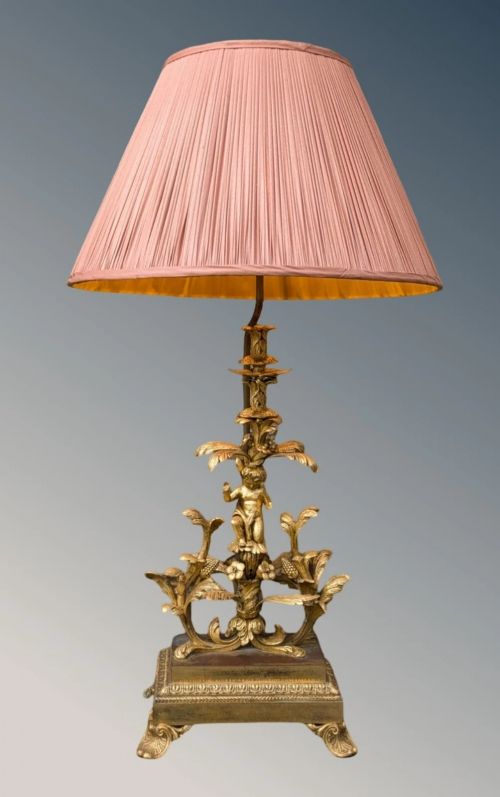
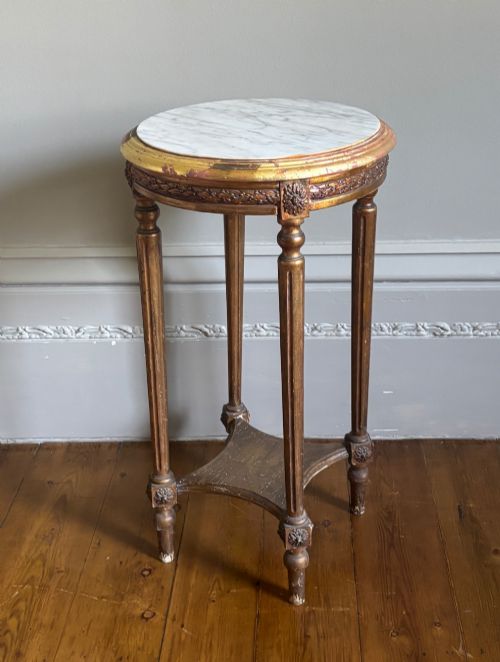
A gold pedestal side table brings structural presence and gilded surface to a room, holding a lamp or holding court beside a chair.

Gold Pedestal Side Table
A gold pedestal side table brings a raised surface supported by a central column, tripod base, or columnar upright, often enriched with giltwood, brass, or gilt bronze. These pieces appear in forms such as occasional tables, wine tables, plant stands, and lamp tables, answering the search for a compact display surface.
The selections span the eighteenth century through the twentieth century, drawing on Regency, French Rococo Revival, French Empire, and Art Deco styles. Mahogany, rosewood, and walnut carcasses meet marble and onyx tops, alongside lacquered and painted finishes.
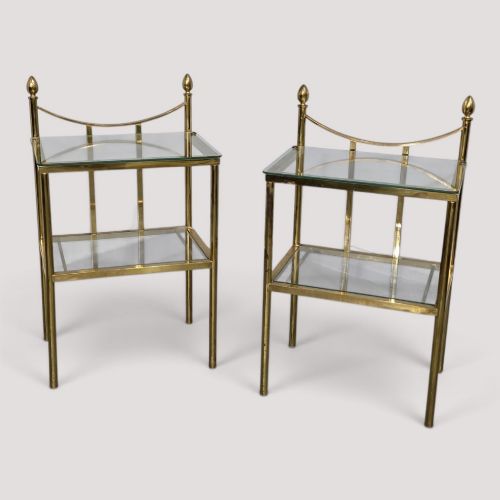
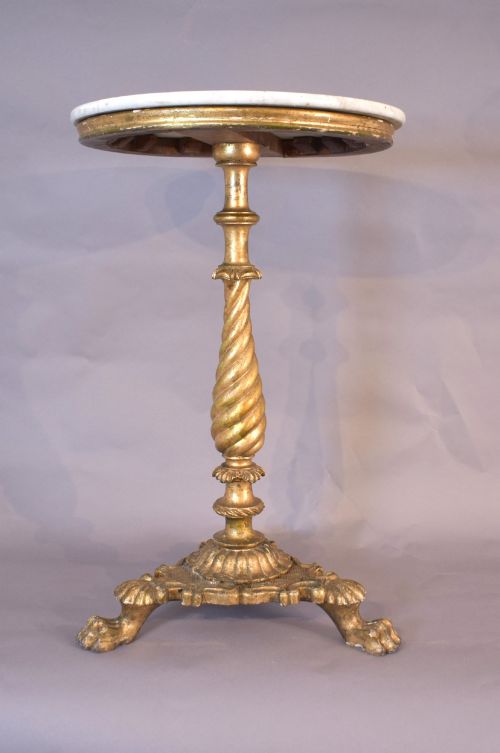
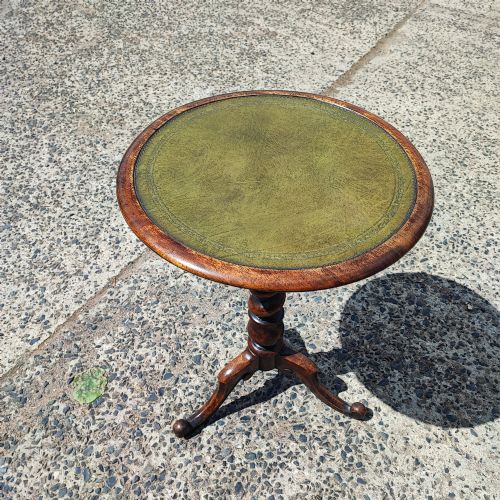
French Chateau and Italian influences surface frequently, alongside English occasional pieces. Buyers encounter round marble tops paired with gilt columns, tripod bases supporting wood surfaces, and brass frames integrated with glass or onyx.
Materials and construction methods
Giltwood, ormolu, and chiseled brass provide the metallic lustre on these frames, applied over woods such as lime wood, mahogany, walnut, and pine. Artisans carved intricate flower mouldings and neoclassical motifs directly into timber before applying gold leaf or paint.
Insets of white and variegated marble or onyx provide stable, polished surfaces for heavy objects like lamps and urns. Turned columns and tripod legs distribute weight evenly beneath these stone tops, anchored by solid joints and central pedestals.
Several tables feature hand-painted floral mouldings that ensure no two floral motifs share the exact same petal count.
Distinctions in craftsmanship
The crispness of carved details in giltwood and the depth of chased work in brass set finer examples apart from simpler production. Hand-applied leaf shows subtle texture and variation compared to flat modern metallic paints.
The selection of stone dictates the character of the piece, with dense, figured marble and rich onyx slabs commanding greater presence than plain timber boards. Structural rigidity in the central column and stability in the tripod base determine how well a table bears weight over time.
The Gold Pedestal Side Table Glossary
- Giltwood
- Timber coated with gold leaf or powder over a prepared gesso ground. This technique gives furniture a warm, reflective metallic surface.
- Ormolu
- Gilded bronze mounts applied to furniture edges and legs. French cabinet makers utilised this technique extensively during the nineteenth century.
- Tripod table
- A small stand supported by three legs radiating from a central pillar. This design ensures stability on uneven floors.
- Onyx
- A banded variety of chalcedony utilised for decorative table tops. It offers a translucent, polished surface with natural mineral patterns.
- Chinoiserie
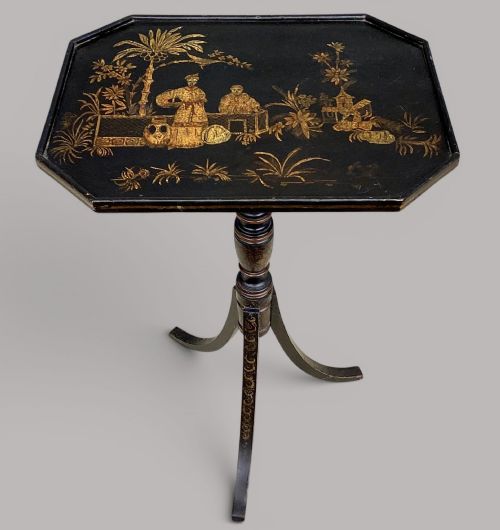
- European decorative motifs imitating Chinese artistic styles. These painted and lacquered finishes appeared frequently on eighteenth and nineteenth-century occasional tables.
Gold Pedestal Side Table: Frequently Asked Questions
What is a gold pedestal side table used for?
These pieces serve as display surfaces for table lamps, small sculptures, or plants beside seating arrangements. Their compact footprint allows them to fit into corners and tight spaces where larger furniture cannot go.
They also function as wine tables or bedside cabinets depending on the surface configuration. The raised pedestal design keeps the visual weight light while providing a sturdy platform.
How do I identify the period of a pedestal table?
Dating relies on combining the stylistic vocabulary, such as Regency curves or Art Deco geometry, with construction methods visible beneath the top. Wood types, screw headings, and the composition of the gesso beneath gilt layers offer clues to the era of manufacture.
Looking at edge profiles on marble slabs and the method of joining the column to the base helps separate nineteenth-century production from later revivals. Comparative examination of hardware and mounting pins confirms the timeline further.
Where should I place a marble top table?
Marble and onyx surfaces handle moisture and heat well, making them practical for holding drinks or illuminated lamp bases. Placing them away from heavy foot traffic protects delicate carved giltwood edges from accidental knocks.
These tables suit drawing rooms, hallways, and studies where their reflective surfaces catch natural light. Pairing them with upholstered seating creates a balanced focal point in a corner or beside a sofa.