
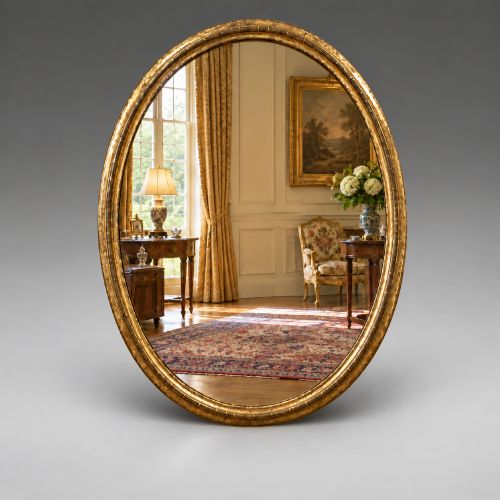
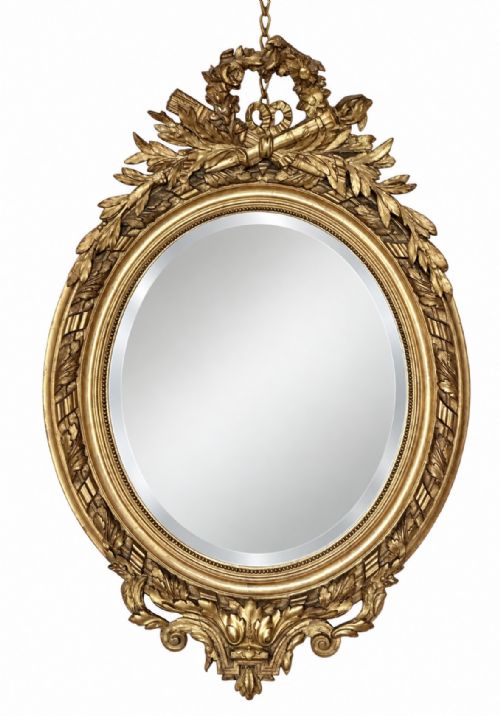
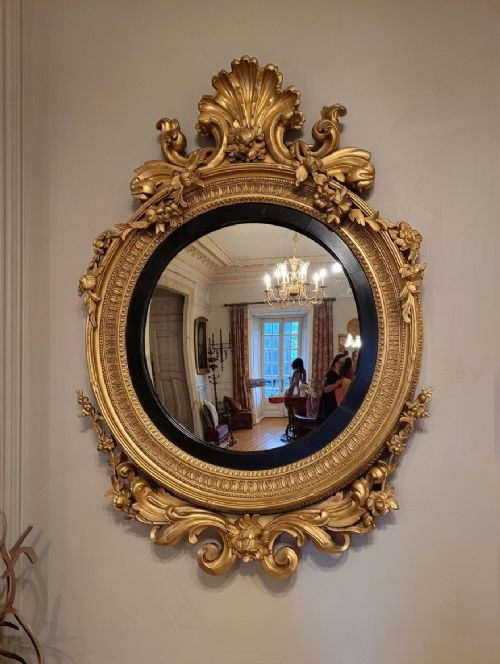
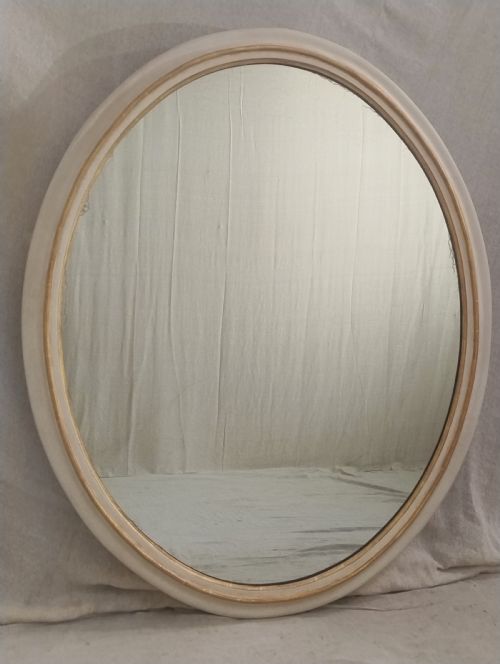


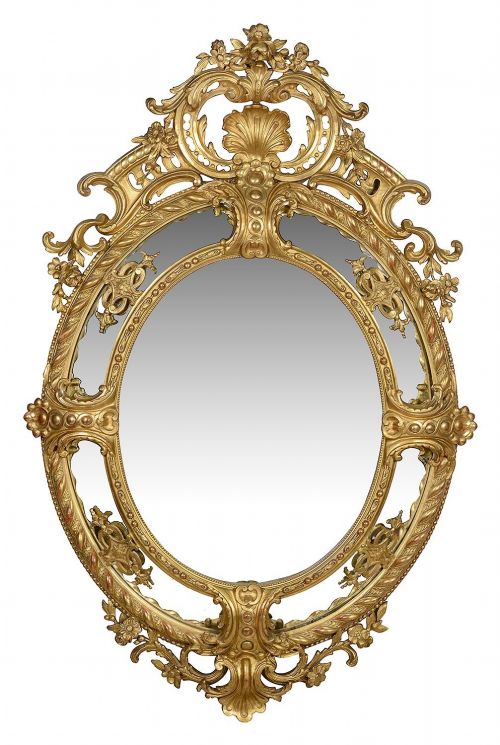


Gold Oval Overmantel Mirror
A gold oval overmantel mirror brings warmth and scale to a room, reflecting light with classic nineteenth-century elegance.
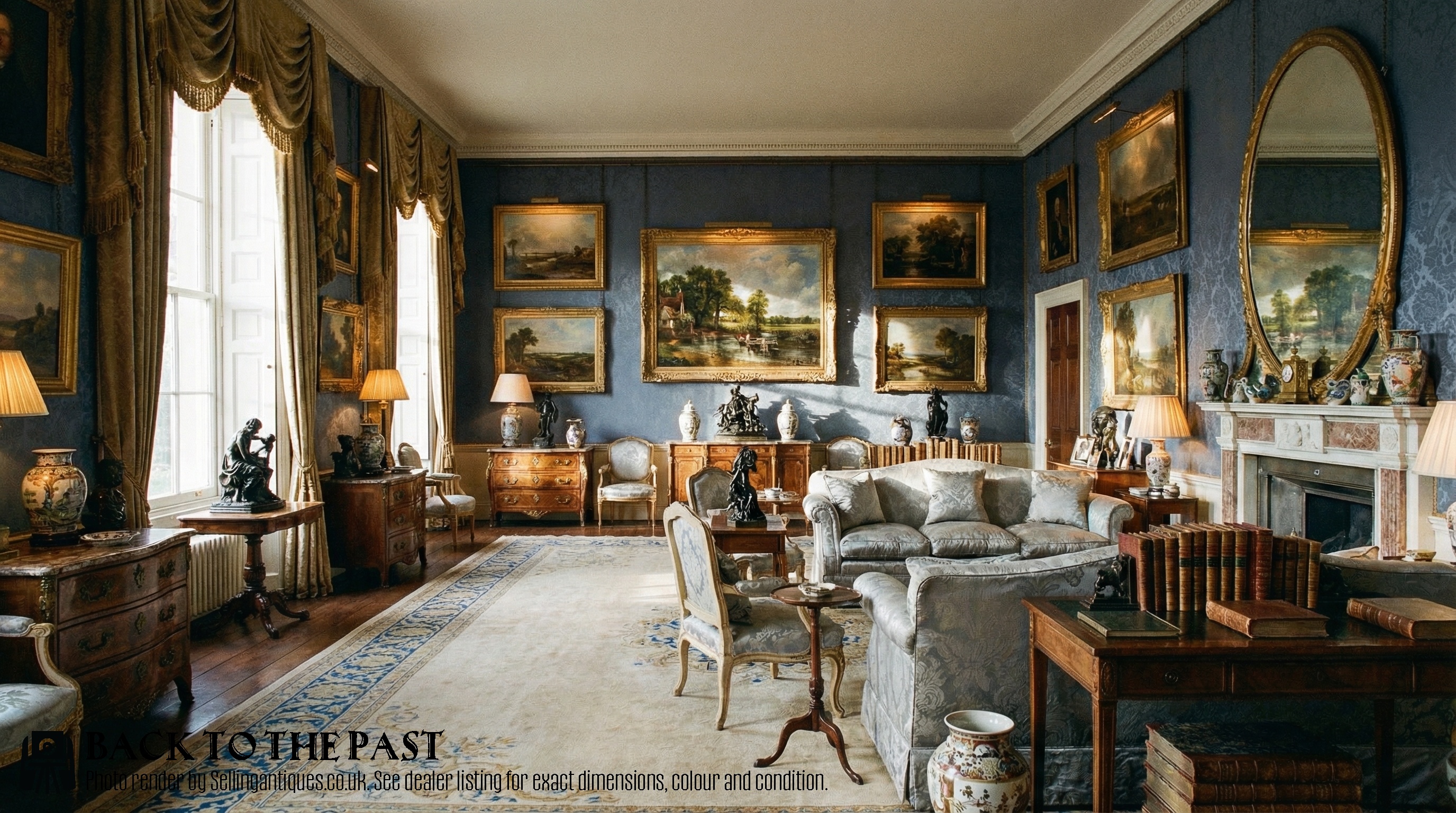
Gold Oval Overmantel Mirror
A gold oval overmantel mirror is a substantial wall piece designed to hang above a fireplace or in a principal reception room. The inventory on this page consists predominantly of nineteenth-century examples, spanning Victorian, Georgian, and Regency periods.
These items function as both architectural elements and decorative focal points within domestic interiors. Styles range from restrained Adam and George III designs to ornate French Rococo Revival and Italianate forms.
How they were made
Frames are constructed from carved wood, often utilising composition or gesso layers to build up intricate surface ornamentation. Gilding is applied using gold leaf or gold paint to achieve a brilliant metallic finish.
Mirrored glass is set within these frames, occasionally featuring bevelled edges or cushion profiles. Structural integrity is maintained through traditional joinery suited to large wall-hanging furniture.
Some frames include secret little carved wooden flourishes that only reveal themselves when caught by evening candlelight.
What varies in quality
The sophistication of the carved detail distinguishes standard production from superior craftsmanship. Crisp execution in wooden mouldings and refined application of the gesso indicate higher workshop standards.
Proportion and scale also define the tier of a piece, with balanced architectural proportions commanding greater presence. Preservation of the original gilding and glass plate contributes significantly to the overall merit of the object.
The Gold Oval Overmantel Mirror Glossary
- Overmantel mirror
- A large wall glass specifically proportioned to hang directly above a mantelpiece. These pieces often feature horizontal or vertical ovals designed to echo the hearth below.
- Giltwood
- Timber that has been coated with a thin layer of gold leaf or gilt finish. It provides the characteristic bright surface seen on formal antique frames.
- Gesso
- A plaster-like mixture applied to wood bases to create a smooth surface for carving and gilding. It allows for intricate relief decoration on frame borders.
- Parcel gilt
- A finishing technique where portions of an object are gilded while other areas show exposed wood or ebonised surfaces. This creates contrast across the frame.
- Cushion mirror
- A frame profile featuring a convex or curved shape that swells outward from the wall. This design reflects light from multiple angles across the room.
Gold Oval Overmantel Mirror: Frequently Asked Questions
Where should I hang an overmantel mirror?
These mirrors traditionally sit above a fireplace mantel to anchor the chimney breast and brighten the space. They also function effectively in hallways and large reception rooms as principal wall ornaments.
Ensure the wall construction supports the considerable weight of a large wooden frame. Professional fixings matching the scale of the piece are essential for safe hanging.
How do I identify a Victorian mirror?
Victorian examples often display heavy ornamentation, including Rococo Revival curves or deep moulded frames. They frequently incorporate gesso details over carved wooden foundations.
Construction methods and backboards can offer further clues to the period. Examining the fixings and the ageing of the mirror glass helps confirm nineteenth-century manufacture.
What is the difference between George III and Regency styles?
George III mirrors often exhibit classical symmetry, intricate carved wood, and refined Adams or Chippendale motifs. They reflect the balanced proportions popular during the Georgian era.
Regency designs tend toward bolder classical revival elements, such as laurel wreaths or friezes. These pieces date from the early nineteenth century and introduce distinct neoclassical influences.
Can these mirrors be cleaned safely?
Dust the carved frame gently with a soft dry brush to protect the delicate gilt surface. Avoid moisture or chemical cleaners on antique gold leaf to prevent flaking.
Clean the glass plate with a mild glass cleaner applied to a cloth rather than sprayed directly onto the mirror. This prevents liquid from seeping behind the frame edges and damaging the backing.