
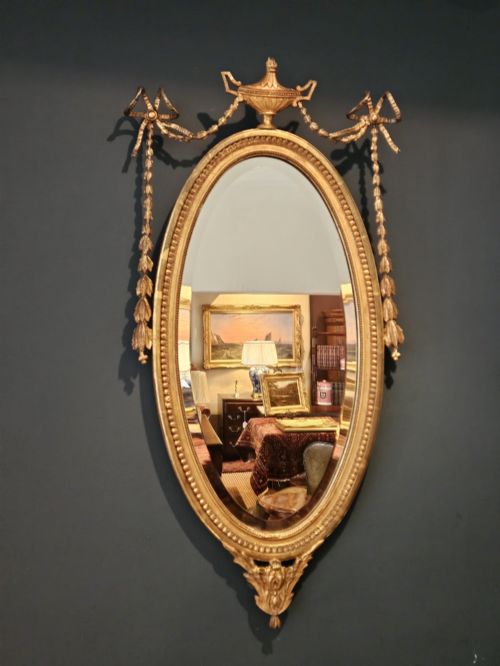
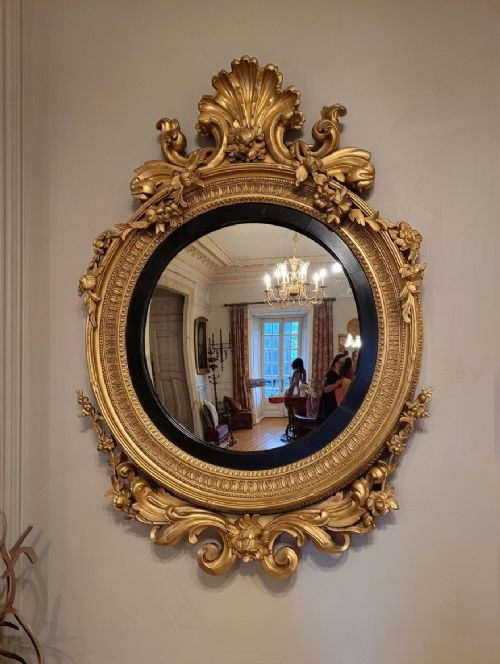


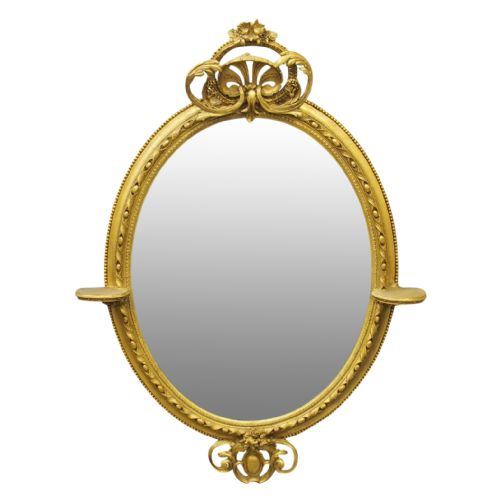

Giltwood Oval Mantle Mirror
A giltwood oval mantle mirror brings warmth and formal balance to a room, catching the light in a way few other furnishings can.
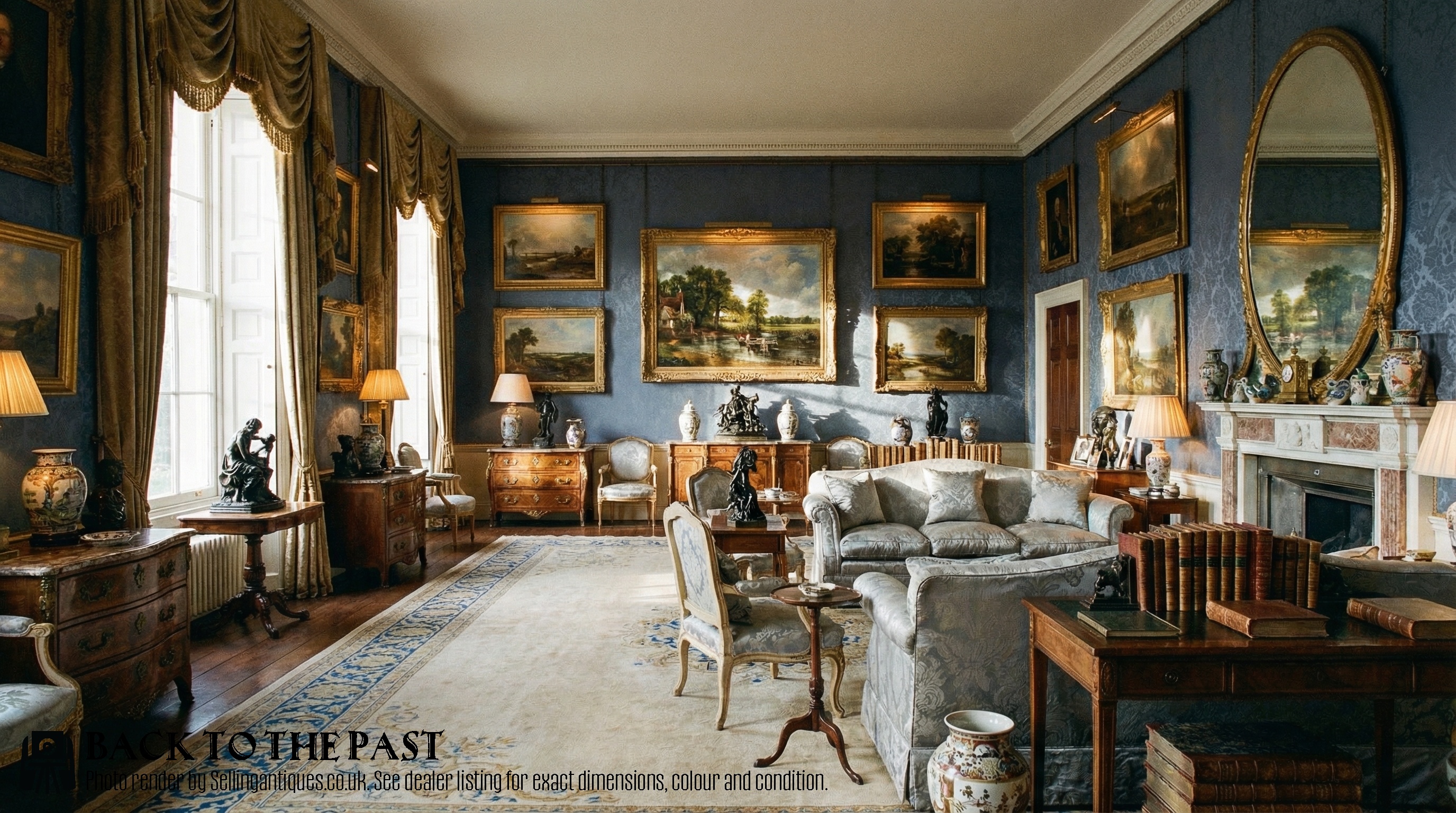
Giltwood Oval Mantle Mirror
When you search for a giltwood oval mantle mirror, you are looking at decorative wall pieces designed to sit above a fireplace or upon a principal wall. These objects bridge the gap between architectural fittings and domestic furnishings, serving both practical and ornamental purposes in period interiors.
The versions you are most likely to meet on this page span the Georgian, Regency, and Victorian eras. They appear in forms ranging from simple hanging wall glasses to substantial overmantel mirrors intended for grand reception rooms.
Originating largely from nineteenth-century English and continental workshops, these mirrors frequently showcase classical revival influences. They combine curved timber frames with reflective glass to create a focal point that opens up darker interior spaces.
How they were made
The construction of a giltwood oval mantle mirror relies on a wooden base carcass, often carved from mahogany or soft timber, built to support the weight of heavy mirror glass. Craftsmen applied layers of gesso to the carved wooden foundation to create a smooth, responsive surface for subsequent ornamentation.
Moulded composition ornaments were frequently applied over the gesso ground to form intricate decorative details such as foliate scrolls, beads, or classical motifs. Guilders then finished the pieces by laying fine sheets of gold leaf or applying gold paint over the prepared surfaces.
Current listings feature pieces spanning the eighteenth to the nineteenth centuries, utilising materials such as giltwood, gesso, composition, and mahogany.
What varies in quality
The distinction between ordinary examples and superior pieces rests upon the crispness of the hand-carved detail beneath the gilding and the depth of the gold leaf itself. Hand-carved wooden ornament shows sharp, clean undercut edges, whereas inferior pieces rely heavily on thick, rounded composition mouldings that blur the underlying design.
The quality of the mirror glass also determines the character of the piece, with older plates often displaying subtle distortions, foxing, or bevelled edges that reflect light unevenly. Additionally, the survival of the original gilding without excessive over-painting or flaking marks the difference between a well-preserved survivor and a heavily restored item.
The Giltwood Oval Mantle Mirror Glossary
- Giltwood
- Timber that has been coated with gold leaf or gold paint. This finish gives the frame its characteristic metallic brilliance and protects the wood beneath.
- Gesso
- A plaster-like mixture applied to the carved wooden frame to provide a smooth surface for gilding. It allows craftsmen to impress sharp decorative details before applying gold leaf.
- Overmantel mirror
- A large wall glass specifically proportioned to hang above a fireplace mantle. These pieces were often designed to complement the architecture of the chimney breast.
- Regency
- An English design period spanning the early nineteenth century. Furniture from this era often incorporates classical Greek, Roman, and Egyptian motifs with clean, bold lines.
- Composition
- A moulded mixture of whiting, resin, glue, and oil pressed into ornamental shapes. It provided a cost-effective alternative to hand-carving intricate frame details.
Giltwood Oval Mantle Mirror: Frequently Asked Questions
How do I clean an antique giltwood frame?
Dust the surface gently with a soft, dry artist's brush or feather duster. Moisture and modern chemical cleaners will strip the delicate gold leaf and gesso layers from the wood.
Keep the mirrors away from direct sources of heat and damp environments. Stable room conditions prevent the timber frame from warping and the gesso from cracking.
How do I tell Regency mirrors apart from Victorian ones?
Regency mirrors lean towards restrained classical lines, often featuring rope twists, ball accents, and architectural motifs. They reflect the early nineteenth-century fascination with antiquity.
Victorian pieces tend to be heavier and more exuberant, incorporating dense foliate carving and Rococo revival scrolls. The frames often employ composition mouldings more heavily than earlier handmade examples.
Can I place these mirrors in a hallway?
Smaller oval wall mirrors suit narrow spaces like hallways and landings perfectly. Their curved shape softens rectangular corridors and bounces available daylight into darker corners.
Ensure the hanging height allows viewers to see their reflection comfortably. Positioning the glass opposite a doorway or window maximises the illusion of space.