

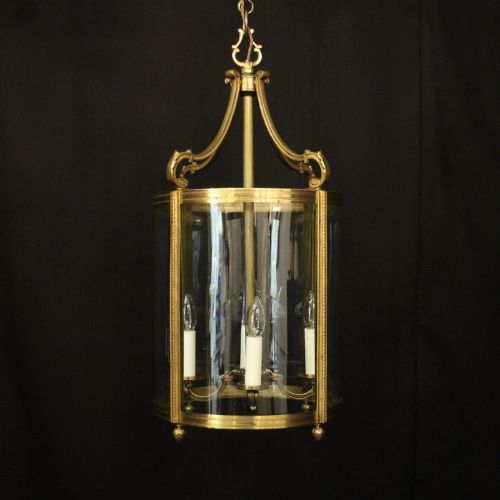
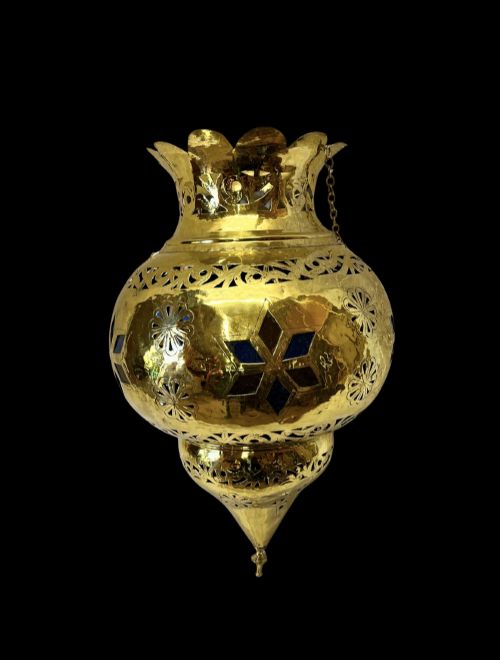


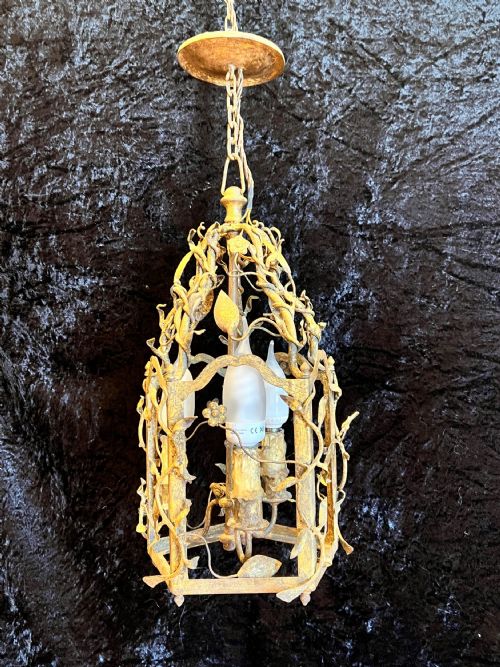

Gold Metal Hanging Lantern
A gold metal hanging lantern brings warmth and definition to a hallway or entrance, offering decorative presence combined with practical illumination.
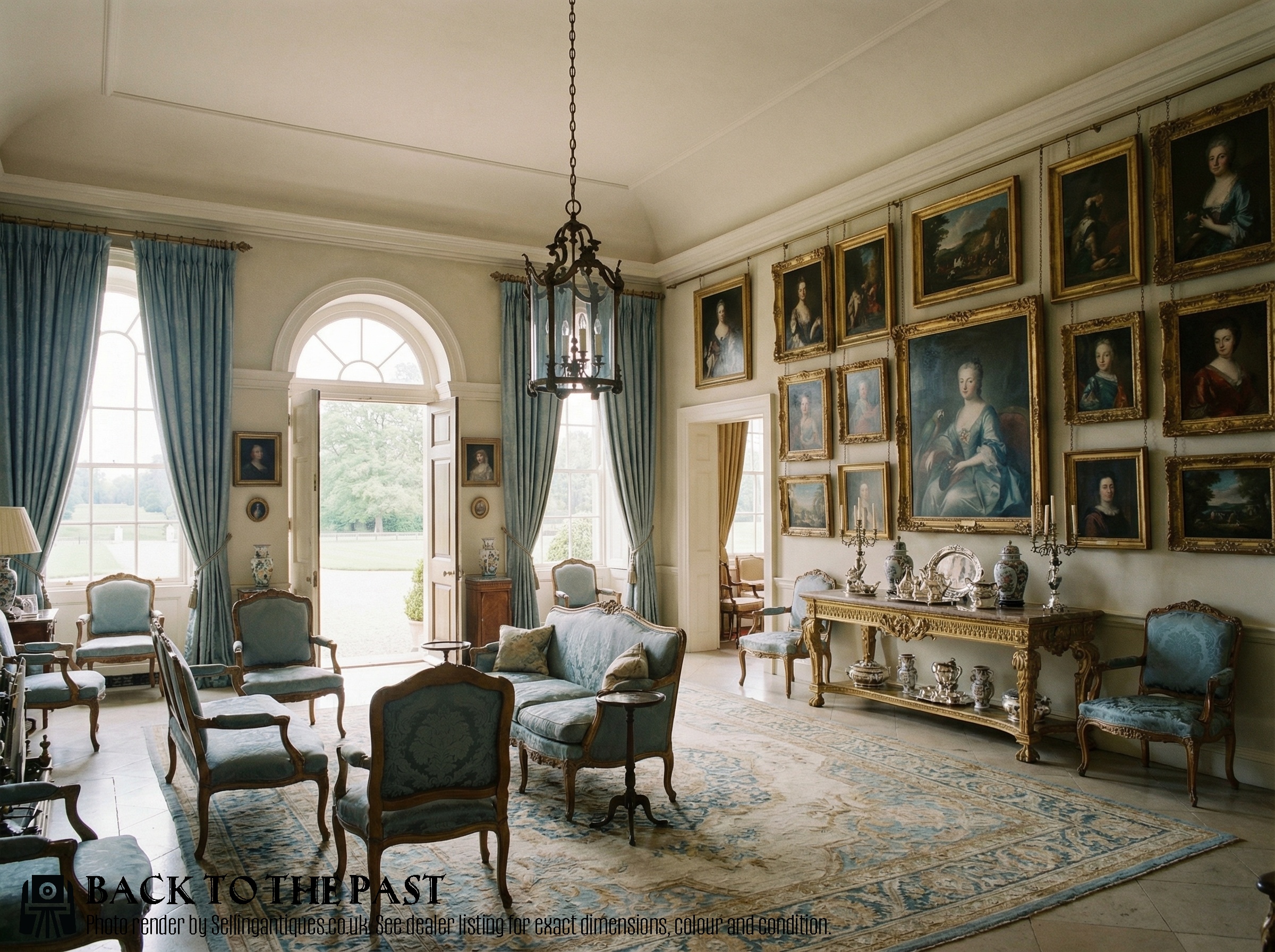
Gold Metal Hanging Lantern
A gold metal hanging lantern combines metallic framing with glass panels to create an overhead light source suited for corridors and entryways. These pieces originate from periods spanning the late nineteenth century through to the interwar decades, taking forms such as hall lanterns, pendant lights, and multi-light chandeliers.
The versions most frequently met on this page include French hall lanterns rendered in gilded bronze or brass alongside English and Italian examples. Styles range from French neo-classical and Rococo revival designs to Moorish revival and art nouveau pieces.
Makers and designers drew inspiration from historical interiors, producing hexagonal and convex configurations that accommodate single bulbs or multi-light arrangements. Their primary function remains the distribution of ambient light within domestic circulation spaces.
Materials and construction methods
Construction relies upon metals such as brass, bronze, and ormolu subjected to gilding processes to achieve a gold-coloured finish. Structural frames are cast or pierced, holding panels of glass, cut glass, lead crystal, or bevelled glass in place.
Individual components are assembled using mechanical joints, screws, and solder, with many surviving examples subsequently adapted for electrical wiring. Pierced brass work and ornate metal framing demonstrate the metalworking techniques of the nineteenth and early twentieth centuries.
Some lanterns were designed specifically to mimic the grandeur of the Palace of Versailles, bringing royal proportions to modest Victorian hallways.
Distinguishing quality across examples
The standard of a gold metal hanging lantern depends upon the weight and finish of the metal casting, alongside the complexity of the decorative chasing and piercing. Heavier gilded bronze or ormolu mounts display sharper detail than simpler pressed brass alternatives.
Glass selection further differentiates the range, with bevelled plates, cut glass, and lead crystal contributing greater optical depth than plain sheet glass. The fidelity of historical revival styles, such as those referencing French chateau or neoclassical interiors, indicates the skill of the original workshop.
The Gold Metal Hanging Lantern Glossary
- Gilded Bronze
- Bronze that has been coated with a thin layer of gold or gold leaf to produce a durable metallic finish. This material is frequently found in French hall lanterns from the nineteenth and early twentieth centuries.
- Ormolu
- Finely chased or cast bronze that has been mercury-gilded, creating a bright gold appearance. It was widely utilised in decorative lighting during the nineteenth century.
- Lead Crystal
- High-clarity glass containing metal oxide that increases weight and refractive index. It scatters light effectively when used in lantern panels and chandeliers.
- Convex Glass
- Curved glass panes that project outward from the metal frame, altering the diffusion of light. This feature appears on several French hall lanterns in the listings.
- Hall Lantern
- An enclosed ceiling-hung light fixture designed specifically for narrow domestic spaces like corridors and vestibules. These pieces typically feature metal frames enclosing glazed sides.
Gold Metal Hanging Lantern: Frequently Asked Questions
Where should I hang a gold metal hanging lantern?
These lanterns suit entryways, hallways, and stairwells where overhead lighting serves as a primary source of illumination and an architectural feature. Their enclosed design directs light downward and outward through the glass panels.
Ceiling height dictates the drop required, and many examples allow for adjustable suspension chains or rods to suit the proportions of the room.
Are these lanterns wired for modern electricity?
Most pieces on this page have been electrified for contemporary domestic use, often adapting historical fittings to house standard internal bulbholders.
Rewiring may be undertaken by a qualified professional to ensure compliance with current electrical safety standards while preserving the original metal and glass structure.
How do I date a gold metal hanging lantern?
Dating relies upon stylistic indicators such as the asymmetry of art nouveau curves, the neoclassical symmetry of French revival designs, or the geometric patterns of the 1920s and 1930s.
Material composition, manufacturing techniques like casting marks, and the type of glass used also provide evidence for the period of manufacture.
How do I clean and maintain the glass and metal?
Maintenance involves dusting the metal framework with a dry cloth and using a mild glass cleaner applied to a cloth rather than directly onto the glass panels. This prevents moisture from seeping into historical joints or electrical components.
Harsh chemical polishes should be avoided on gilded surfaces to prevent wearing away the gold finish over time.