




Gold Metal Candlestick Holders
Gold metal candlestick holders bring warmth and formal structure to a room, cast in brass, bronze, and ormolu from the eighteenth century to the twentieth.
Gold Metal Candlestick Holders
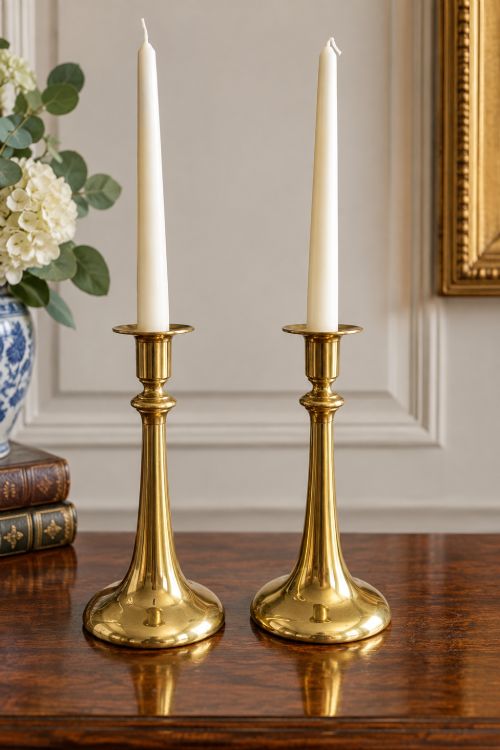
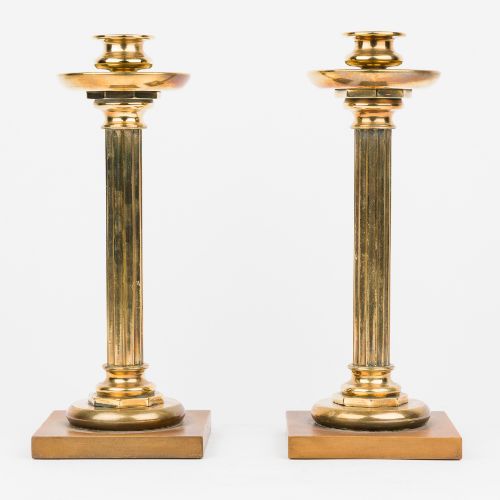
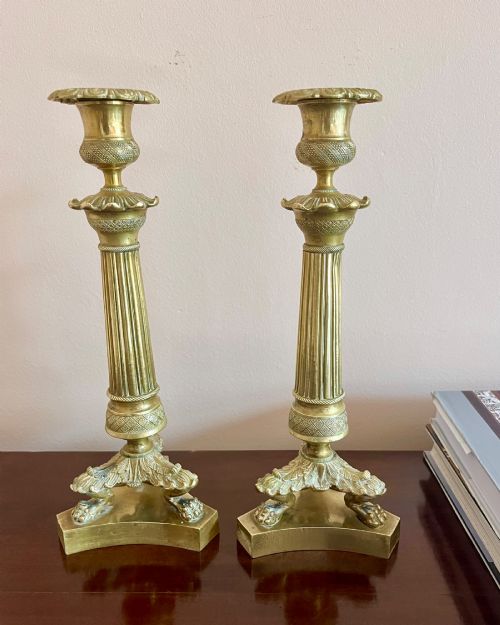
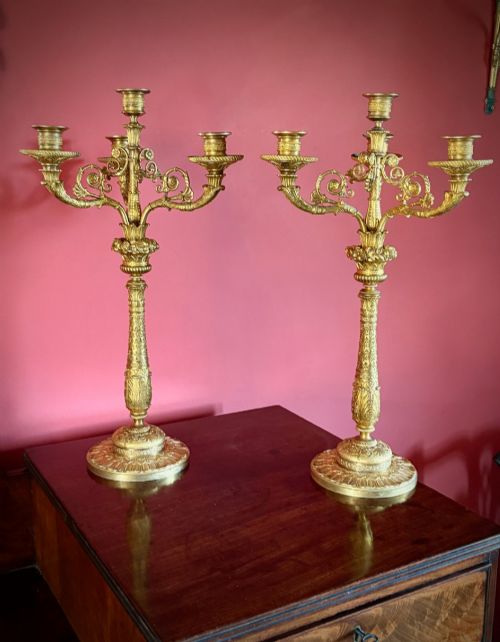
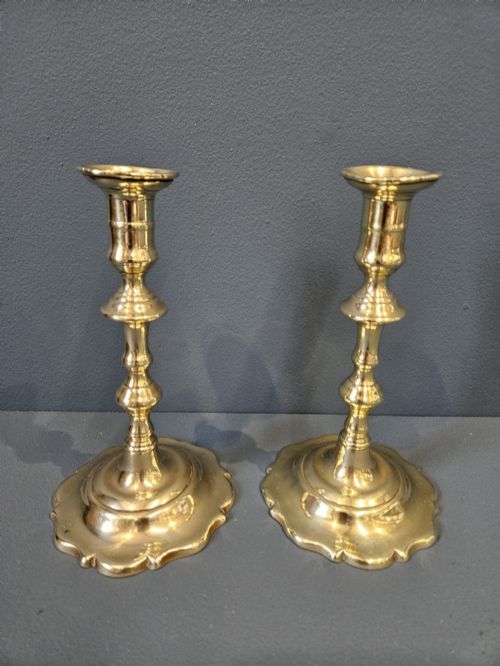
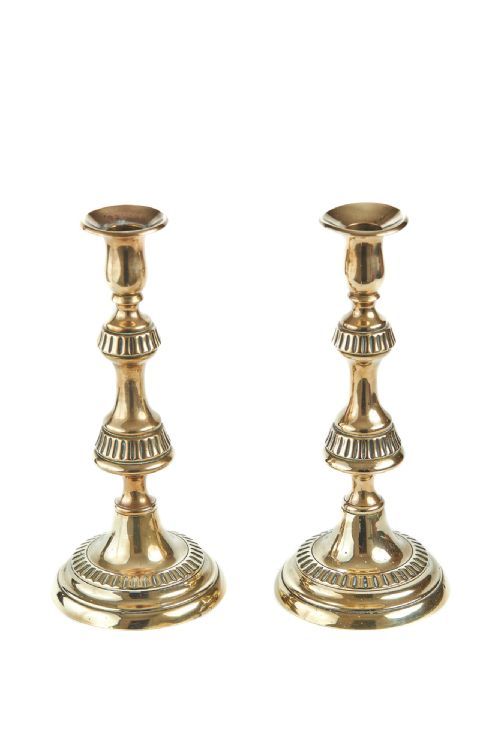
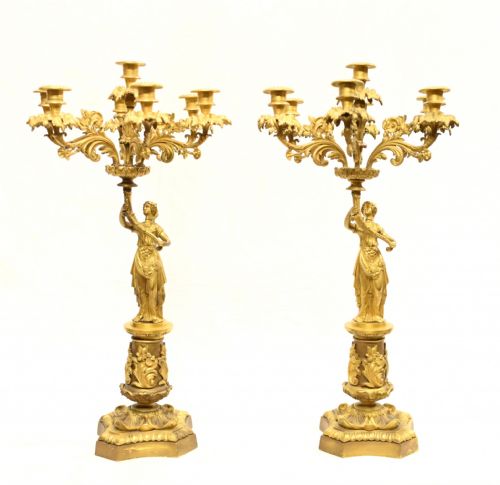
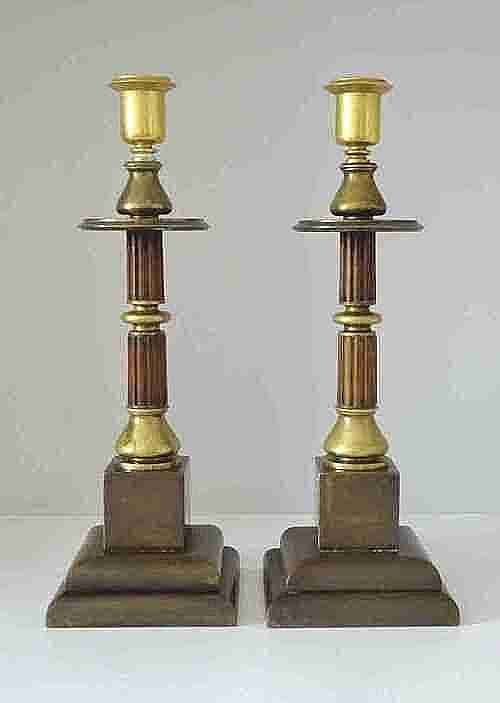
When you search for gold metal candlestick holders, you encounter items predominantly formed from brass, ormolu, and gilt bronze across multiple centuries. The selection on this page ranges from Georgian and Regency pairs to Victorian, Edwardian, and Art Deco designs. Most pieces take the form of paired candlesticks or multi-branched candelabra intended for tabletop or mantle placement.
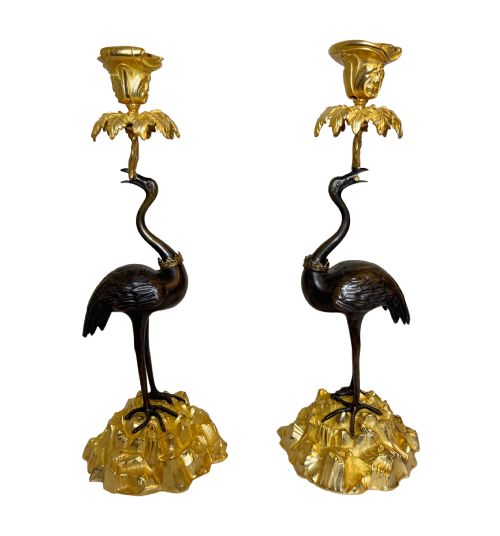
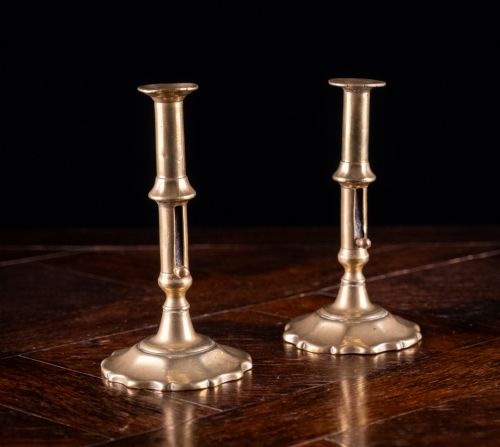
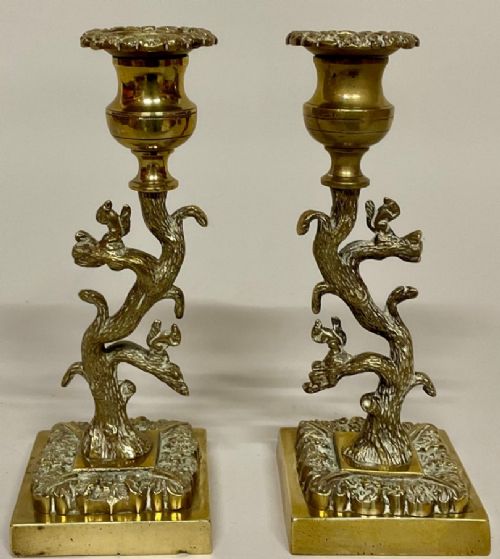
The styles span classical revival periods, including French Empire, French Rococo, and George III, alongside occasional Arts and Crafts or Art Nouveau interpretations. Heavy brass and cast bronze dominate the domestic nineteenth-century items, whilst earlier examples incorporate bell metal or specialised mechanical forms like telescopic shafts. You also find figurative and sculptural variants, such as trees with squirrels or flamingo motifs, alongside standard campana sconces and square bases.
Continental pieces from France and Italy appear frequently alongside English items, bringing distinctive gilt metal, slate, and marble combinations. Whether you encounter tall Victorian examples or seventeenth-century brass work, the primary function remains supporting taper candles while providing a reflective golden metallic surface.
Materials and Working Methods
The foundational material across the majority of items is brass or bronze, often finished with fire-gilding to create ormolu or gilt bronze surfaces. Makers utilised casting techniques, producing seamed bronze components or solid cast brass pieces that were subsequently turned on a lathe and hand-finished. Complex forms like French candelabra combine cast bronze bodies with applied ormolu mounts, sometimes incorporating marble or slate plinths for added weight.
Surface treatment defines the appearance of these objects, relying on the natural warmth of polished brass or the rich golden lustre of mercury gilding on bronze. Decorative details such as champllevé enamel, intricate chasing, and stamped maker marks like the Queen of Diamonds add textural variety to the cast metal frames.
Listings feature brass, ormolu, and bronze pieces spanning from the seventeenth century through the Art Deco period.
Distinctions in Execution and Finish
Quality rests in the crispness of the chasing and the weight of the cast metal, separating finely detailed sculptural castings from simpler production items. Superior pairs exhibit deep, clean relief work on foliage, animal motifs, or architectural mouldings, whereas lesser examples show softer edges and shallower detail from worn moulds.
The integrity of the gilding and the precision of the assembly further divide standard utility pieces from exhibition-grade works. Original fire-gilding on ormolu retains a deep, shimmering golden depth that mechanical plating fails to replicate, and components fitted together with tight, secure mechanical joints demonstrate superior workshop standards.
The Gold Metal Candlestick Holders Glossary
- Ormolu
- Gilded bronze, typically produced using a mercury amalgamation process on cast bronze objects during the eighteenth and nineteenth centuries. This finish gives a rich golden surface that resists tarnish.
- Campana
- A bell-shaped socket or sconce found at the top of many candlesticks and candelabra. It mimics the profile of classical Roman pottery.
- Pricket
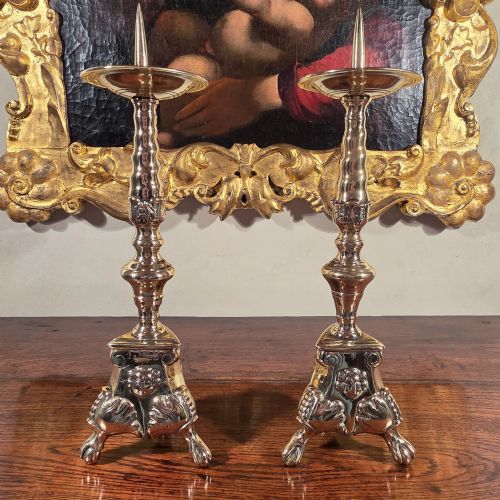
- A sharp metal spike set in the drip pan to impale a candle, rather than a socket to hold it. This form is common in medieval and early ecclesiastical metalwork.
- Candelabra
- A branched candlestick holding multiple lights from a single base. They often feature removable arms to allow conversion into single candlesticks.
- Bell Metal
- An alloy of copper and tin traditionally used for bells, adapted for heavy cast candlesticks. It produces a resonant tone when struck and takes a fine polish.
Gold Metal Candlestick Holders: Frequently Asked Questions
Were these holders made as pairs?
Many metal candlestick holders and candelabra were produced and sold as matched pairs to flank mantelpieces or sideboards. Single survivors also appear frequently from earlier centuries.
Matching pairs command stronger interest from collectors seeking formal symmetry. Minor variations in height or casting detail often indicate hand-finished work rather than factory standardisation.
What is a telescopic candlestick?
Telescopic candlesticks feature an adjustable inner shaft that raises or lowers the candle height. Patents like the Harrison version allowed users to adapt the light level for writing or dining.
Inspect the sliding mechanism for smooth movement without excessive wobble. Original thumb screws or friction stops confirm the period functionality.
How do I identify French empire style?
French Empire pieces rely on classical antiquity, featuring strict symmetry, dark patinated bronze, and bright ormolu mounts. Common motifs include laurel wreaths, sphinxes, swans, and military trophies.
These items date predominantly to the early nineteenth century under Napoleonic influence. The combination of black slate bases and gilt bronze is a hallmark of the period.