
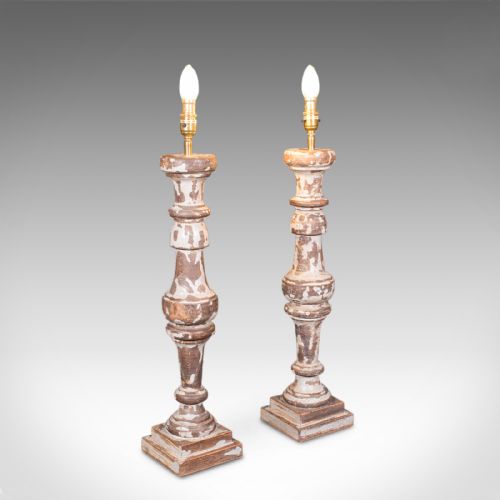


English Victorian Candlesticks
Solid english victorian candlesticks bring warmth and period character to a room, cast in heavy brass, silver plate and porcelain.
English Victorian Candlesticks
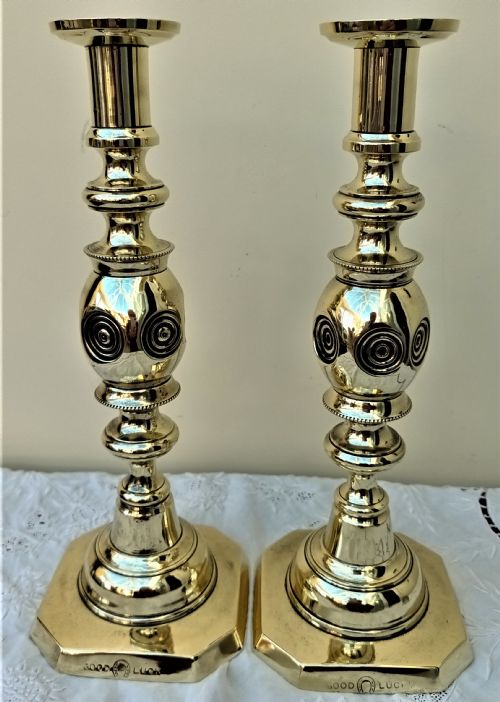
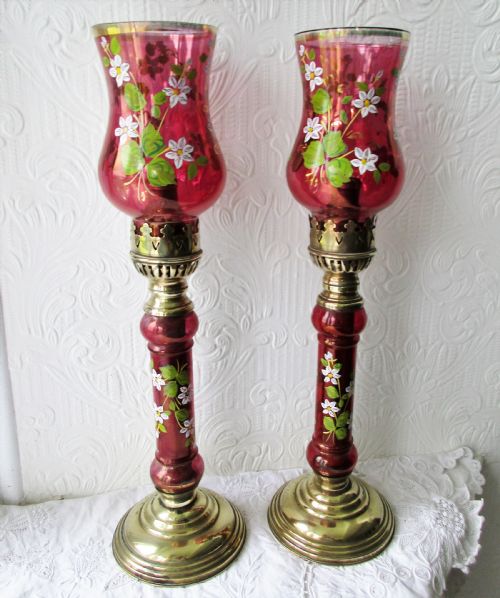
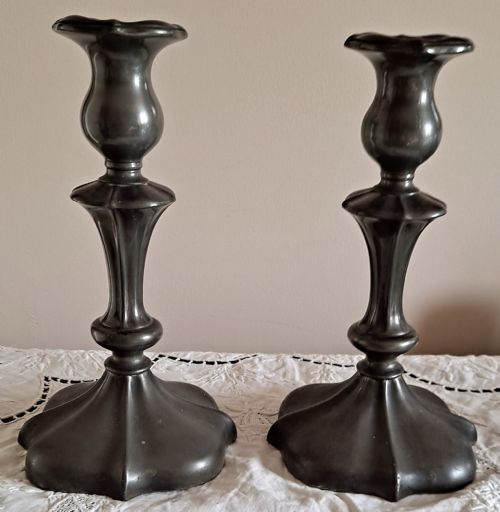
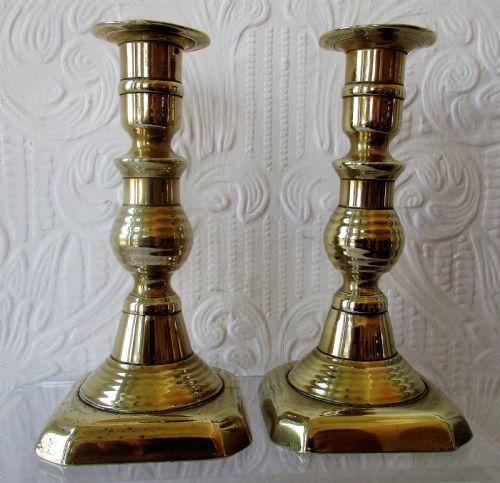
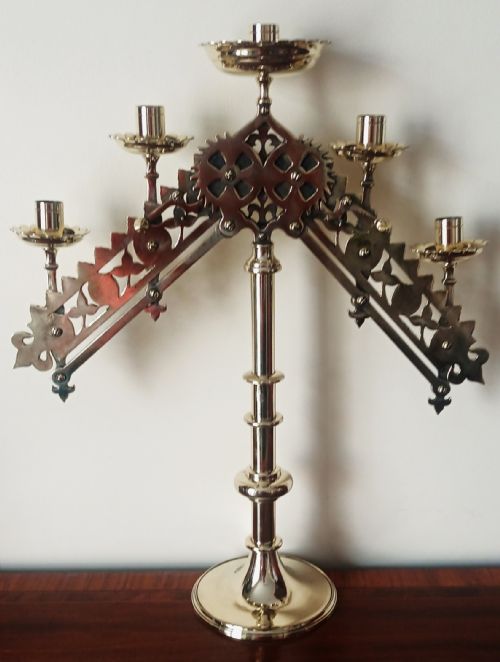
These english victorian candlesticks encompass sturdy chambersticks, tall column table lamps, and heavy altar candelabra designed for domestic illumination. Brass examples dominate the selection, often paired with silver plate, pewter, and ruby glass elements.
Makers utilised distinct aesthetic shifts during the period, moving from early gothic revival oak and sterling silver down to later arts and crafts pewter and neoclassical brass forms. Buyers encounter paired items frequently, alongside single desk candlesticks and postal scales adapted for candle use.
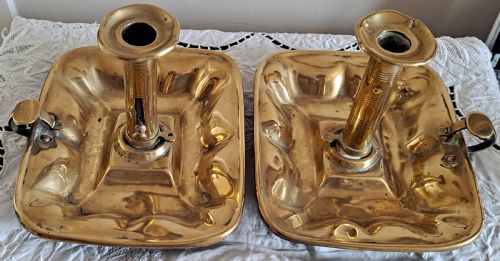
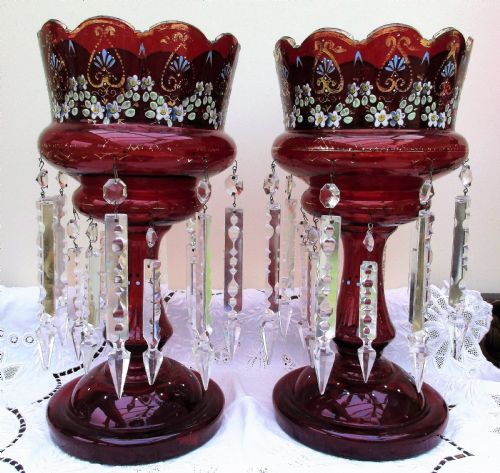
The objects reflect the domestic habits of the nineteenth century, ranging from simple bedroom chambersticks with loop handles to decorative mantelpiece lustres hung with crystal drops. Walnut, marble, and porcelain appear in specific regional designs like doulton lambeth or minton figures.
Materials and Technique
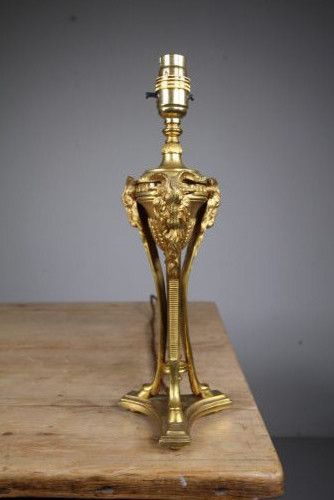
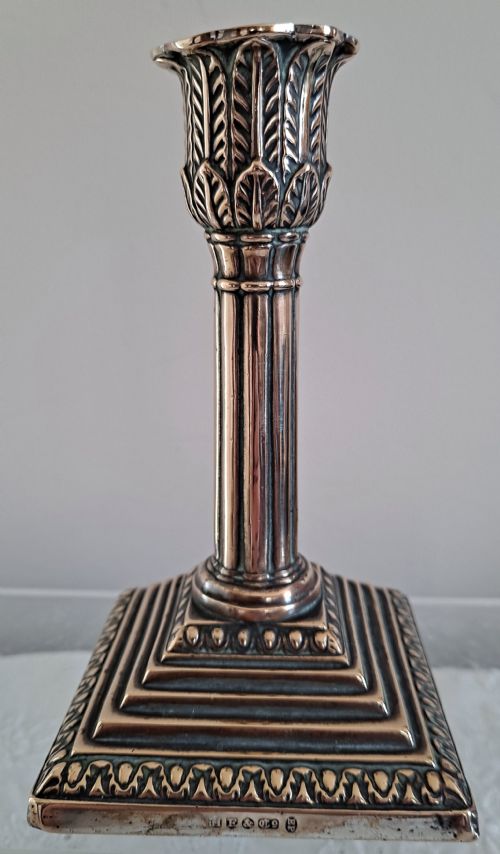
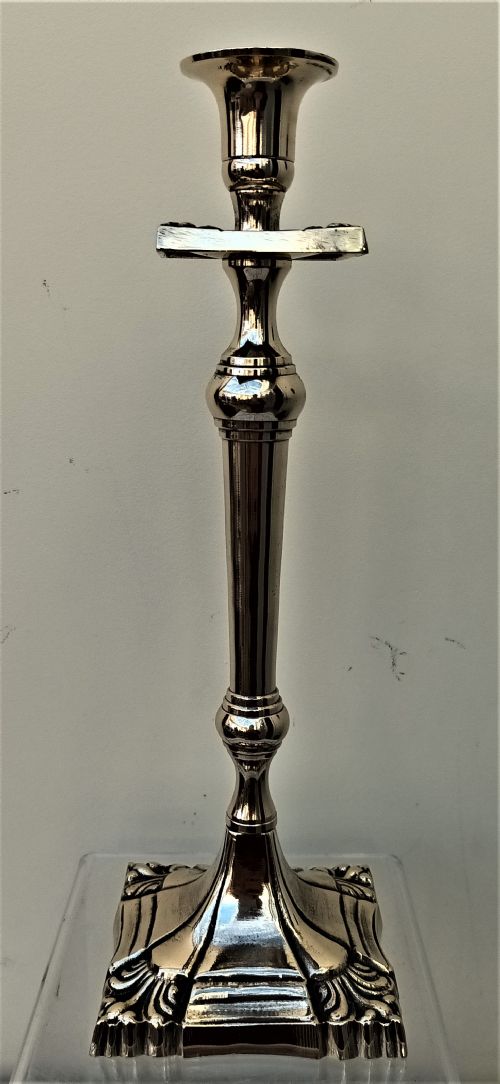
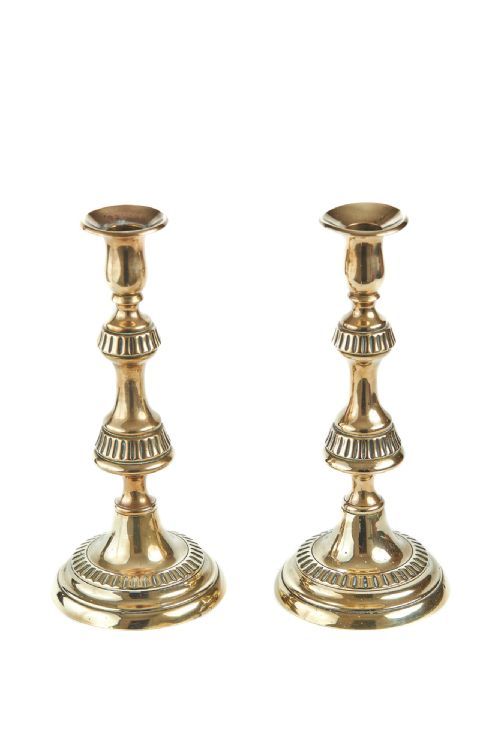
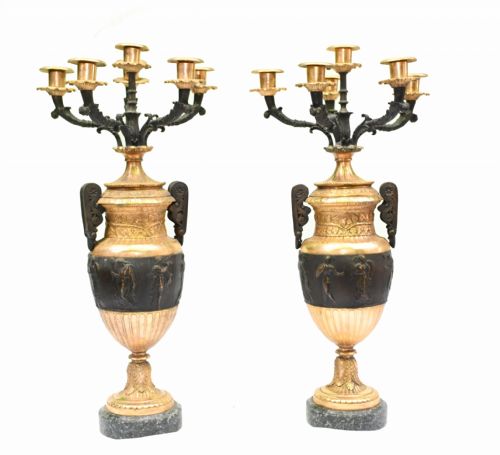
Foundry work relied on heavy cast brass and ormolu, shaped into fluted corinthian columns or articulated arms that pivoted to direct light. Silver plating techniques applied thin coats over base metal substrates, while pewter was cast into simpler art nouveau profiles.
Pottery components combined moulded ironstone and porcelain with hand-painted glazes, evident in earthenware styles from minton and mason's. Woodturning produced spiral walnut carver shafts, and glassmakers formed ruby glass lustres by casing clear glass with coloured layers before cutting.
The inventory records pieces originating from the georgian, victorian, and edwardian eras.
Evaluating Quality
Weight and casting crispness distinguish superior metalwork, where chased details on rams heads and foliate mounts remain sharp rather than smoothed over from worn moulds. Silver plated surfaces show longevity through the thickness of the deposit over the underlying metal.
Completeness dictates value in glassware and ceramics, requiring intact crystal drops on lustres and undamaged porcelain figures without restoration. Articulated joints and mechanical actions on candelabra must move smoothly without play or loose pins.
Benhan and Froud·Thomas Hope·Ratcliff Birmingham·Doulton Lambeth·Minton·Holtzapffel·Mason's·Elkington
The English Victorian Candlesticks Glossary
- Chamberstick
- A low candlestick fitted with a saucer base and a loop handle for carrying a candle from room to room.
- Lustre
- A decorative ceramic or glass vase hung with cut crystal prisms designed to reflect candlelight.
- Ormolu
- Gilt bronze mounted onto furniture or lighting fixtures to provide a bright metallic gold finish.
- Candelabra
- A branched candlestick holding multiple candles on a single weighted base.
- Corinthian Column
- A classical architectural shaft topped with acanthus leaves, frequently adopted for tall table lamps.
English Victorian Candlesticks: Frequently Asked Questions
How do I clean old brass?
Warm soapy water and a soft brush remove surface dust without disturbing the aged patina accumulated over decades of use.
Harsh chemical polishes strip away the natural dark oxidation that collectors prefer to see on nineteenth-century metalwork.
Were these electrified later?
Many surviving examples have been converted to house electrical wiring for safe modern tabletop illumination.
Original wick holders and snuffers often remain intact on pieces that retained their primary domestic function.
How do I spot silver plate?
Silver plated items show base metal glowing through high points where cleaning wore away the thin precious coating.
Hallmarks appear rarely on plated wares compared to solid sterling silver pieces manufactured in the same era.
Why do some pairs differ?
Hand casting methods meant individual pieces cooled and finished by hand display subtle variations in height and weight.
Matching sets assembled later in the nineteenth century often exhibit minor discrepancies in chased surface ornament.