






Gold Leaf Wall Table
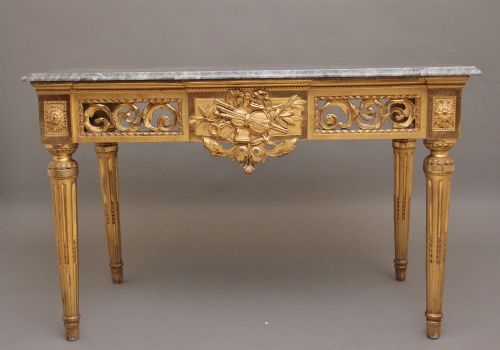
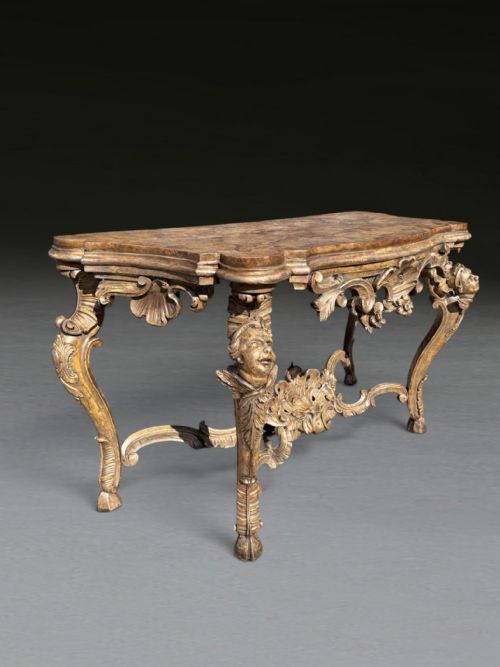
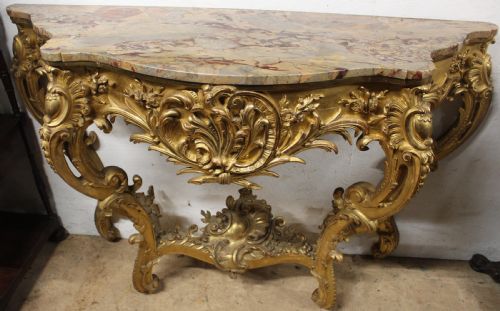
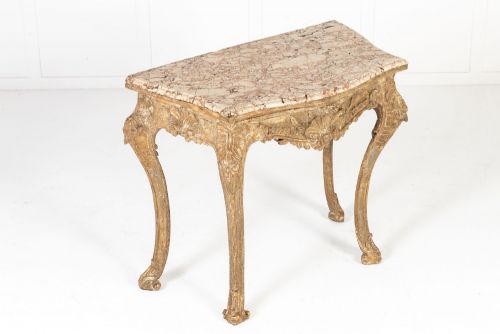
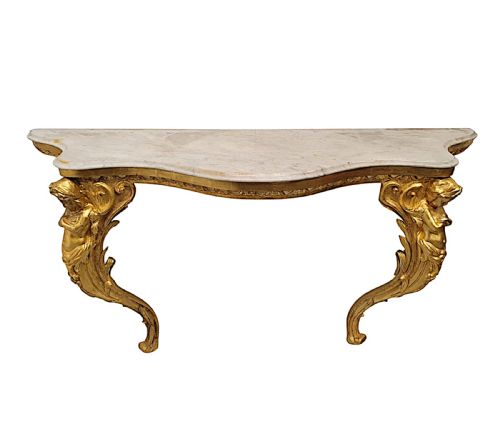
A gold leaf wall table brings monumental presence to a reception room through carved giltwood frames and heavy marble tops.
Gold Leaf Wall Table
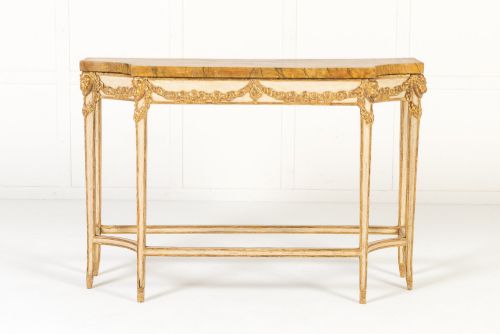
When you search for a gold leaf wall table, you encounter console tables, side tables, and console table and mirror sets designed to anchor against a flat surface. These pieces span from the eighteenth century through the nineteenth century, covering Victorian, Regency, and early twentieth-century periods.
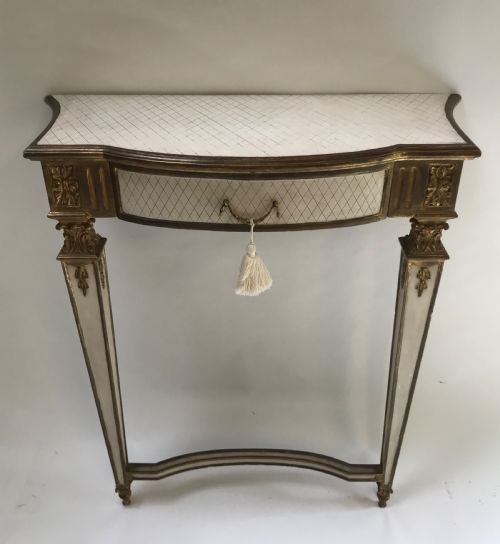
The Italian and French examples dominate the selection, heavily styled in Rococo, Baroque, and Neoclassical designs. You are most likely to meet carved giltwood frames supporting marble tops, alongside paired consoles and matched trumeau mirror sets.
Makers and craftsmen of these periods built them specifically as wall-mounted or console furniture to display decorative objects or fill narrow architectural spaces in grand interiors.
How they were made
The construction relies heavily on carved wood frameworks finished with gesso and gold leaf or silver leaf application. Artisans shaped timber into elaborate scrolls and figural heads before applying layers of metallic leaf by hand.
Heavy marble slabs form the upper surfaces of the console tables, resting directly on the carved wooden bases. Paint and gilding combine on several pieces to create contrasting textures across the apron and legs.
Listings feature Italian, French, Swedish, and German origins spanning the eighteenth and nineteenth centuries, utilising marble, gesso, and giltwood.
What varies in quality
Depth and crispness of hand-carving separate standard production from masterwork execution in giltwood furniture. Finer examples display undercut foliage and sharply defined figural elements rather than shallow, generalized moulding.
The integration of the marble top with the wooden base indicates the tier of manufacture, where fitted stone with complex edge profiling denotes superior workshop output.
The Gold Leaf Wall Table Glossary
- Console table
- A table designed to be fixed against a wall, frequently supported by two front legs and secured to the masonry behind.
- Giltwood
- Timber that has been coated with gold leaf or gold paint. This finish defines the reflective surfaces of these wall tables.
- Gesso
- A plaster mixture applied to wood surfaces to provide a smooth base for gilding. It allows for intricate relief carving before the metal leaf is laid.
- Trumeau mirror
- An architectural wall mirror often incorporating a painted panel or artwork above the glass. It frequently accompanies a matching console table.
- Rococo
- An ornate design style characterised by asymmetry, C-scrolls, and naturalistic plant motifs. It appears widely across eighteenth-century frames.
Gold Leaf Wall Table: Frequently Asked Questions
How were console tables used historically?
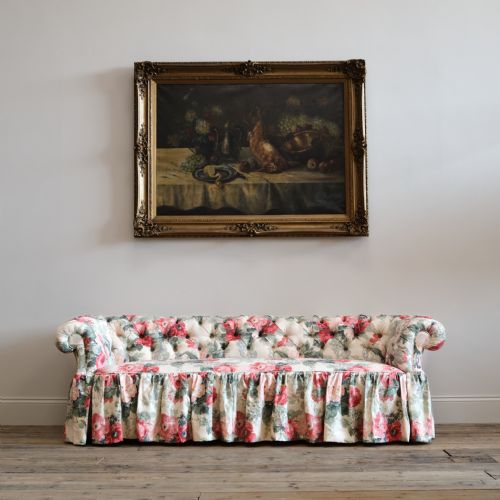
These tables served primarily as decorative side pieces in formal halls and reception rooms, positioned against walls beneath large mirrors or paintings.
They functioned as display surfaces for porcelain, urns, and other decorative objects rather than for heavy daily use.
Are these tables attached to the wall?
Many period console tables rely on wall fixings for stability because their narrow frames and heavy marble tops create an uneven weight distribution.
Some versions feature front legs only and require direct structural support from the wall behind them.
How do I identify an eighteenth-century piece?
Eighteenth-century examples typically display hand-carved wooden frames beneath the gilding, showing tool marks and natural material shrinkage over time.
They often adhere to Italian or French Rococo and Neoclassical design idioms with distinct regional carving characteristics.
Can I place a marble top table anywhere?
Marble top consoles require sturdy wall support and careful placement to protect the heavy stone slab from accidental impact.
Their substantial weight and fixed wall requirements mean they suit permanent locations in high-ceilinged rooms.