


Gold Leaf Porcelain Saucer
These gold leaf porcelain saucer pieces combine delicate ceramic bodies with rich metal gilding to bring Regency and Victorian elegance to any table.
Gold Leaf Porcelain Saucer
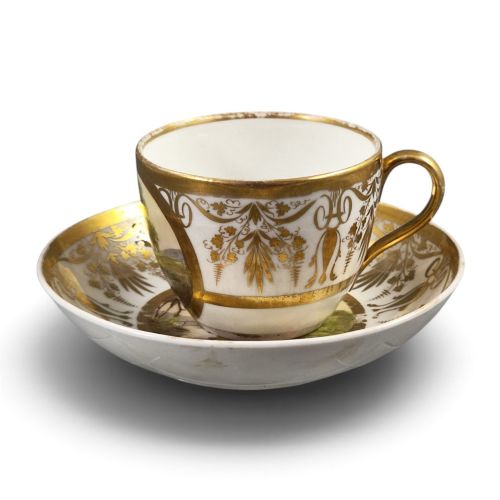
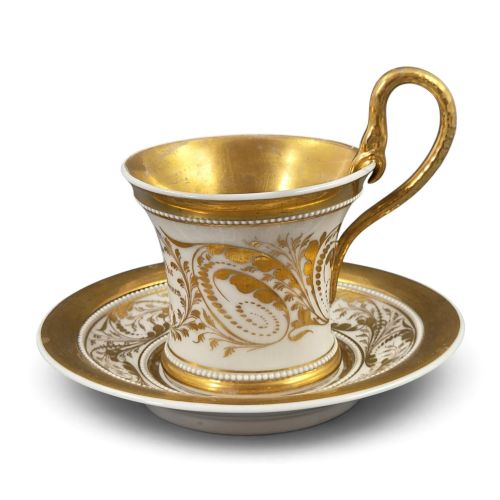
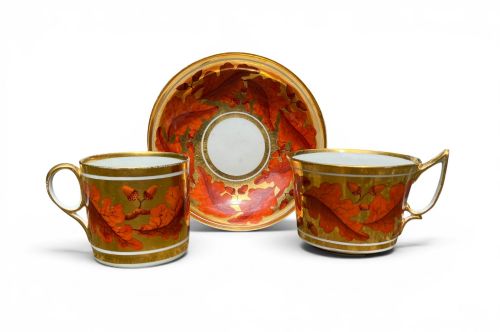
A gold leaf porcelain saucer brings together fine ceramic craftsmanship and metallic enrichment across various historic periods. When searching for a gold leaf porcelain saucer, collectors encounter items ranging from early Georgian cabinet pieces to later Victorian service items.
The selections span distinct forms including teacups and saucers, demitasse sets, and larger coffee services. Pieces emerge from notable European traditions such as KPM Berlin, Old Paris, Derby, and Worcester.
The examples available reflect stylistic shifts from Neoclassical and Regency designs through to Biedermeier and Rococo Revival aesthetics. Each object serves as a tangible link to 19th-century dining and display customs.
Manufacturing Methods and Materials
The underlying ceramic is predominantly hard-paste porcelain, shaped into delicate forms like cabinet cups, demitasse vessels, and matching saucers. Artisans then applied detailed painted landscapes, enamel highlights, and cobalt enamel motifs directly onto the glazed surface.
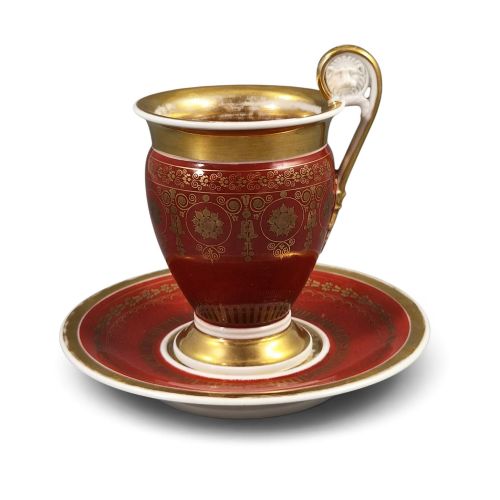
Gilding was executed using gold leaf and gold gilt to accentuate rims, handles, and borders. Specific items feature sculptural elements such as lion mask handles, adding physical dimension to the painted decoration.
Lion mask handles guard the edges of select Empire period saucers, adding a tiny sculptural roar to morning tea.
Evaluating Quality and Execution
The sophistication of the porcelain body and the complexity of the accompanying cup form dictate the piece's standing. Early 19th-century works by established factories demonstrate superior ceramic formulation and artistic ambition.
KPM Berlin·French Old Paris·Derby·Coalport·Hutschenreuther·Royal Worcester
The Gold Leaf Porcelain Saucer Glossary
- Hard-paste porcelain
- A durable ceramic material fired at high temperatures using kaolin and petuntse. It provides a dense, vitreous body suitable for intricate painting and gilding.
- Cabinet cup and saucer
- A decorative pairing intended for display in a cabinet rather than regular tea service. These items often feature elaborate hand-painted scenes or sculptural handles.
- Demitasse
- A small cup used for serving strong black coffee or espresso. They frequently appear paired with matching saucers in later 19th and early 20th-century services.
- Cobalt enamel
- A rich blue vitreous colouring applied to porcelain before or during firing. It frequently frames gilt decoration on Regency and Georgian tablewares.
- Gilding
- The application of gold leaf or powdered gold to the ceramic surface. This technique highlights rims, handles, and hand-painted motifs.
Gold Leaf Porcelain Saucer: Frequently Asked Questions
What is a gold leaf porcelain saucer?
A gold leaf porcelain saucer is a ceramic dish adorned with metallic gilding, often produced as part of a tea or coffee service during the 19th century.
These items range from functional dining pieces to highly decorative cabinet items created by prominent European factories.
How do I date a porcelain saucer?
Dating relies on examining the factory marks, the style of the hand-painted decoration, and the form of the ceramic body. Neoclassical and Regency pieces typically show different stylistic priorities compared to later Victorian or Edwardian examples.
Material characteristics such as hard-paste porcelain composition also provide clues to the era of manufacture.
Were these saucers used daily?
Many items, such as coffee service saucers and standard teacups and saucers, were intended for active dining use. Other pieces, particularly cabinet cups, were created primarily for display.
The presence of delicate gold leaf gilding often dictated a more careful handling.
How should I care for antique gilding?
Antique gilding requires gentle treatment to preserve the delicate gold leaf layers applied to the porcelain surface. Hand washing with mild soap and avoiding abrasive materials ensures the metallic details remain intact.
Displaying pieces away from excessive moisture protects both the ceramic body and the enamel paints.