



Regency Period Teacup Saucer
These regency period teacup saucer sets bring refined early nineteenth-century elegance to the table, combining delicate porcelain forms with handpainted detail.
Regency Period Teacup Saucer
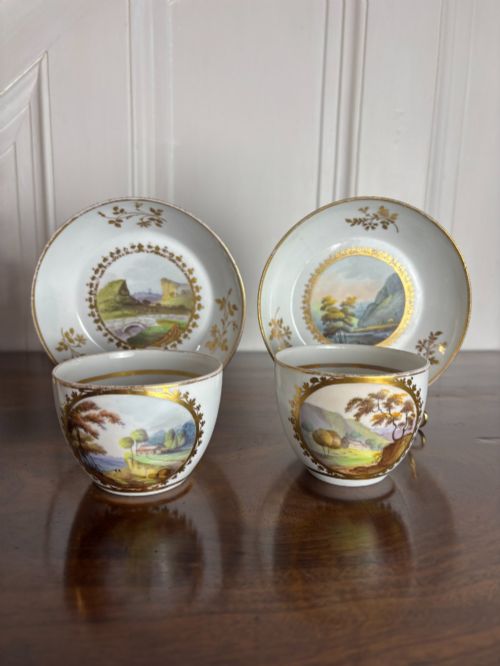
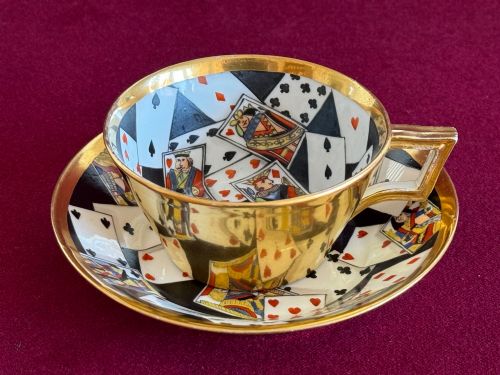
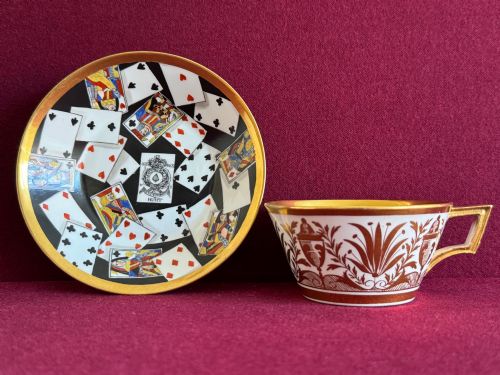
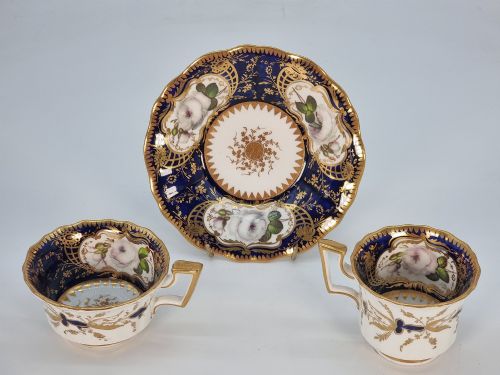
When you search for regency period teacup saucer items, you encounter delicate porcelain and bone china vessels produced during the Georgian and nineteenth-century eras. The listings here showcase tea cups, coffee cups, and saucers, often forming part of cabinet trios.
Most examples originate from prominent English porcelain factories active around the turn of the nineteenth century and the Regency period. These wares reflect the neoclassical tastes of the era, frequently featuring handpainted landscapes, floral motifs, and rich gilding.
The assortment on this page spans early nineteenth-century production dates from roughly eighteen hundred through to eighteen fifty. Collectors find individual teacups with matching saucers alongside larger three-piece cabinet trios.
How they were made
Potters utilised fine porcelain and bone china bodies, shaping them into handled teacups and deep saucers before applying a smooth porcelain glaze. These pieces rely on traditional kiln firing techniques typical of early nineteenth-century English manufactories.
Skilled decorators applied handpainted details and gold leaf or gold gilding by hand over the glaze. Specific patterns, such as landscape scenes and botanical motifs like oak and mistletoe, required precise brushwork from factory artisans.
Regency Period Teacup Saucer Retail Price Guide 2026
Typical asking prices for regency period teacup saucer among the pieces listed under this phrase on Sellingantiques today, from the lower quarter to the upper quarter. They describe what is for sale here now, not the wider market.
Materials recorded on this page include gold leaf, gold gilding, and traditional porcelain glaze applied over fine ceramic bodies.
What varies in quality
The finesse of the handpainted decoration sets finer examples apart from standard factory output. Superior pieces display intricate brushwork, such as detailed landscape scenes or complex compartmentalised patterns.
The application and preservation of gold gilding and gold leaf indicate the original grade of the ware. Heavier, more elaborate gilding alongside crisp porcelain moulding marks the higher tier of these historic sets.
H and R Daniel Shrewsbury·Minton·Flight Barr and Barr Worcester·Yates·Spode
The Regency Period Teacup Saucer Glossary
- Cabinet trio
- A matched set consisting of a teacup, a coffee cup, and a saucer. These items were often displayed in glazed furniture rather than used for daily dining.
- Bone china
- A type of soft-paste porcelain containing bone ash, developed in England to create a durable, brilliantly white body. It allows for thinner walls than standard porcelain.
- Porcelain glaze
- A glassy coating fused to the ceramic body during firing, creating a smooth and impervious surface. This layer protects the underlying ceramic and provides a base for painted decoration.
- Gold gilding
- The application of powdered gold or gold leaf onto the ceramic surface for decorative accenting. It is typically fired onto the glaze to secure the metallic finish.
Regency Period Teacup Saucer: Frequently Asked Questions
How do I use an antique teacup and saucer?
These delicate nineteenth-century cups are generally suited for gentle use or display rather than robust daily dining. Hand washing in warm water helps preserve the fragile porcelain glaze and delicate gilding.
Avoid sudden temperature changes to protect the historic ceramic body from thermal shock. Many collectors prefer to house these pieces within cabinet displays to safeguard the handpainted surfaces.
What is the difference between a tea cup and a coffee cup?
Historic drinking vessels often differentiated tea and coffee consumption through their form and proportions. Coffee cups from this era tend to be taller and straighter sided, whilst teacups are typically wider and shallower.
Matching saucers accompanied both forms, though cabinet trios combined both cup types with a single saucer. Examining the handle shape and overall volume helps identify the intended beverage.
How do I date a Regency period teacup?
Dating relies on identifying factory marks, stylistic traits, and material compositions recorded across the piece. Stylistic markers from the early nineteenth century often include neoclassical motifs and specific handpainted palette choices.
Factory attribution through pattern numbers or named decorators further narrows the timeline of production. Comparing the shape of the handle and footrim against known manufacturing periods establishes the approximate decade.
What is a cabinet trio?
A cabinet trio comprises a matching teacup, coffee cup, and saucer designed to be displayed together. These matched sets were produced by prominent English factories for decorative cabinet use.
They showcase the full artistic range of a manufacturer in a single coordinated grouping. Collectors prize complete trios for their visual impact and scarcity compared to individual cups.