


Derby Porcelain Cup
These derby porcelain cup examples range from delicate eighteenth century teacups to bold Edwardian Imari coffee sets.
Derby Porcelain Cup
A derby porcelain cup brings together centuries of British ceramic history, spanning Georgian elegance through to Edwardian refinement. When searching for a derby porcelain cup, buyers encounter teacups and saucers, chocolate cups with covers, coffee sets, and porter mugs.
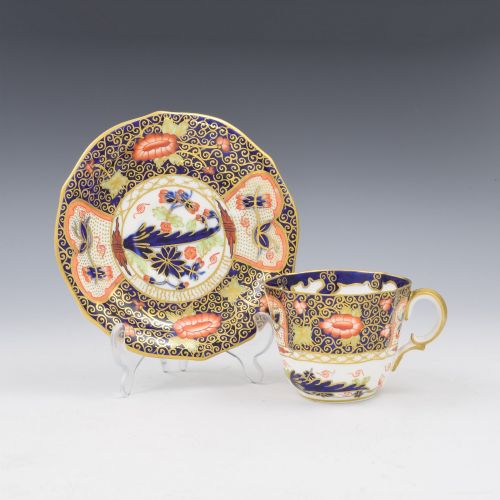
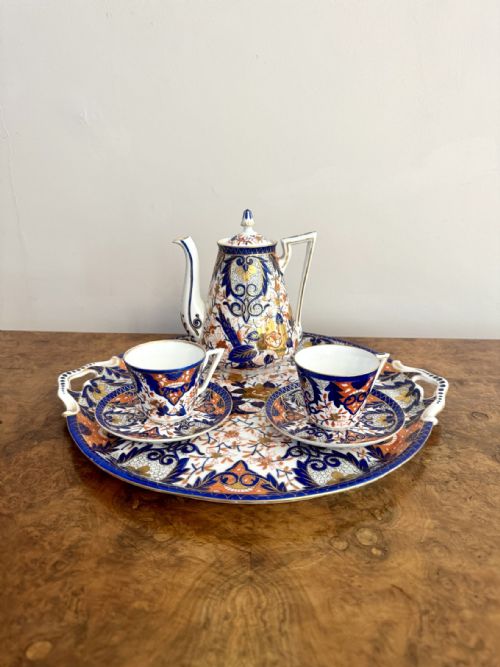
The pieces on this page appear in various forms, from simple bone china vessels to elaborate sets decorated with flowers or landscapes. Regency and Georgian examples often show hand-painted scenes, while later Victorian and Edwardian pieces frequently display the distinctive Imari palette.
How they were made
Potters shaped these vessels using porcelain, soft-paste porcelain, and bone china, often adding intricate handles and covers to chocolate cups and mugs. Kiln firing prepared the ceramic body for subsequent decoration.
Artisans applied enamel colours, gold leaf, and gilding by hand to create the intricate patterns seen on tea cups and saucers. Some specialised pieces also incorporated silver plate mounts.
Listings feature porcelain, bone china, enamel, and gold leaf across Regency, Georgian, and Edwardian periods.
What varies in quality
The standard of a derby porcelain cup rests upon the crispness of the moulded form and the precision of the hand-painted decoration. Finer examples display meticulous brushwork in floral sprays or topographical scenes rather than simple transfer printing.
Preservation of the original gilding and gold leaf significantly influences the standing of a piece. Earlier eighteenth century soft-paste items and Regency chocolate cups with distinct painted putti or armorial details occupy the upper tier of the range.
Duesbury and Kean·Bloor Derby·Royal Crown Derby·King Street Derby·Chelsea Derby
The Derby Porcelain Cup Glossary
- Imari
- A decorative style utilising a rich palette of iron-red, cobalt blue, and gold leaf. This pattern became particularly popular on Victorian and Edwardian tea and coffee sets.
- Soft-Paste Porcelain
- An artificial ceramic composition fired at lower temperatures than hard-paste porcelain. It produces a warm, creamy body common in eighteenth century English ceramics.
- Trio
- A matched set consisting of a teacup, a coffee cup, and a saucer. These three-piece sets were widely produced during the Regency period.
- Stirrup Cup
- A drinking vessel shaped like an animal head, such as a fox. Riders drank from these cups before setting off on a hunt.
- Demitasse
- A small cup used for serving strong black coffee or espresso. These frequently appear within larger ceramic coffee sets.
Derby Porcelain Cup: Frequently Asked Questions
How do I date a derby porcelain cup?
Dating relies on identifying specific factory marks, pattern numbers, and the composition of the ceramic body. Earlier eighteenth century pieces often feature handwritten marks or distinct soft-paste bodies, while later Victorian and Edwardian items carry printed crown marks.
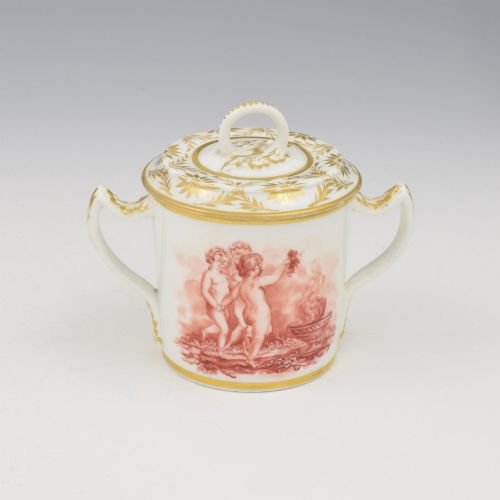
Style also provides clear clues, as Regency pieces frequently feature classical motifs like sepia putti, whereas Edwardian examples often showcase dense Imari patterns.
What is the difference between a coffee cup and a teacup?
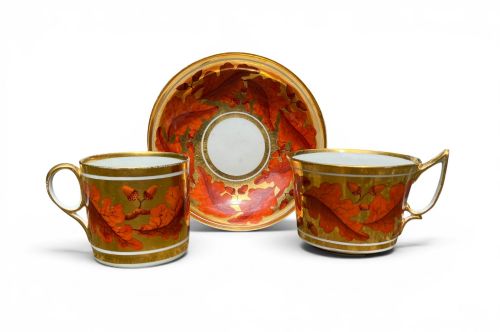
Georgian and Regency coffee cups were typically taller and straighter-sided than teacups, often shaped like small beakers or cylindrical mugs. Teacups were usually wider and shallower to allow the hot tea to cool more quickly.
Sets from this era frequently distinguished between the two vessel shapes, though later Victorian production standardised many of these forms.
Can I use antique porcelain cups for daily drinks?
Handling historical ceramics requires care due to the delicate nature of soft-paste porcelain, enamel decorations, and gold leaf. Most collectors prefer to display these pieces or reserve them for occasional gentle use rather than regular daily consumption.
Hand washing in warm water without harsh detergents helps preserve the fragile hand-painted details and gilding.
What is a chocolate cup with a cover?
Chocolate cups were deeper vessels designed for drinking hot chocolate, featuring two handles and a matching lid to keep the rich drink warm. Eighteenth and nineteenth century examples often came with a dedicated saucer or stand.
These covered vessels represent some of the most ornate ceramic forms produced by the factory.