


German Porcelain Cup
A german porcelain cup brings hard-paste ceramic and hand-painted artistry to the table, offering a tangible link to historic European kilns.
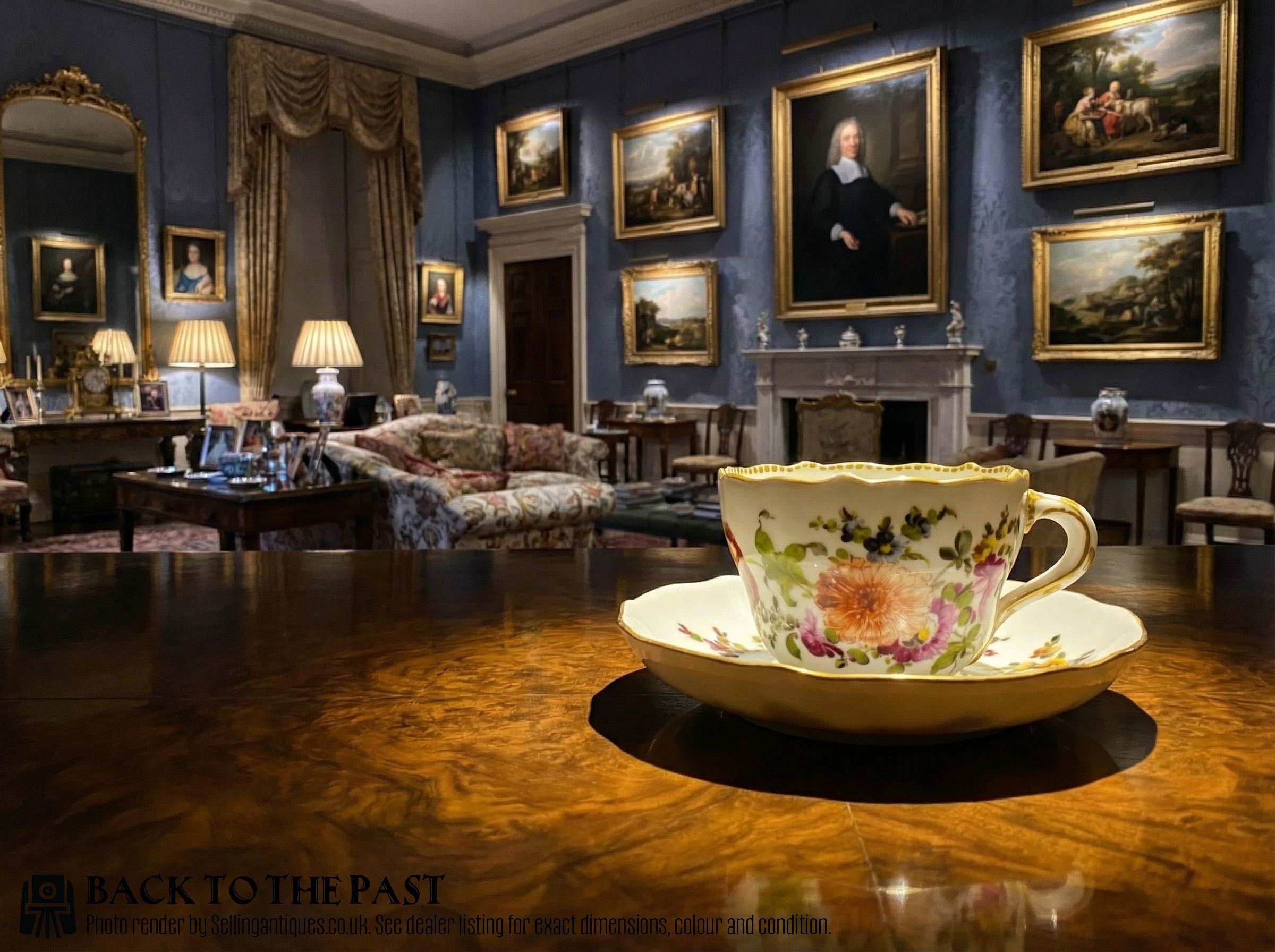
German Porcelain Cup
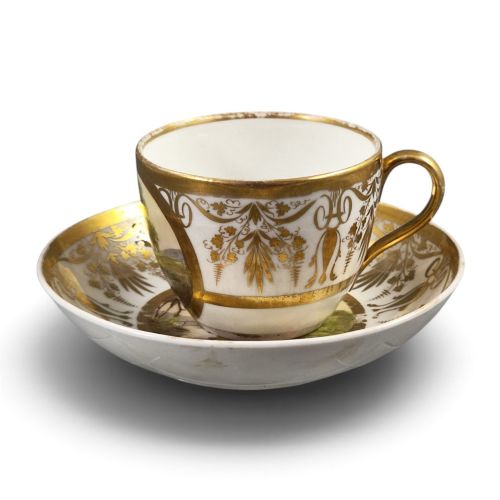
A german porcelain cup spans domestic teacups, demitasse sizes, cabinet display pieces, and miniature forms. These objects emerge from periods ranging from the mid-eighteenth century through the Edwardian era and the nineteen-twenties.
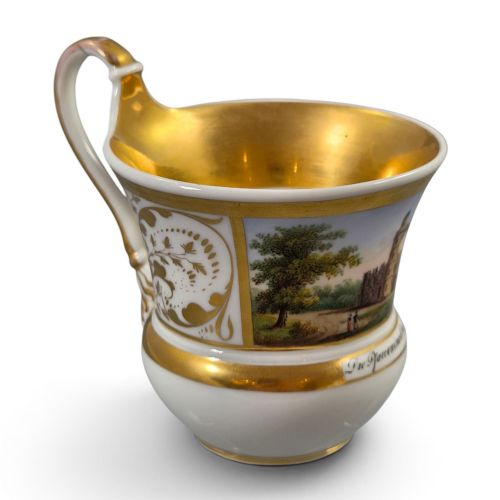
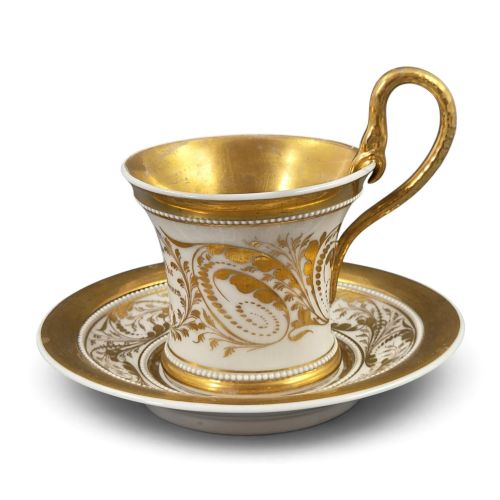
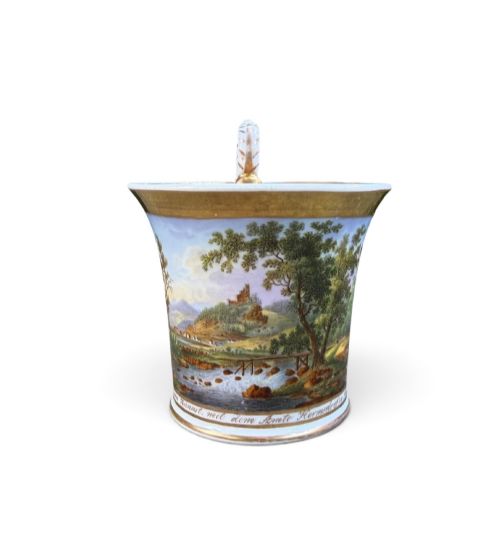
The most common formats on this page combine a matching cup and saucer, often styled in Rococo Revival, Biedermeier, Neoclassical, or Empire aesthetics. Cabinet cups stand out for their topographical painted scenes, while demitasse cups serve smaller portions of strong coffee.
Origins trace directly to notable German ceramic traditions, with historical pieces carrying the signatures of established factories. Collectors encounter everything from early Meissen tablewares to later KPM Berlin presentation items.
Materials and production techniques
Makers construct these vessels from hard-paste porcelain, a durable ceramic body fired at high temperatures. This dense material supports intricate forms like pedestal bases and delicate handles.
Artisans decorate the glazed surfaces using hand-painted enamel scenes, floral motifs, and topographical landscapes. Many examples incorporate gold leaf, gilding, and gold gilt to accent rims and handle details.
Listings feature hard-paste porcelain bodies finished with gold leaf, enamel, and gilding across Rococo Revival, Biedermeier, Neoclassical, and Empire styles.
Assessing quality in german porcelain
Quality rests in the precision of the hand-painted details, from delicate Dresden flowers to finely rendered landscape miniatures and courtly figures. Superior pieces display crisp brushwork and balanced compositions across both cup and saucer.
The application of gilding and gold leaf distinguishes high-grade production, showing clean lines and deep burnishing rather than flat, faded application. The purity of the hard-paste porcelain body and the sharpness of factory marks further divide standard wares from exhibition-quality cabinet pieces.
KPM Berlin·Meissen·Hutschenreuther·Hirsch Dresden·Helena Wolfsohn
The German Porcelain Cup Glossary
- Hard-paste porcelain
- A dense ceramic compound made from kaolin and petuntse fired at high temperatures. This formula creates a durable, bright white body that resists scratching.
- Demitasse
- A small cup designed for serving espresso or strong black coffee. These items frequently accompany matching saucers.
- Cabinet cup
- A decorative vessel intended primarily for display rather than daily dining. These pieces often feature detailed topographical paintings or historical scenes.
- Enamel
- Vitreous pigments applied over the glazed porcelain surface and fired at lower temperatures to fix the colour. This technique allows for rich palettes in floral and figurative designs.
- Gilding
- The application of gold leaf or gold paint to ceramic surfaces. It highlights rims, handles, and borders on cups and saucers.
German Porcelain Cup: Frequently Asked Questions
How do I identify a KPM Berlin cup?
Look for factory marks on the base of the porcelain, often accompanied by fine hand-painted topographical scenes or gilt decoration. These pieces date across the eighteenth, nineteenth, and early twentieth centuries.
Compare the style of the handle and the weight of the hard-paste body to authenticated examples from the same period.
How are demitasse cups used today?
Demitasse cups serve espresso, Turkish coffee, and after-dinner cordials in modern settings. Their small scale also makes them popular for decorative display in cabinets.
Collectors often enjoy pairing mismatched antique saucers with surviving cups when original sets are incomplete.
What distinguishes Biedermeier style cups?
Biedermeier style pieces emphasise clean domestic comfort, practical utility, and restrained neoclassical lines rather than excessive ornamentation. They date broadly to the early nineteenth century.
These items frequently showcase painted landscapes and subdued gilding on hard-paste porcelain.
Are cabinet cups meant for drinking?
Cabinet cups were primarily produced for display in collector cabinets rather than everyday use. Their elaborate topographical views and delicate gold leaf decoration made them ornamental showpieces.
Handle them with care, washing only by hand to preserve the enamel and gilding.