
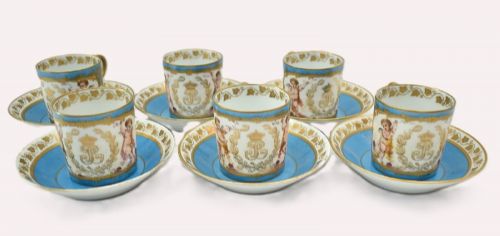


Gilt Porcelain Demitasse
These gilt porcelain demitasse cups bring small-scale luxury to after-dinner coffee with their heavy gilding and delicate forms.
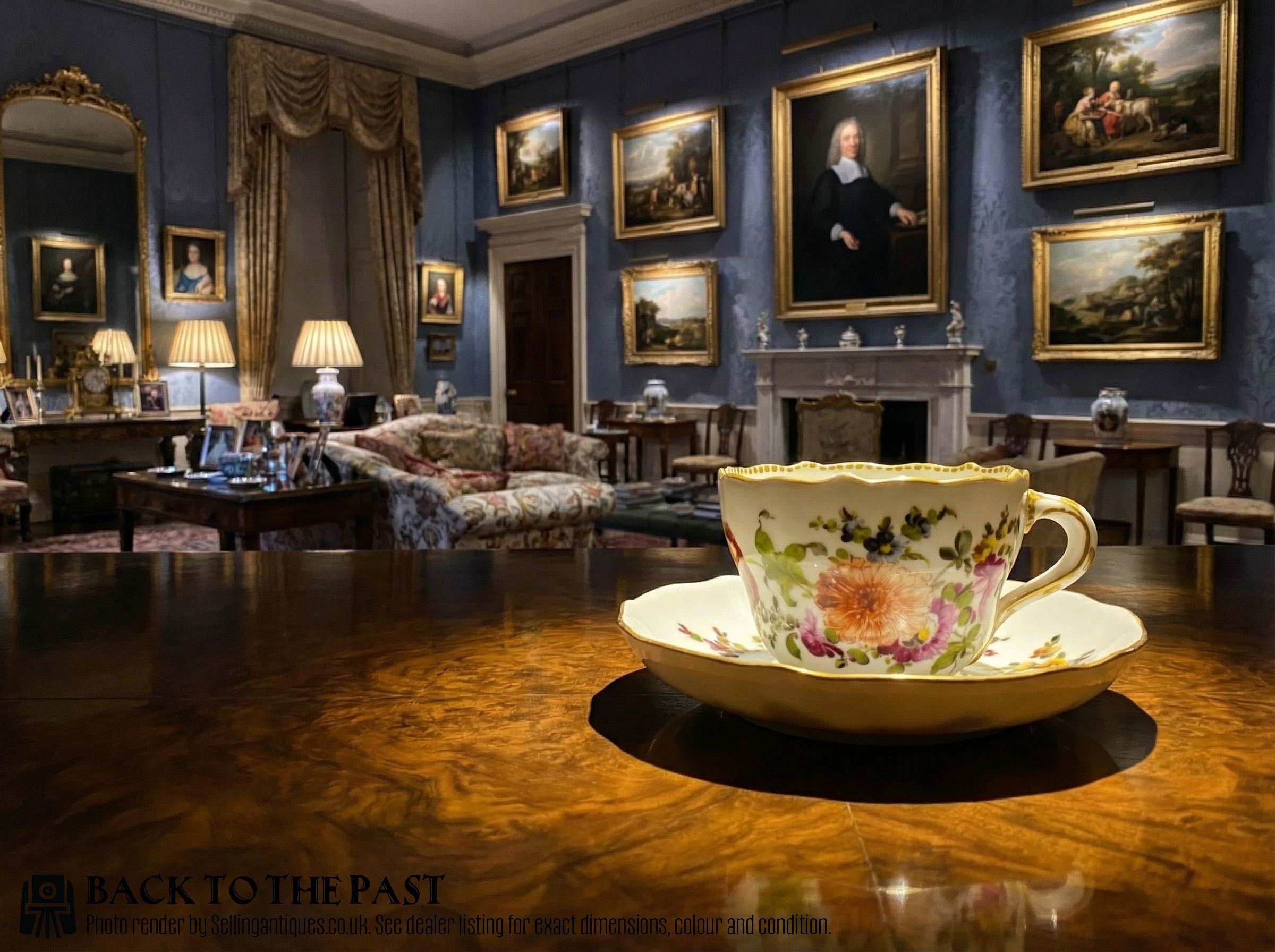
Gilt Porcelain Demitasse
When you search for gilt porcelain demitasse, you are looking at small cups and saucers designed specifically for strong black coffee after dinner. The pieces on this page span several centuries, including 18th century examples alongside Victorian and Edwardian sets.
Most items appear as single cups with matching saucers, small coffee cans, or complete coffee services. British factories such as Royal Crown Derby, Spode, and Royal Worcester sit alongside continental makers like Meissen, Sevres, and Limoges.
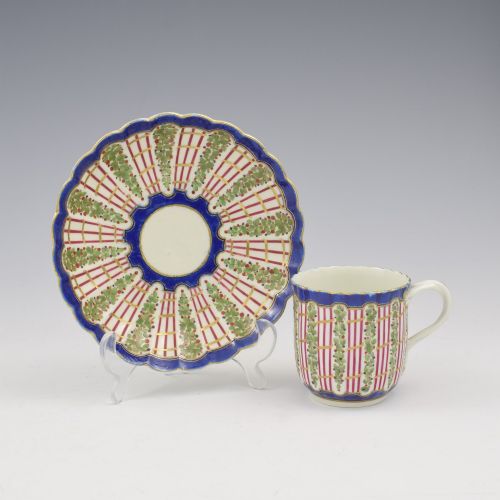
Forms range from traditional tea and coffee cups to miniature vessels and dedicated demitasse sets. These objects combine utilitarian function with ornamental ambition, often finished with intricate enamel work.
How they were made
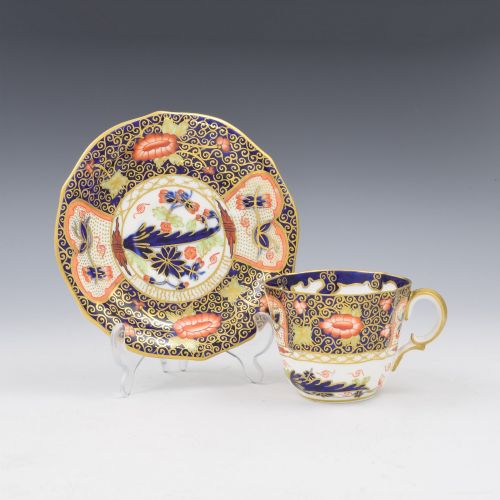
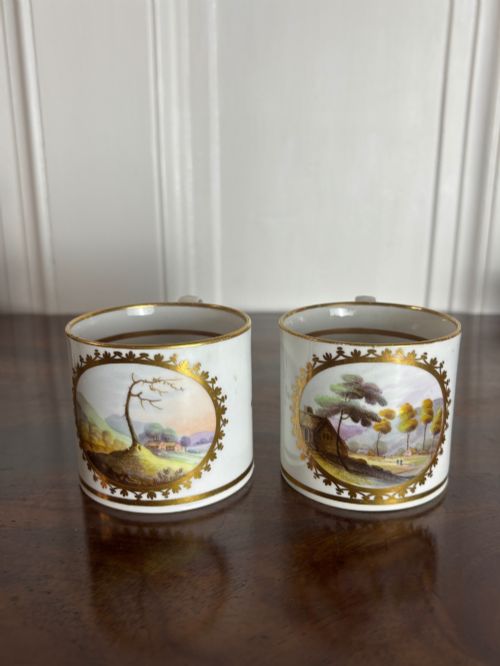
Potters shaped these vessels using hard-paste porcelain, soft-paste porcelain, or bone china, firing the body before applying colour and decoration. Enamel painting added detail such as floral motifs, landscapes, and Imari patterns directly onto the ceramic surface.
Makers applied gold leaf, gold gilt, or liquid gilding by hand to rims, handles, and borders, fixing the metal through a subsequent kiln firing. Artisans then burnished the gold with agate stones to achieve a bright, reflective shine against the white or coloured glaze.
Materials recorded across the inventory include bone china, soft-paste porcelain, enamel, and gold leaf.
What varies in quality
Quality rests on the crispness of the porcelain body and the precision of the hand-painted decoration. Finer pieces display expertly mixed enamels and steady brushwork on landscapes or floral sprays.
The application of gold also defines the upper tier of objects, where thick, burnished gilding remains intact rather than rubbed thin from use. Weight, translucency, and the reputation of the pottery shape the overall standard.
Royal Crown Derby·Minton·Spode·Sevres·Coalport·Ahrenfeldt and Asalvary·Meissen·Hutschenreuther·Royal Worcester·Spode Copeland·KPM
The Gilt Porcelain Demitasse Glossary
- Demitasse
- A small cup used for serving strong black coffee. The name translates from French as half-cup.
- Coffee can
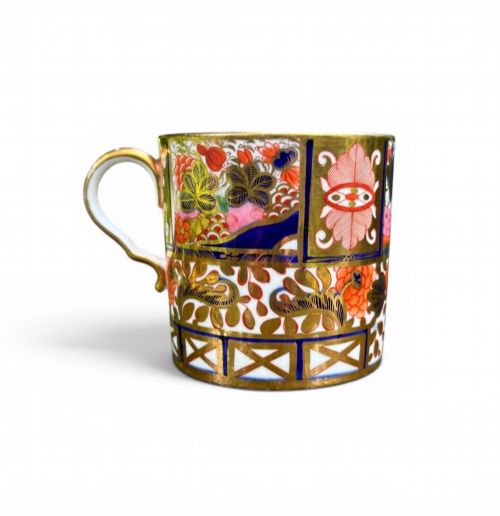
- A straight-sided cylindrical cup used for coffee during the Georgian and Regency periods. These pieces lack the flared sides of standard teacups.
- Imari
- A style of ceramic decoration featuring deep cobalt blue and iron red, heavily accented with gold. This aesthetic originated in Japan and inspired numerous European factories.
- Soft-paste porcelain
- A glassy ceramic material fired at lower temperatures than hard-paste porcelain. It produces a warm, creamy body common in 18th century English pieces.
Gilt Porcelain Demitasse: Frequently Asked Questions
What is a demitasse cup used for?
A demitasse cup holds strong black coffee or espresso served at the end of a meal.
Because the volume is small, the coffee stays hot and intense without requiring a standard large mug.
Can I use these cups daily?
You can use these cups for special occasions, though many collectors prefer to display them.
Keep in mind that centuries-old handle attachments and thin porcelain require careful handling during use.
How do I date an antique cup?
Look for factory backstamps, pattern numbers, and specific potting styles recorded in the listing details.
Porcelain composition and painting techniques also provide strong clues to the decade or century of manufacture.