





Antique Espresso Cup
An antique espresso cup delivers concentrated coffee in vessels shaped across the Georgian, Victorian, and Art Deco eras.
Antique Espresso Cup
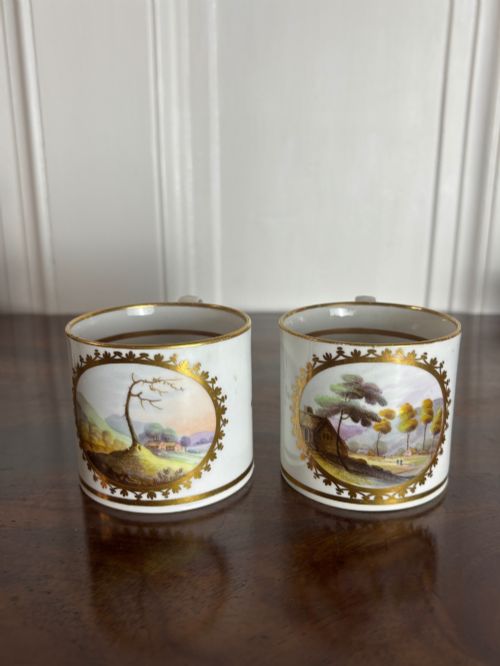
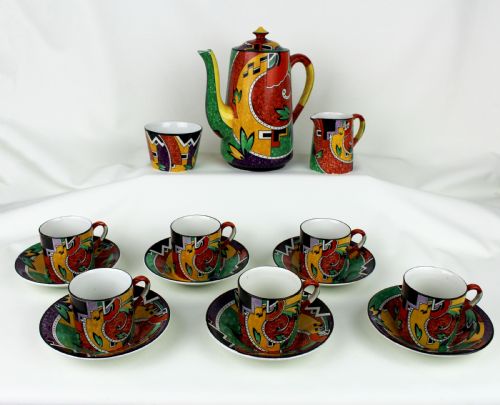
An antique espresso cup selection spans compact coffee cans, demitasse vessels, and full service sets designed for strong coffee. Buyers meet forms originating from Georgian workshops, nineteenth-century European factories, and twentieth-century makers.
The most common pieces on this page include individual demitasse cups with matching saucers and cased sets from English potteries like Royal Worcester. These items reflect the shifting dining habits from the Georgian period through to the 1930s.
Makers adapted traditional tea-drinking scales into smaller formats, producing coffee cans and matching saucers that accommodated rich brews. Styles range from Rococo Revival and Regency designs to clean Art Deco geometry.
How they were made
Makers utilised hard-paste porcelain and standard porcelain bodies as the primary foundation for these small drinking vessels. Potters then applied hand-painted landscape scenes, floral motifs, and geometric patterns directly onto the ceramic surface.
Workshops added finishing touches using gold leaf, gold gilt, and intricate gilding around rims and handles. Enamel paint and satin finishes appear frequently across nineteenth-century and early twentieth-century examples.
Listings feature porcelain vessels spanning the Georgian period, the nineteenth century, and twentieth-century Art Deco designs.
What varies in quality
The standard of painting separates standard production wares from superior factory output, particularly in hand-painted landscape and floral compositions. Finer pieces demonstrate precise brushwork and careful distribution of enamel and gilding.
Completeness dictates the standing of a service, distinguishing single surviving coffee cans from intact cased sets and multi-person sets. The presence of original matching saucers and spoons elevates the cohesion of the ensemble.
Flight Barr Worcester·Royal Worcester·Elkington·Meissen·Hutschenreuther·Spode Copeland·KPM
The Antique Espresso Cup Glossary
- Demitasse
- A small cup used for serving espresso or strong black coffee. The term translates literally to half-cup.
- Coffee Can
- A cylindrical ceramic cup shape popular during the Georgian and Regency periods. These vessels typically featured straight sides and loop handles.
- Hard-paste porcelain
- A durable ceramic material fired at high temperatures using kaolin and petuntse. European factories utilised this paste to achieve crisp details.
- Gilding
- The application of gold leaf or gold gilt onto ceramic surfaces. Artisans employed this technique to highlight rims, handles, and painted panels.
- Enamel
- Opaque glass-like paint fused to pottery during firing. It provides vibrant colours for decorative motifs.
Antique Espresso Cup: Frequently Asked Questions
What is a demitasse cup?
A demitasse cup is a small vessel designed specifically for holding strong coffee or espresso. These pieces hold a smaller volume than standard tea cups.
They appear frequently in nineteenth and twentieth-century ceramic services alongside matching saucers.
How do I date an antique coffee can?
Dating relies on factory marks, ceramic bodies, and prevailing artistic styles such as Georgian, Regency, or Art Deco. Shape profiles also shift from cylindrical Georgian cans to curved twentieth-century forms.
Material composition and painted decorative motifs offer further chronological indicators.
Can I use these cups for daily espresso?
Many buyers prefer to use durable porcelain cups for regular coffee service, though fragile gilded items require gentle handling. Hand washing preserves the delicate enamel and gold leaf decorations.
Checking the glaze for stability helps determine suitability for frequent use.