


German Porcelain Cabinet Set
A german porcelain cabinet set brings cabinet cups, saucers, and decorative plates of hard-paste porcelain into a collection, offering hand-painted detail and nineteenth-century artistry.
German Porcelain Cabinet Set
When you search for a german porcelain cabinet set, you encounter hard-paste porcelain objects created for display and gentle use rather than daily service. These sets comprise teacups, demitasse cups, saucers, and decorative plates that reflect nineteenth-century craftsmanship.
The most common forms on this page include individual cups with matching saucers and small sets of plates. Makers such as KPM Berlin and Meissen dominate the selection, often presenting painted landscapes, floral motifs, and pedestal forms from the eighteen-hundreds to the early nineteen-twenties.
Pieces span several distinct aesthetic movements, ranging from Biedermeier and Neoclassical simplicity to Rococo Revival ornamentation and Empire grandeur. Each grouping preserves the distinctive artistic priorities of its decade of origin.
How these pieces were made
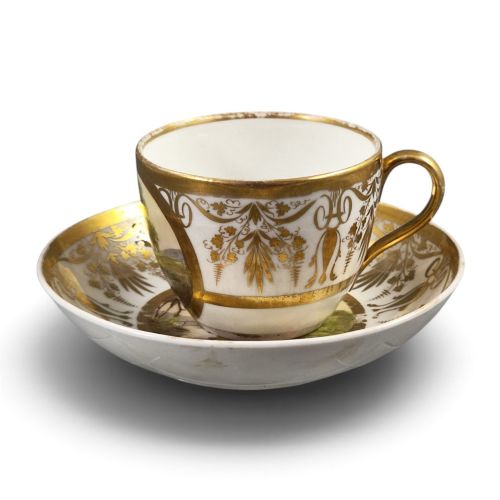
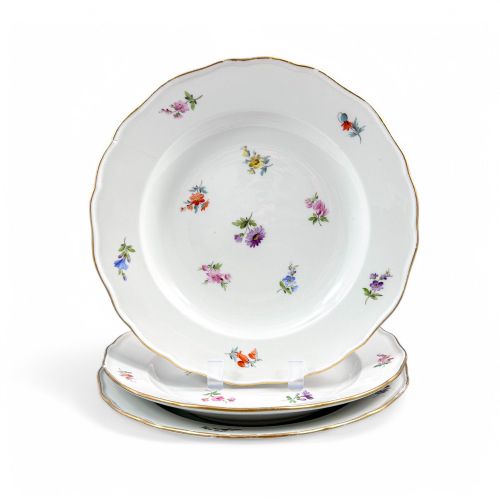
Makers utilised hard-paste porcelain fired at high temperatures to achieve a durable and brilliant white body. Artisans then applied enamel paints by hand, capturing intricate landscape scenes and delicate floral patterns such as Streublumen directly onto the glazed surface.
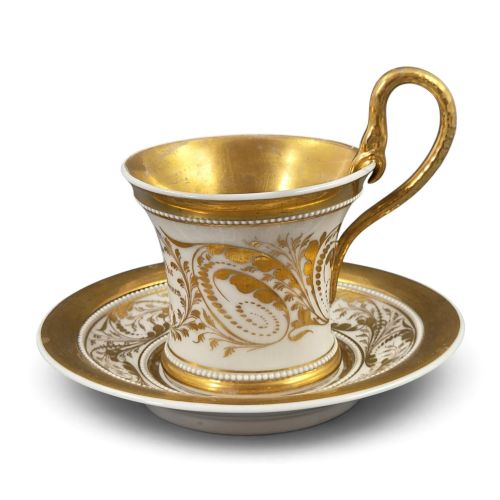
Gilding played a central role in decoration, incorporating gold leaf and gilded glazes to accent rims, handles, and pedestals. This gold work underwent secondary firing to bond the precious metal permanently to the ceramic body.
Listings feature hard-paste porcelain from the nineteenth century decorated with gold leaf, enamel, and hand-painted landscapes.
What separates the best from the rest
Quality in a german porcelain cabinet set rests upon the precision of the hand-painted brushwork and the crispness of the porcelain moulding. Superior examples display finely detailed landscape miniatures or botanicals executed with remarkable control, whereas lesser pieces rely on repetitive stencilled motifs.
The application of gold leaf and gilding dictates the visual hierarchy of these objects. Heavy, burnished gilding applied by skilled hands endures with deep lustre, while thin or rubbed application diminishes the decorative impact of the set.
KPM Berlin·Meissen·Hutschenreuther·Hirsch Dresden
The German Porcelain Cabinet Set Glossary
- Hard-paste porcelain
- A dense, vitrified ceramic composed of kaolin and petuntse fired at extremely high temperatures. This material forms the durable white body characteristic of fine German wares.
- Demitasse
- A small cup used for serving strong black coffee or espresso. These diminutive vessels often feature intricate painting and rich gilding suitable for cabinet display.
- Streublumen
- A German term meaning scattered flowers. This decorative style arranges small, loose floral sprays across the white porcelain surface.
- Gilding
- The application of gold leaf or powdered gold to the surface of the porcelain. It enhances the decorative appeal of rims, handles, and borders.
- Rococo Revival
- A nineteenth-century design style marked by asymmetric curves, naturalistic ornamentation, and elaborate scrolls. It heavily influenced the shaping of cups and plates of this era.
German Porcelain Cabinet Set: Frequently Asked Questions
What is a cabinet set?
A cabinet set typically consists of cups, saucers, or plates made for display inside a glass-fronted cabinet rather than everyday dining. These pieces showcase superior painting and gilding.
They were intended to demonstrate the owner's refined taste and the manufacturer's technical skill during the nineteenth century.
How do I identify KPM porcelain?
KPM Berlin porcelain often bears impressed or painted factory marks, such as the royal sceptre or the letters KPM. The quality of the hand-painted landscapes also aids identification.
Examining the style of the Biedermeier or Neoclassical forms helps confirm the nineteenth-century origin.
What is demitasse?
Demitasse translates to half cup in French and describes a small vessel designed for serving espresso or strong coffee. These cups frequently accompany matching saucers in decorative sets.
Their small scale allowed artisans to concentrate fine miniature painting onto a compact surface.