


Gold Leaf Chairs
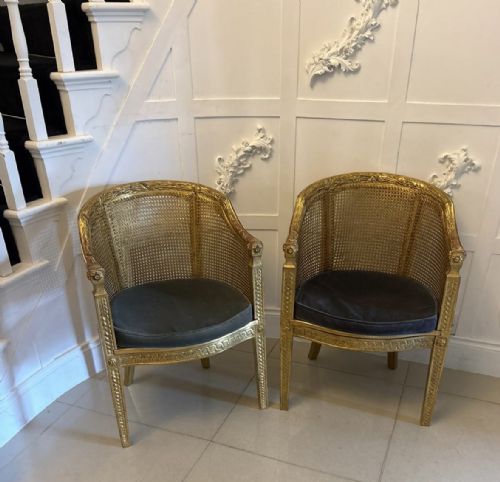
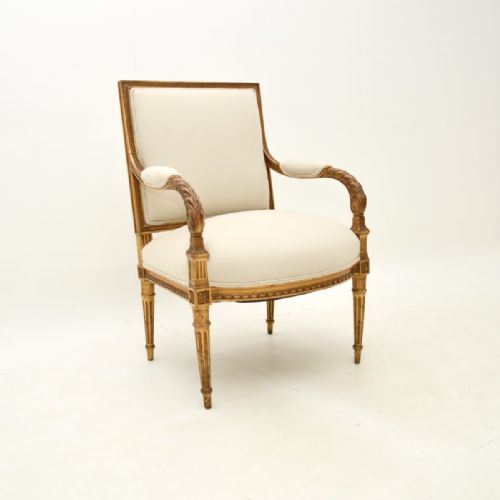
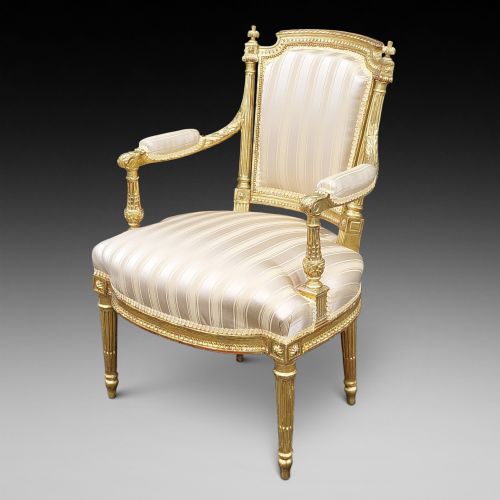
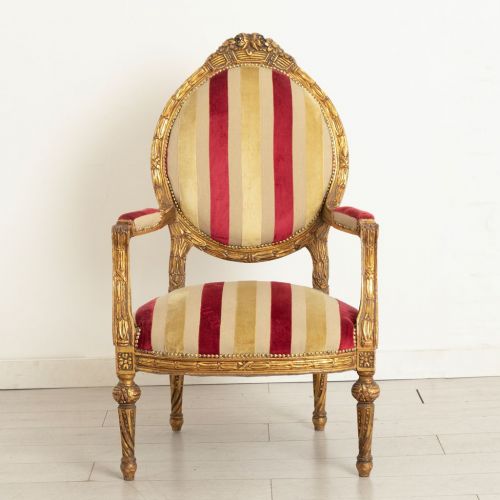
Gold leaf chairs bring historic French and English grandeur into a room through carved timber and metallic lustre.
Gold Leaf Chairs
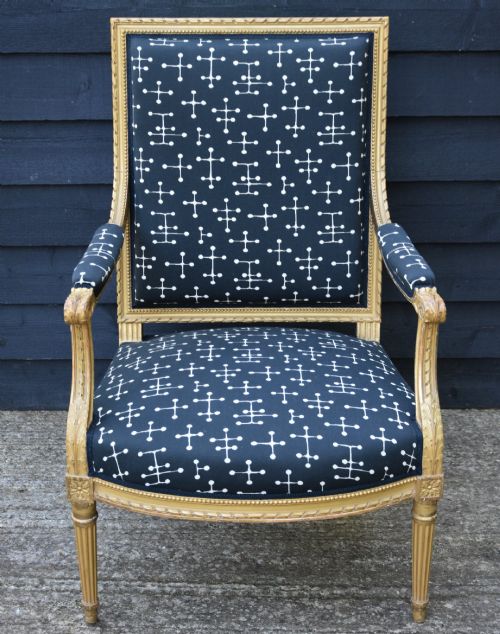
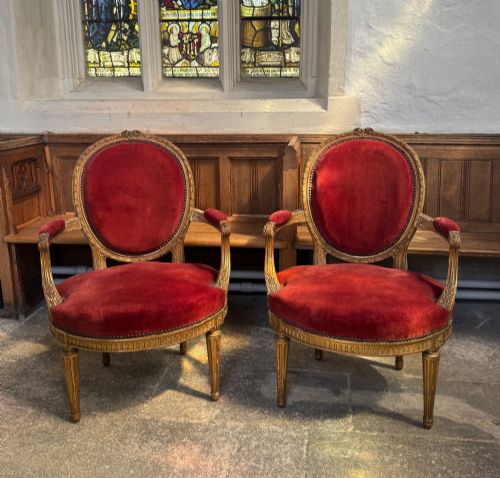
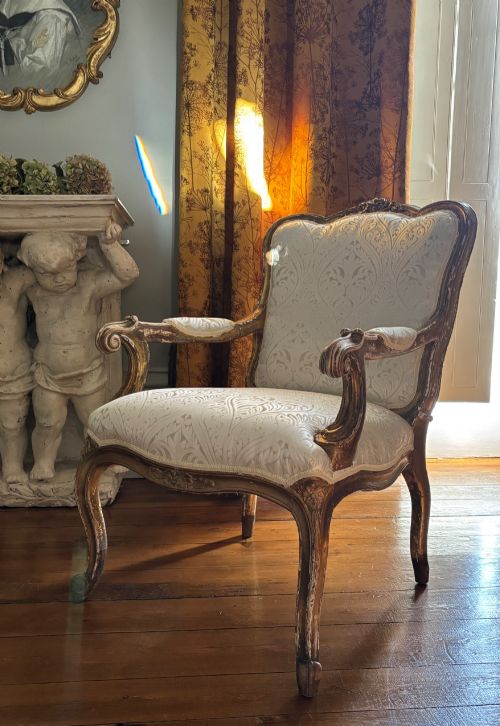
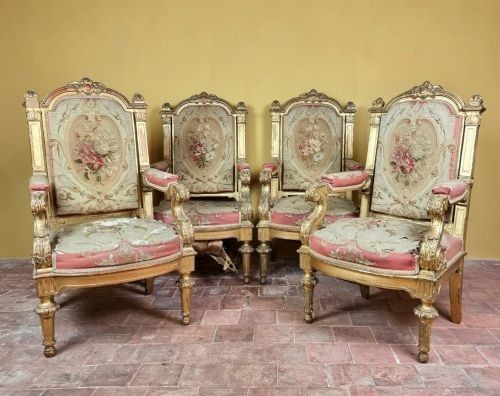
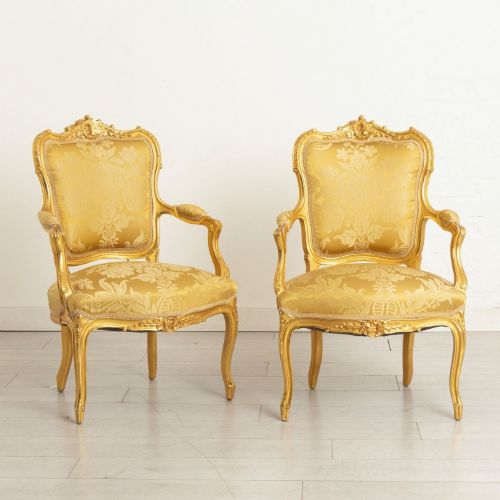
When you search for gold leaf chairs, you encounter seating finished with fine metallic leaf across various historical periods. The inventory spans from the eighteenth century through to the early twentieth century, drawing heavily on French stylistic revivals. You are most likely to meet nineteenth-century armchairs and salon chairs executed in Louis XVI, Rococo, or Baroque revival modes.
The selection includes open armchairs, bergères, fauteuils, and dining chairs alongside occasional pieces and salon suites. Timber frames form the core structure, shaped into scroll arms, carved rails, and upright backrests designed for formal reception rooms. Many examples survive in pairs or larger sets, retaining their decorative presence across generations.
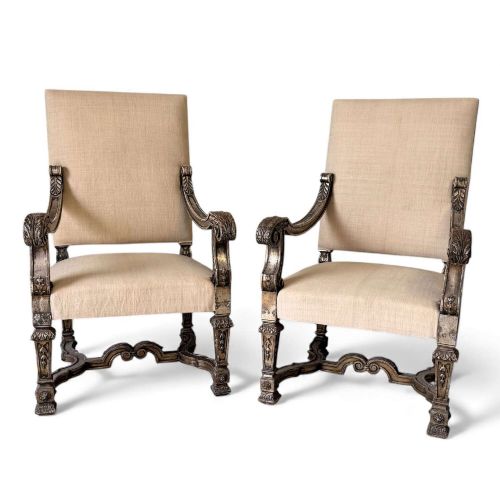
Origins stretch across French workshops and English interpretations, capturing styles such as Régence and Napoleonic eras. These seating forms served distinct functions in historic interiors, from grand throne chairs to intimate bedroom and piano seating. The widespread adoption of French design idioms dominates the surviving pieces on this page.
How they were made
Carved wooden frames form the structural foundation of these chairs, utilising timbers such as beech, walnut, and general hardwoods. Artisans shaped these woods through traditional joinery and hand-carving to achieve intricate scrollwork, fluted legs, and panelled crest rails. The underlying timber provides the rigid skeleton required to support upholstery and daily use.
A layer of gold leaf or applied gilding covers the wooden armature, imparting a brilliant metallic finish across the carved surfaces. Craftspeople laid beaten metal leaf over prepared grounds, sealing the wood to create an illusion of solid gold. Silk, velvet, and other patterned fabrics provide the upholstery for seats and backrests, secured with traditional tacking methods.
Object types include armchairs, side chairs, salon suites, bergères, fauteuils, and piano stools.
What varies in quality
The precision and depth of hand-carving dictate the artistic merit of the wooden frame, separating mass-produced interpretations from masterwork execution. Crisp floral motifs, balanced proportions, and fluid scroll arms reflect superior craftsmanship in the underlying timber. Weaker examples exhibit shallow, uniform moulding that lacks definition and three-dimensional presence.
The application and retention of the gold leaf layer dictate the visual richness of the surface finish. Smooth, burnished gilding that catches light evenly indicates higher original skill, whereas coarse or heavily flaked treatments diminish the effect. The integrity of the frame joints and the quality of the textile upholstery further differentiate everyday seating from high-status salon pieces.
Blaise Maucuy
The Gold Leaf Chairs Glossary
- Giltwood
- Timber coated with gold leaf or metallic powder applied over a prepared gesso base. This technique creates a radiant surface finish characteristic of formal historic seating.
- Fauteuil
- An open-arm armchair with upholstered back and seat, featuring exposed wooden arms. Originating in France, it became a standard form in elegant reception rooms.
- Bergère
- An enclosed upholstered armchair featuring padded sides and a solid, curved back. It offers a deeper and more enclosed seat than an open armchair.
- Rococo
- An ornate artistic style characterised by asymmetrical curves, C-scrolls, and naturalistic shell motifs. It heavily influenced mid-eighteenth-century furniture design and later nineteenth-century revivals.
- Louis XVI Style
- A neoclassical design vocabulary marked by straight tapered legs, geometric symmetry, and classical ornamentation. It defines many of the refined armchairs found in this collection.
Gold Leaf Chairs: Frequently Asked Questions
Where were gold leaf chairs used?
These seats were traditionally placed in formal reception rooms, drawing rooms, and grand salons to display status and taste.
They served both decorative and functional purposes during gatherings, formal dinners, and musical evenings.
How do I identify a revival style?
Revival pieces borrow decorative motifs from earlier reigns like Louis XIV or Louis XVI while employing nineteenth-century construction methods.
Look at the crispness of the carving and the timber beneath the gilding to distinguish original periods from later interpretations.
Can I use these chairs daily?
Most antique seating functions well for gentle daily use provided the frame joints remain stable and secure.
Heavier everyday wear can be mitigated by placing them in low-traffic areas or utilising supportive cushions.
What fabrics suit historic frames?
Silk and velvet dominate the historic upholstery choices seen on these chairs, echoing original period aesthetics.
Selecting appropriate period-style textiles ensures the restored upholstery complements the character of the gilded wood.