

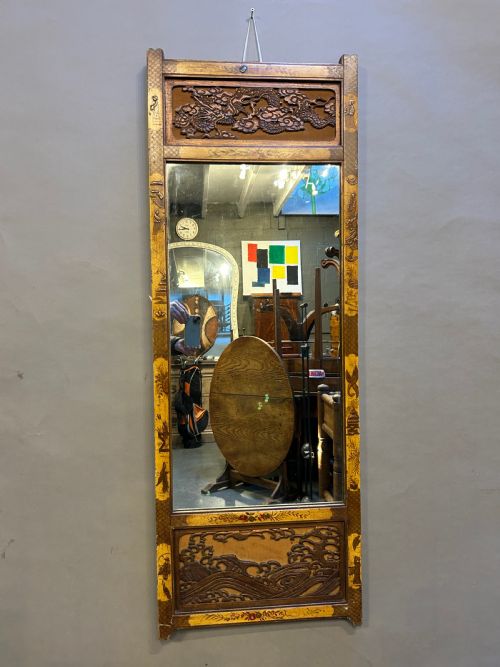


Gold Lacquer Carving
Gold lacquer carving brings together intricate sculptural detail and rich metallic finishes across furniture, panels and temple figures from various periods.
Gold Lacquer Carving
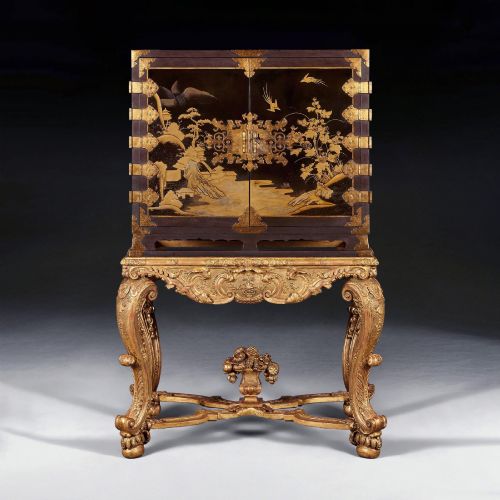
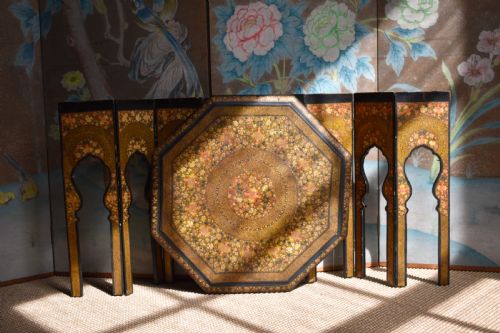
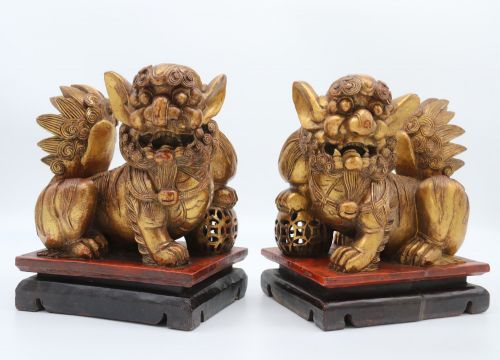
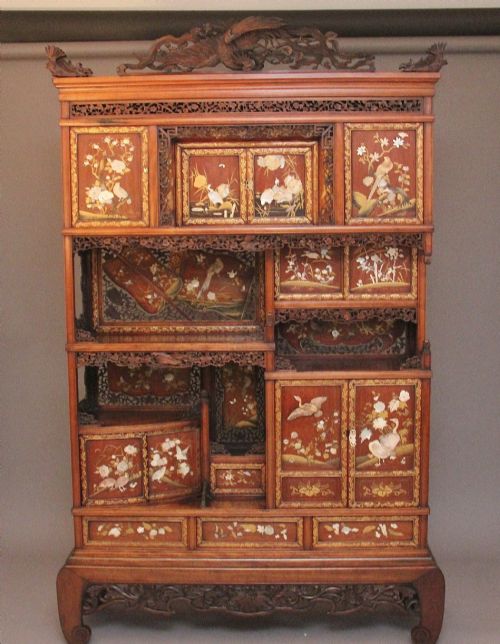
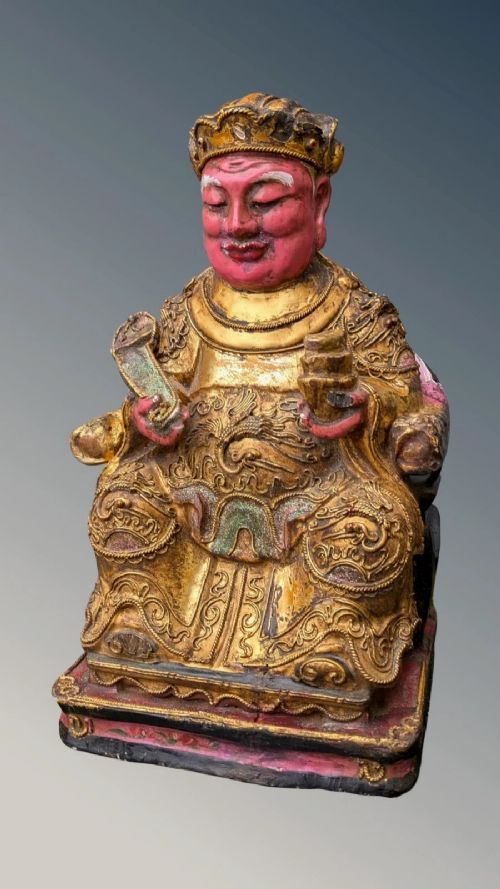
Gold lacquer carving encompasses decorative objects and furniture created across Asian and European traditions, ranging from Japanese display cabinets to Chinese temple panels and deities. Buyers seeking these pieces will encounter items shaped by diverse aesthetic movements, including Chinoiserie, Qing Dynasty, and the Japanese Meiji period.
Domestic furniture forms dominate the current display, particularly stands, cabinets, and carved tables utilising traditional lacquering techniques. Figures of deities and temple sculptures also feature prominently, offering collectors examples of traditional sculptural artistry.
Materials and construction
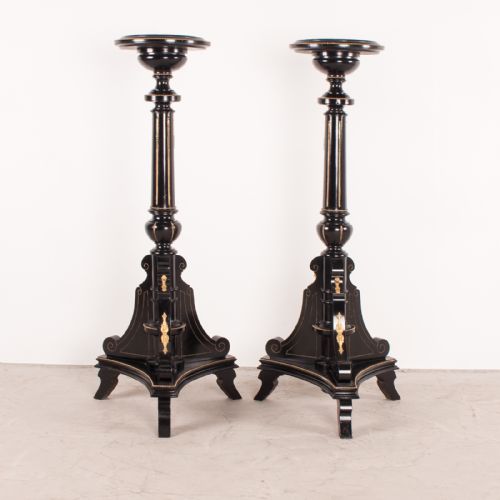
Makers utilised wood, softwood, and ebonised timber as structural bases, applying layers of lacquer to build durable and smooth surfaces. Gold leaf and gilt applied over these foundations created the characteristic metallic sheen seen across panels, figures, and furniture.
Secondary materials such as brass and glass appear on specific forms like display cabinets and wall mirrors, supplementing the primary wooden structures. Carving techniques allowed artisans to shape intricate relief designs depicting figures, floral motifs, and ornamental patterns prior to finishing.
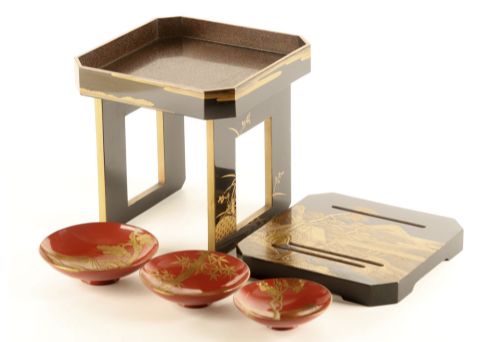
Some tables double as beverage stations, proving that historical ancestors enjoyed a structured tea or sake break just as much as modern collectors.
Assessing quality
Structural integrity and the harmonious integration of stands with upper cabinets influence the overall merit of composite furniture pieces. Consistency in the decorative scheme across multiple panels or matched pairs demonstrates greater workshop cohesion.
The Gold Lacquer Carving Glossary
- Lacquer
- A durable resin finish applied to wooden objects in multiple layers to protect and decorate the surface. This technique creates a smooth, glossy coating that often accepts gold leaf and intricate carving.
- Giltwood
- Timber that has been coated with thin sheets of gold leaf or gold paint for decorative effect. It frequently appears on mirrors, stands, and frames from various periods.
- Chinoiserie
- A European style that reflects Chinese artistic influences, popular in decorative arts and furniture design. Items in this style often feature lacquered surfaces and painted motifs.
- Coromandel
- A type of Chinese incised lacquer screen where designs are carved into a dark lacquer ground and filled with colours or gold. These multi-fold screens serve both decorative and partitioning functions.
- Meji
- Referring to the Meji period in Japanese history, noted for detailed craftsmanship in metalwork, lacquer, and cabinetry. Pieces from this era often display high levels of decorative elaboration.
Gold Lacquer Carving: Frequently Asked Questions
How are gold lacquer carvings cleaned?
Dusting surfaces gently with a soft, dry cloth preserves the delicate lacquer and gold leaf layers without causing abrasion. Liquid cleaners and harsh chemicals damage the protective finish and should be avoided entirely.
Keeping pieces away from direct sunlight and excessive humidity protects the underlying wood and prevents the lacquer from cracking over time.
Are these pieces purely decorative?
While many items like temple panels and statues served spiritual or ornamental roles, forms such as cabinets, tables, and mirrors provided practical utility. Furniture pieces combined functional storage with elaborate surface decoration to suit formal reception spaces.
Owners integrated these items into both traditional and eclectic interiors to introduce texture, pattern, and metallic warmth.
How do I identify a Qing Dynasty piece?
Qing Dynasty items often feature deep carving, polychrome highlights, and rich red or black lacquered surfaces on figures and storage furniture. The motifs typically incorporate traditional symbolic imagery, auspicious figures, and detailed floral patterns.
Construction methods, material weight, and the ageing characteristics of the lacquer assist in determining the historical period of manufacture.