



Traditional Chinese Wall Art
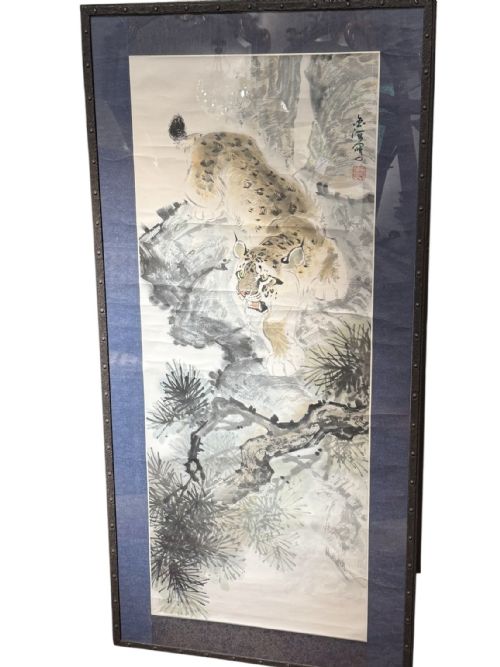
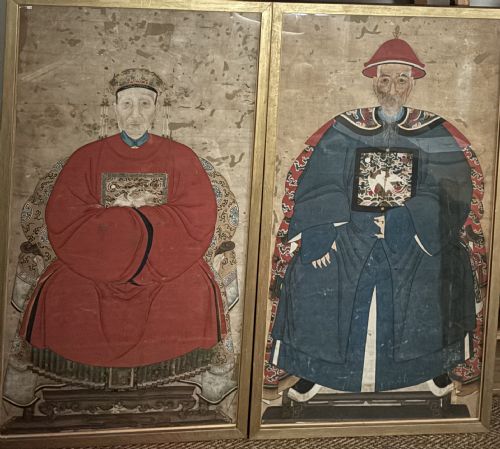
Traditional chinese wall art brings centuries of heritage to your walls, spanning intricate silk paintings, carved wooden panels and reverse glass works.
Traditional Chinese Wall Art
Buyers frequently encounter framed ancestral scrolls, reverse glass portraits, and carved wooden plaques bearing traditional motifs. These pieces reflect distinct aesthetic periods from the Qing dynasty through to mid-century works.
Dating ranges from the mid-eighteenth century to the mid-twentieth century, offering various scales from intimate watercolour studies to large architectural panels. Each format serves a specific decorative function within a room.
Materials and construction techniques
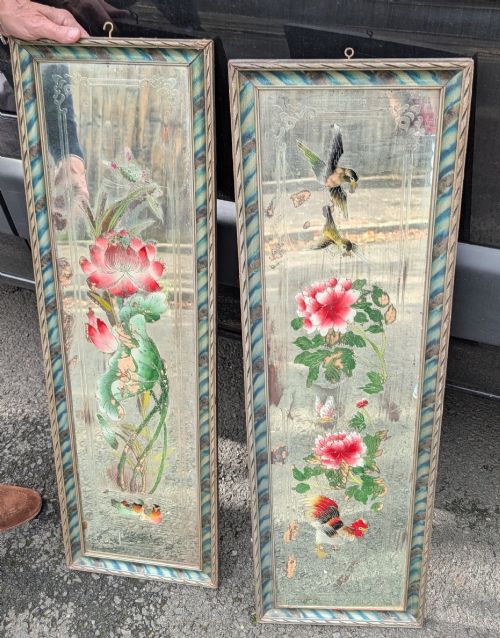
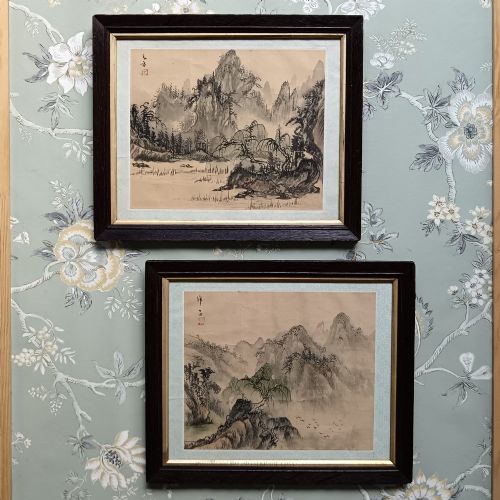
Artisans applied ink and pigment directly onto prepared silk, paper, and glass surfaces to create detailed pictorial scenes and portraits. Reverse glass painting required meticulous brushwork applied to the rear face of the glass to be viewed from the front.
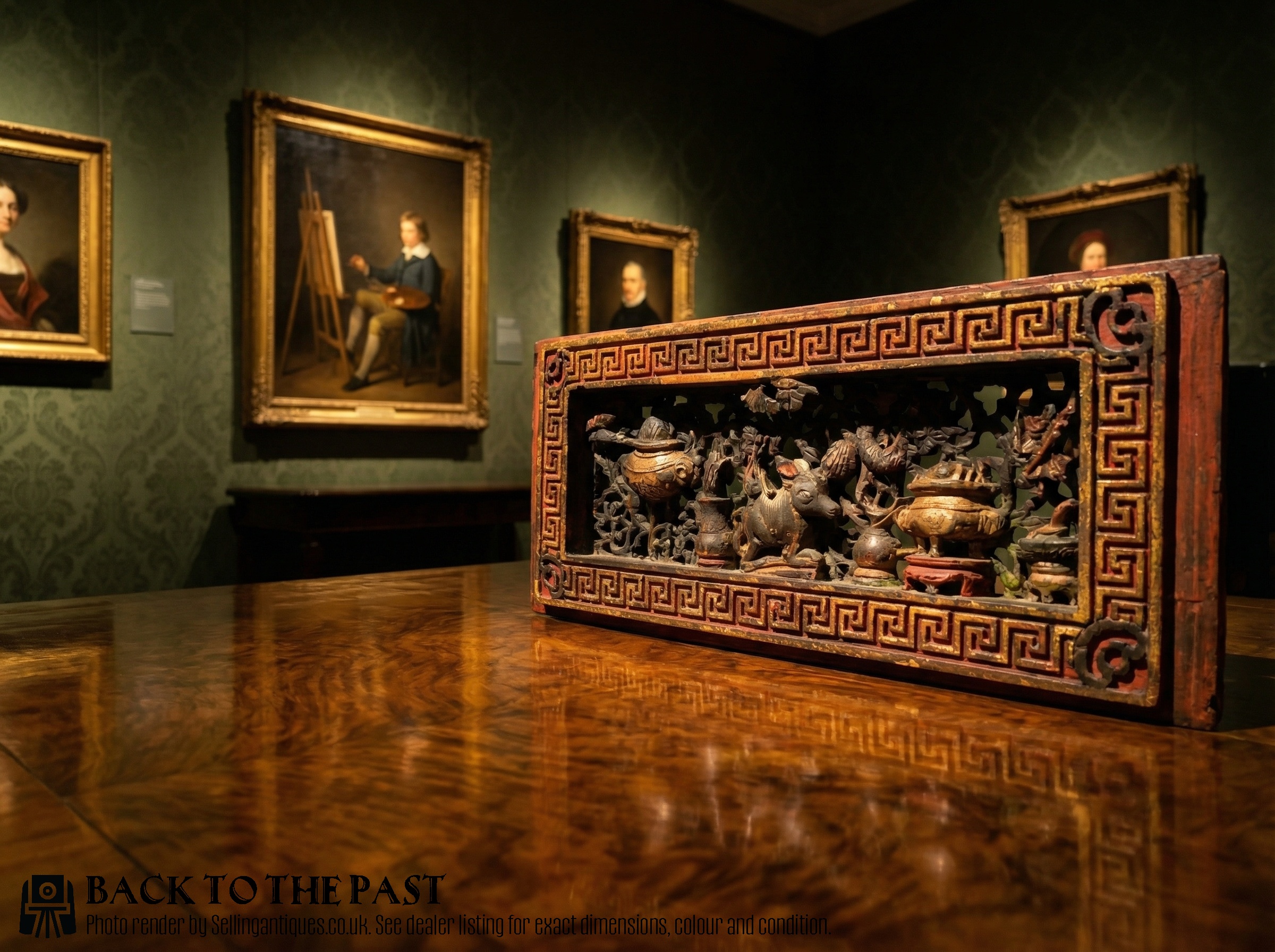
Carved wooden panels utilise relief techniques on dense timber substrates, sometimes combined with lacquer finishes or brass accents. Frames are frequently original to the pieces, preserving historical mounting methods.
The site listings feature works spanning the 18th, 19th, and 20th centuries, executed in media including silk, glass, wood, and paper.
Factors distinguishing quality
Quality rests upon the precision of the brushwork, the depth and execution of the wood carving, and the preservation of the original pigments. Finer examples display meticulous detail in facial expressions, textiles, and natural subjects.
The survival of original framing, glazing, and mounting adds significantly to the integrity of scrolls and paintings. Patina on wood and silk reflects age and storage conditions rather than deliberate manipulation.
The Traditional Chinese Wall Art Glossary
- Reverse glass painting
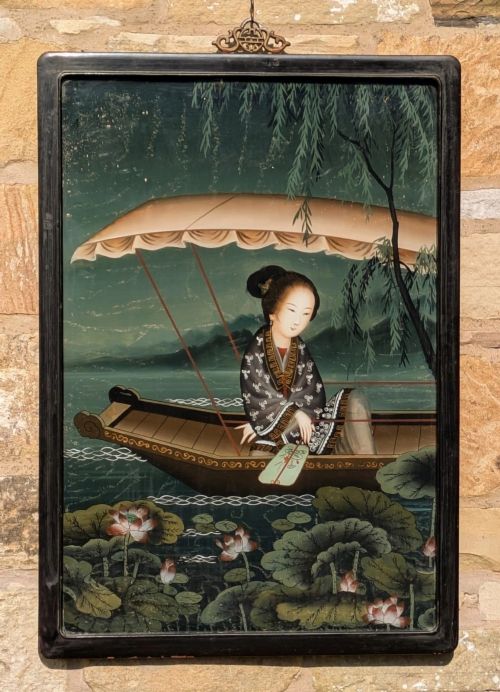
- A technique where the artist paints directly onto the back of a glass panel so the finished image is viewed through the front. This method imparts a glossy finish and preserves the pigments from atmospheric wear.
- Ancestor portrait
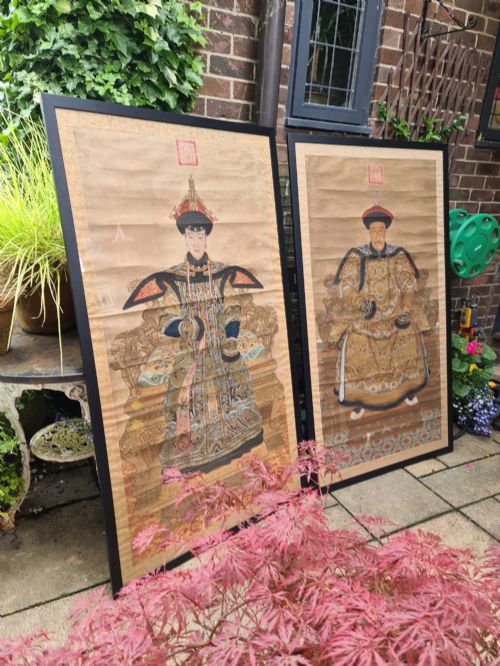
- A formal painting commissioned to honour family forebears, typically depicting sitters in rigid frontal poses. These works hold significant historical and cultural value.
- Scroll
- A flexible length of silk or paper attached to rollers, designed to be rolled up when not displayed. They often feature calligraphy alongside landscape or figurative paintings.
- Shan shui
- A style of traditional painting that depicts natural scenery such as mountains, rivers, and waterfalls. The term translates directly as mountain-water.
- Lacquer panel
- A decorative wooden board coated with multiple layers of treated tree sap resin. This creates a durable, glossy surface often embellished with carved designs or inlay.
Traditional Chinese Wall Art: Frequently Asked Questions
How do I hang antique scrolls safely?
Traditional scrolls require careful handling due to the delicate nature of aged silk and paper. Utilise wall fixings that support the specific weight of the wooden rollers without placing strain on the hanging cord.
Keep pieces away from direct sunlight and fluctuating humidity to protect the pigments and prevent the fabric from warping or becoming brittle over time.
What is a reverse glass painting?
A reverse glass painting is an artwork created by applying pigments directly onto the rear surface of a glass plate. The viewer looks through the glass to see the finished composition, which protects the paint layer from dust and environmental degradation.
This technique produces a distinctive reflective sheen that differentiates these works from standard paintings on paper or canvas.
How do I identify Qing dynasty pieces?
Qing dynasty pieces are identified through stylistic conventions, materials, and internal evidence such as signatures or seals. The visual motifs often adhere to traditional imperial or scholarly aesthetics established during that era.
Consulting the specific construction methods of the frames and panels also aids in establishing a nineteenth or eighteenth-century origin.
Are carved wooden panels structural?
Carved wooden panels function primarily as decorative wall art rather than structural architectural supports. They were frequently created as architectural elements or decorative screens before being mounted for display.
Inspect the reverse of the panels to understand their original mounting context and ensure the hanging hardware is secure.