

Gold Hearth Screen
A gold hearth screen stands before an idle grate, screening the room from sudden sparks whilst catching the flicker of the hearth.
Gold Hearth Screen
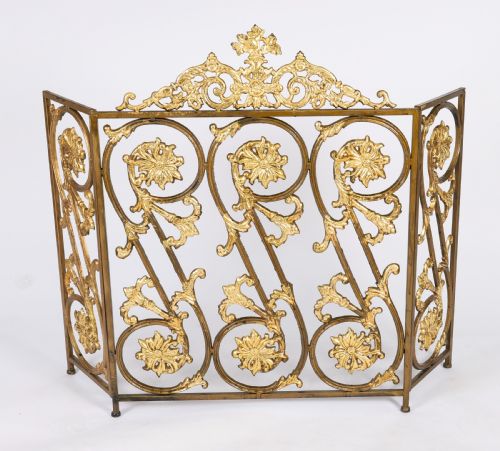
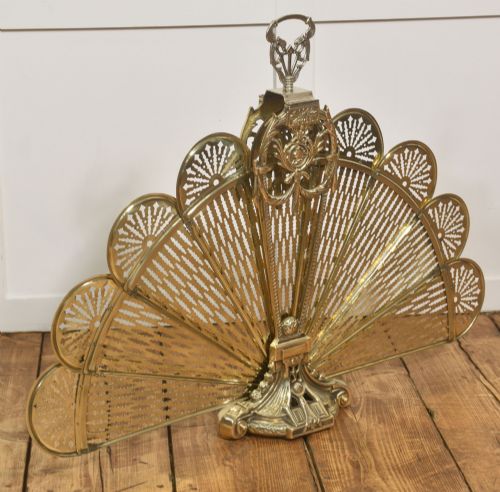
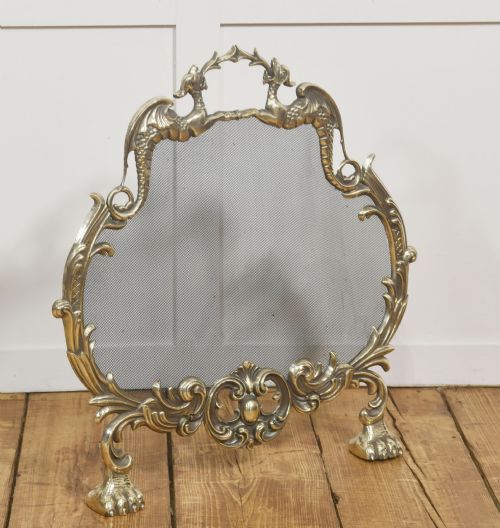
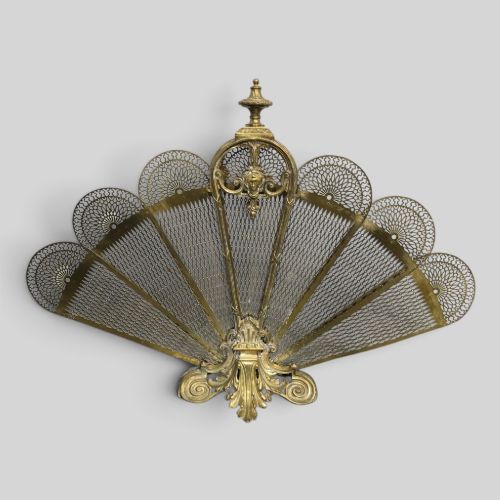
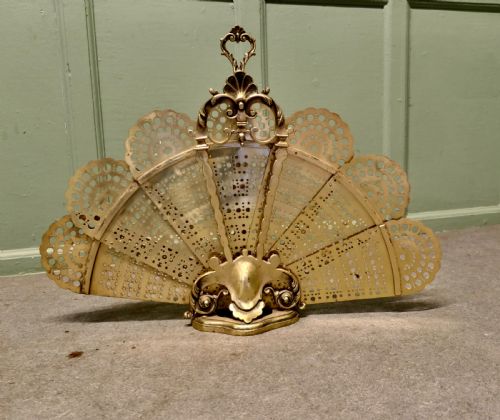
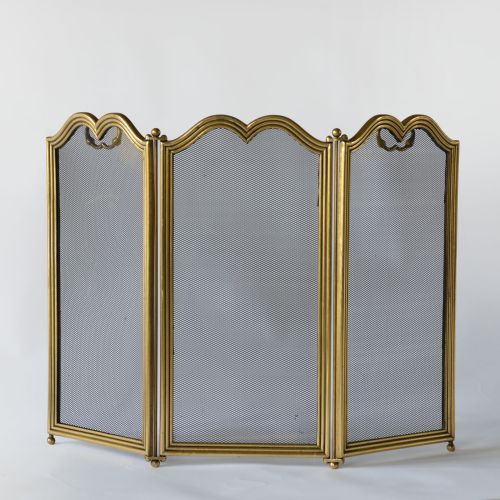
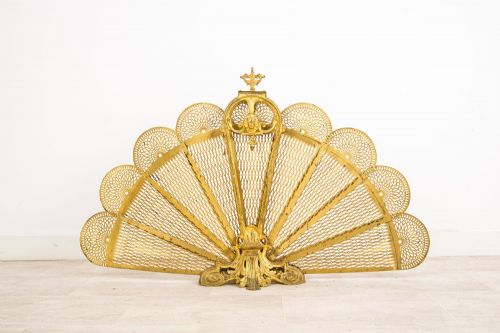
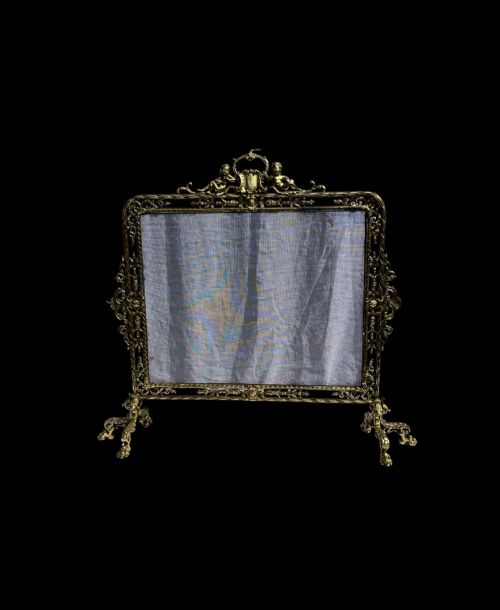
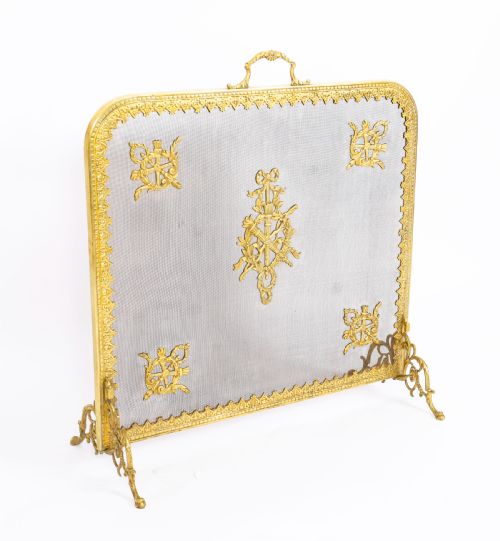
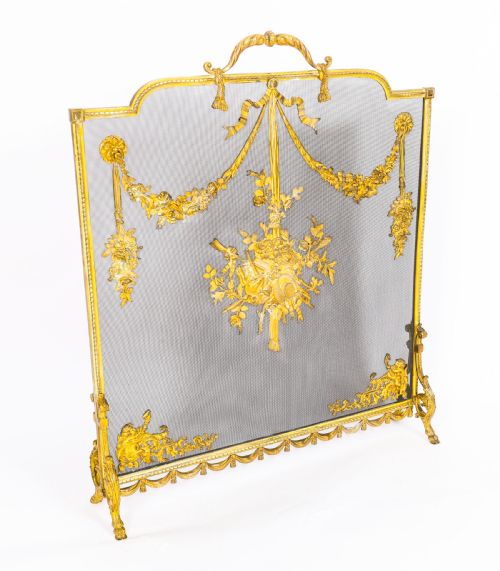
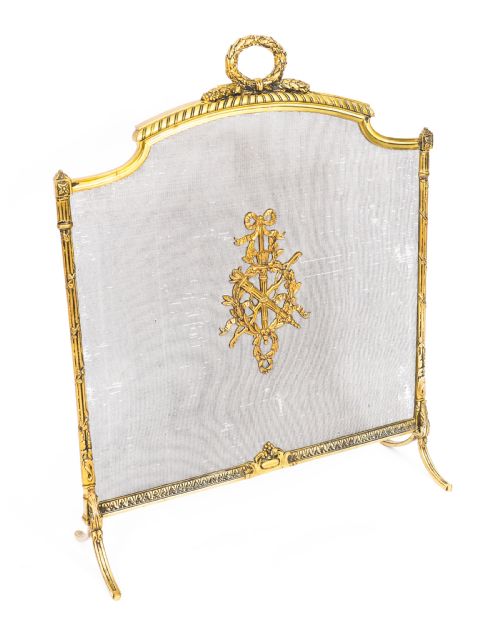
A gold hearth screen brings warmth and reflective metalwork to the fireside, often taking the form of a folding peacock fan, an ornate brass frame, or a framed mesh guard. These functional accessories protect a room from stray embers whilst ornamenting the fireplace during warmer months when the fire remains unlit.
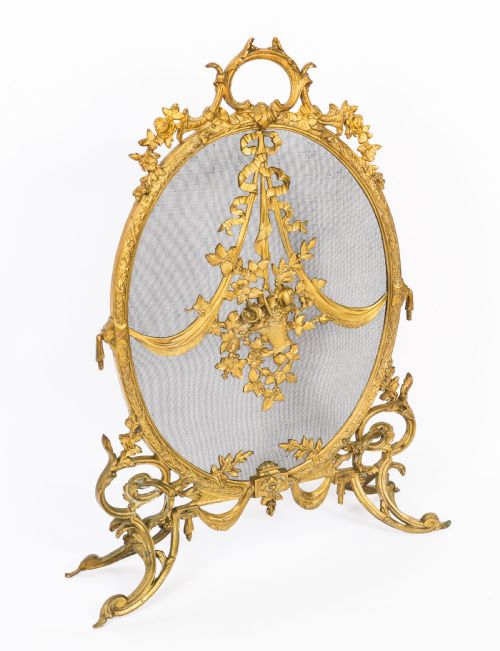
The pieces seen here span the Victorian, Edwardian, and Regency periods, alongside earlier stylistic revivals such as French Rococo, Louis XVI, and Empire styles. Brass, gilt bronze, gilt brass, and giltwood dominate the selection, forming rigid structures, folding guards, and standing pole screens.
Most examples date from the nineteenth and early twentieth centuries, reflecting a period when hearth furniture received heavy ornamental attention. Buyers encounter flat mesh screens, tripartite folding guards, and articulating fan designs featuring cast motifs and pierced brass work.
How they were made
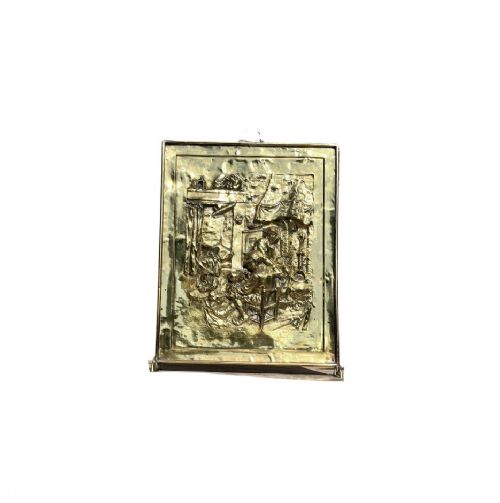
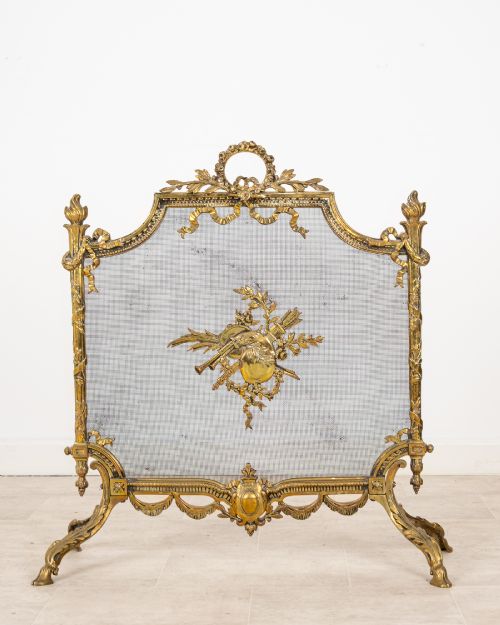
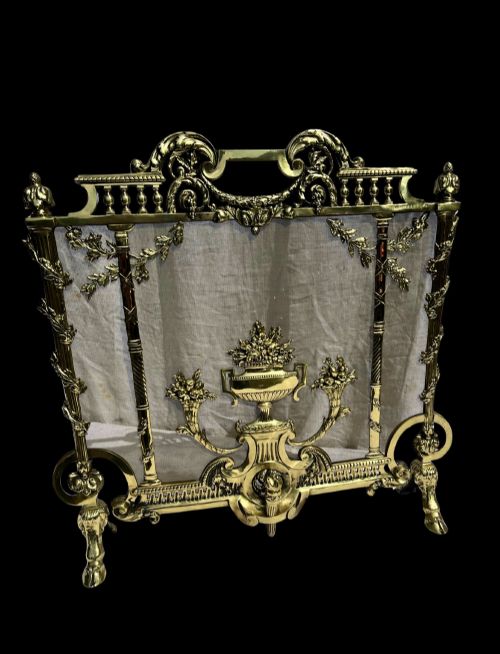
Metalwork forms the core of these pieces, utilising cast brass, gilt bronze, ormolu, and steel mesh shaped into rigid frames or flexible folding panels. Artisans employed casting, piercing, and hammering techniques to build openwork scroll patterns, musical trophies, and classical motifs into the metal.
Gilding applies a gold finish to brass, bronze, and wooden structures, creating the characteristic warm glow associated with these hearth accessories. Wooden frames in giltwood incorporate carved detailing, sometimes housing glass panels, embroidered textiles, or painted surfaces within the central aperture.
Several folding guards open into the precise shape of a peacock's tail, bringing an avian flourish directly to the hearth.
What varies in quality
The refinement of the casting and chasing distinguishes standard production guards from exceptional examples. Finer pieces display crisp botanical motifs, sharply rendered musical trophies, and deeply chased scrollwork without the softening typical of secondary casts.
Weight, gauge of metal, and the mechanics of folding joints or pivoting feet determine the structural integrity of a screen. Superior items utilise heavier brass or bronze frames that remain stable when extended, alongside robust hinges that support multi-fold peacock fans smoothly.
The Gold Hearth Screen Glossary
- Ormolu
- Gilded bronze, where finely ground gold amalgam is applied to a bronze base through heat treatment. This technique gives a rich, durable golden surface to decorative mounts and frames.
- Pole screen
- A freestanding fireside screen with an adjustable panel mounted on a vertical wooden pole. It allowed occupants to shield their faces from the intense radiant heat of an open fire.
- Spark guard
- A fine wire mesh or perforated metal screen placed directly in front of the fire opening. Its primary function is containing flying embers whilst maintaining visibility of the flames.
- Peacock fan
- A folding screen composed of overlapping metal blades that expand into a semicircular fan shape. When closed, the blades nest compactly inside a protective base or sheath.
Gold Hearth Screen: Frequently Asked Questions
What is a gold hearth screen used for?
These screens serve both protective and decorative functions in domestic interiors. During active fires, they catch flying embers to prevent damage to flooring and furnishings.
When the fireplace is unused, the screen remains in place to mask the dark opening with polished brass, gilt bronze, or decorative mesh.
How do you clean a brass fire screen?
Careful dusting with a soft cloth preserves the surface without removing the accumulated patina of age. Avoid harsh chemical cleaners that strip the original gilding or lacquer from antique metalwork.
For stubborn soot deposits, mild soapy water applied sparingly and dried immediately prevents corrosion on the brass or wire mesh.
What is the difference between a pole screen and a hearth screen?
A pole screen consists of a small adjustable panel mounted on a tall vertical stand, designed to sit beside a specific seat. It protected a person's face from the direct heat of the fire.
A hearth screen stands directly in front of the fireplace opening to guard the entire room from sparks and ash.
Are folding peacock screens antique?
Many folding peacock fan screens date from the Victorian and Edwardian eras, typically manufactured from stamped and pierced brass. They became popular in the late nineteenth century as decorative accessories for formal hearths.
Later twentieth-century reproductions also exist, making period confirmation reliant on examining the weight of the metal and construction joints.