
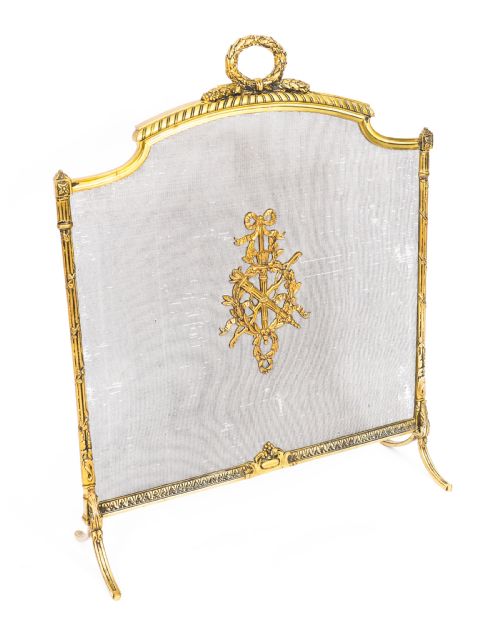


Gilded Fireplace Screen
A gilded fireplace screen brings warmth and reflective shine to a hearth, combining decorative metalwork with functional protection.
Gilded Fireplace Screen
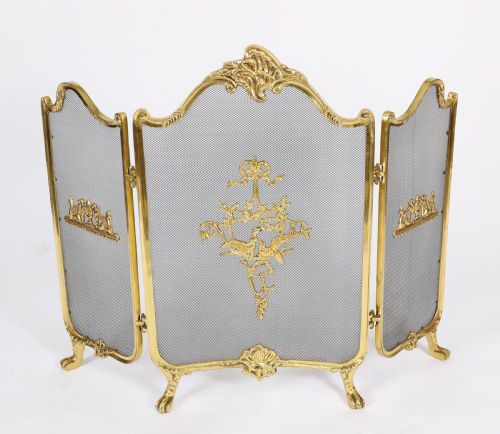
A gilded fireplace screen serves as both an ornamental hearth centrepiece and a practical shield against stray embers, utilising metal and wood construction. The listings here showcase variations ranging from compact face screens to large triple panels designed for open fireplaces.
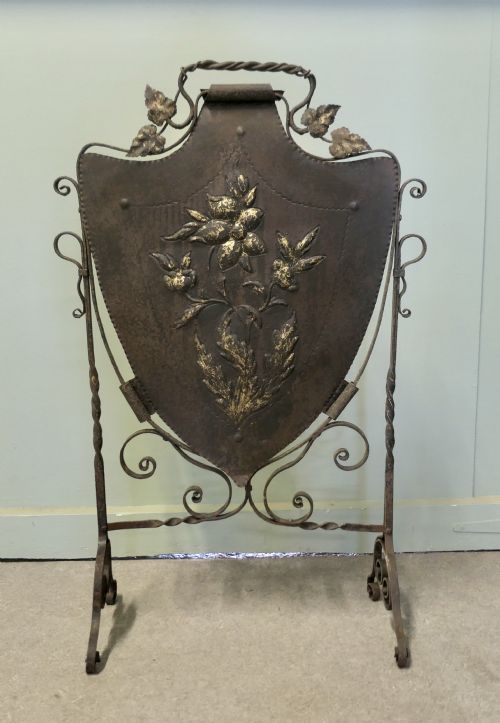
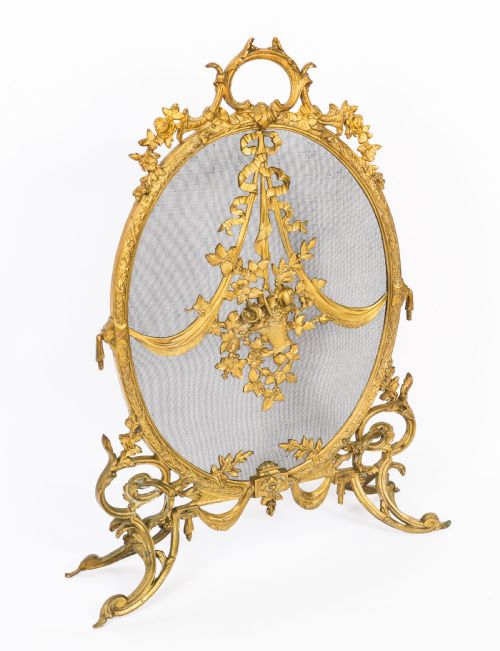
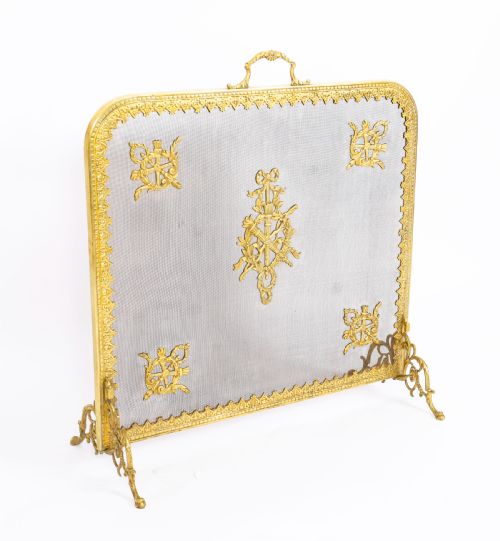
French Rococo Revival and Empire Revival pieces dominate the selection, bringing elaborate cast frames and decorative motifs into domestic spaces. Alongside these, buyers encounter Victorian gothic ironwork, Georgian giltwood, and Chinese Qing Dynasty hand-carved wood panels repurposed for the hearth.
Forms vary from sturdy brass fire guards to intricate wire mesh panels framed in gilt bronze. Smaller handheld face screens also appear, offering personal protection from radiant heat before the fire settles.
How they were made
Metalwork forms the backbone of these pieces, employing cast gilt bronze, brass, wrought iron, and steel mesh to create durable frames. Artisans shaped these metals through casting and forging, often applying gold leaf or gilt finishes to catch the firelight.
Victorian ladies relied on delicate papier-mâché face screens to keep their complexions from melting before the parlour fire did its worst.
What varies in quality
The sophistication of the casting and carving dictates the refinement of each piece, distinguishing mass-produced items from bespoke workshop commissions. Finer screens display crisp detailing in motifs such as flaming torches, classical trophies, and rococo scrolls.
The integrity of the gilding and the weight of the bronze or brass framework indicate the standard of manufacture. Original mesh panels and solid hinges also separate standard domestic guards from high-status decorative furnishings.
The Gilded Fireplace Screen Glossary
- Gilt bronze
- An alloy treated with a gold finish, frequently used in decorative French fireplace screens to provide a lasting metallic sheen.
- Fire guard
- A protective barrier placed before a hearth to stop sparks from reaching the room, often constructed from brass or iron wire.
- Face screen
- A small handheld panel designed to shield a person's complexion from the intense radiant heat of an open fire.
- Rococo Revival
- A nineteenth-century design style drawing on eighteenth-century motifs, characterised by asymmetrical scrolls, floral elements, and flowing lines.
- Empire Revival
- A classical architectural style inspired by the Napoleonic era, featuring military trophies, flaming torches, and formal symmetry.
Gilded Fireplace Screen: Frequently Asked Questions
How do I use a fire screen?
A fire screen stands directly in front of the hearth opening when the fire is lit or dying down. It prevents sparks from escaping onto the floor while allowing warmth to circulate.
Smaller handheld versions were traditionally held by individuals to protect their faces from the direct heat of the flames.
Are these screens safe for use?
Many historical screens feature sturdy wire or steel mesh designed to contain sparks effectively. However, structural stability varies depending on age and material.
Buyers should assess the weight and base of each piece to ensure it stands securely on a hearth without tipping.
How do I tell French and English styles apart?
French screens from this selection typically display ornate Rococo or Empire Revival details, utilising gilt bronze with cast motifs like torches and scrolls. They lean toward decorative elaboration.
English pieces, such as those from the Georgian or Victorian periods, often emphasise architectural wood framing or simpler brass and iron construction.
Can I clean the gilded metal?
Gilded surfaces require gentle dusting with a soft, dry cloth to remove surface particles. Avoid chemical polishes, as they can strip the thin gold finish.
Heavier metal components like solid brass frames tolerate mild cleaning solutions, but care must be taken near the mesh and gilded areas.