


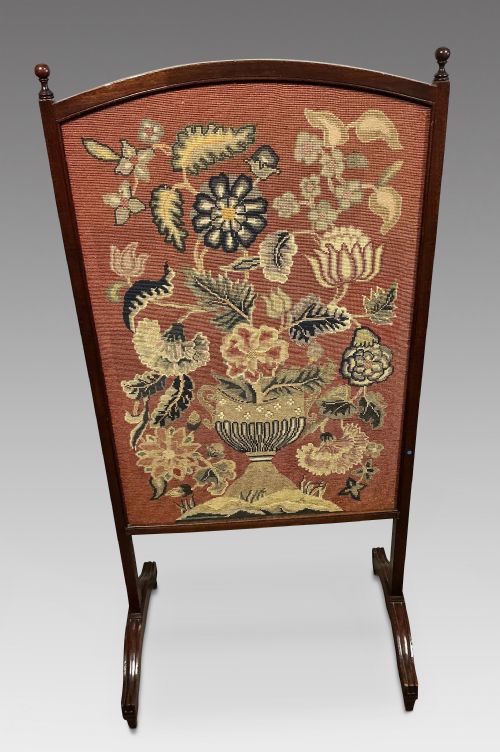


Carved Wood Fireplace Guard
A carved wood fireplace guard protects a room from radiant heat while concealing an unlit hearth with traditional craftsmanship.
Carved Wood Fireplace Guard
A carved wood fireplace guard takes the form of a standing screen positioned in front of a hearth to block warmth and drafts when a fire is unlit. Buyers seeking a carved wood fireplace guard will encounter various nineteenth century examples alongside Georgian and seventeenth century interpretations.
The objects appear under several designations including fire screens, firescreens, and fireplace screens. Most pieces on this page combine timber frames with decorative inserts such as needlework, tapestry, canvas, wool, silk, or glass panels.
Origins span English and Dutch traditions, incorporating distinct regional aesthetics from the George III era through the Victorian period and Black Forest workshops. These screens function as both room dividers and decorative focal points within the domestic interior.
Materials and construction methods
Frames rely upon timbers such as oak, mahogany, rosewood, walnut, and giltwood, shaped through period joinery and carving techniques. Timber components frequently feature bobbin turning, intricate mouldings, or figural woodcarvings characteristic of styles like Dutch Renaissance Revival and Rococo Revival.
Central panels employ diverse textile and decorative arts, including hand-woven needlepoint, pastoral tapestry, wool work, silk embroidery, and embossed or chased brass. Glazed panels incorporate glass to frame heraldic motifs, coats of arms like those of the Clan Maclellan, or pictorial scenes.
Listings feature oak, mahogany, rosewood, walnut, and giltwood alongside textiles like wool, silk, and canvas.
Distinctions in craftsmanship and design
Quality separates through the depth and precision of the timber carving, alongside the complexity of the frame's structural joinery. Finer pieces demonstrate superior hand-carved details and sophisticated turnings rather than simple machined mouldings.
The artistic execution of the central panel dictates overall merit, distinguishing finely worked needlepoint, silk embroidery, or chased brass from standard textile inserts. Material selection also plays a role, with dense hardwoods like rosewood and mahogany holding greater finish retention over time.
The Carved Wood Fireplace Guard Glossary
- Cheval fire screen
- A screen supported by twin upright posts and feet, allowing the central panel to swing or adjust on pivots.
- Needlepoint
- A type of canvas work embroidery executed with wool or silk yarn, frequently seen forming the pictorial panel of a screen.
- Giltwood
- Timber that has been coated with a thin layer of gold leaf, prominent in grander Georgian and revival examples.
- Bobbin turned
- Woodwork shaped on a lathe to resemble a series of bobbins or spools end-to-end, popular during the Victorian era.
- Chased brass
- Metalwork decorated by hammering or indenting from the front to raise a design, often combined with oak frames.
Carved Wood Fireplace Guard: Frequently Asked Questions
What is a carved wood fireplace guard used for?
A carved wood fireplace guard shields a room from excessive heat when a fire burns low and conceals the empty grate during warmer months.
Historically, these screens also protected ladies' complexions from the scorching heat of open coal fires.
How do I place a screen by a hearth?
Position the screen a safe distance directly in front of the fireplace opening to block drafts and manage stray sparks from dying embers.
Ensure delicate textiles or wooden frames do not sit close enough to active flames to sustain heat damage.
How do I distinguish Victorian from Georgian styles?
Victorian screens frequently display heavy ornamentation, darker woods like walnut or rosewood, and revival motifs inspired by Gothic or Rococo styles.
Georgian pieces, particularly those from the George III period, typically exhibit lighter proportions, refined giltwood, and classical symmetry.
What materials make up these fireplace screens?
The structural frames consist of hardwoods such as oak, mahogany, walnut, and rosewood, occasionally finished with giltwood.
Central inserts feature textiles including wool, silk, canvas, and needlepoint tapestry, alongside brass and glass panels.