


Gold Gilt Wood Lamp
A gold gilt wood lamp brings warmth and historic presence to a room through carved surfaces and gilded finishes.
Gold Gilt Wood Lamp
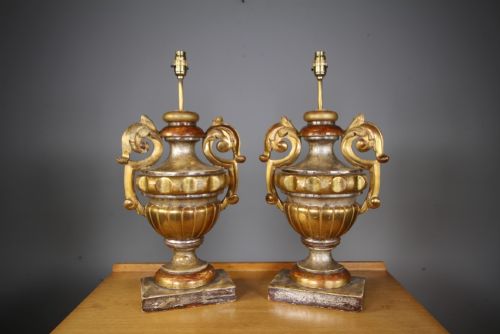
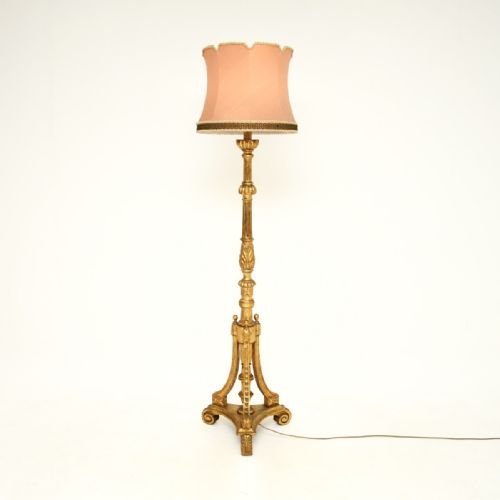
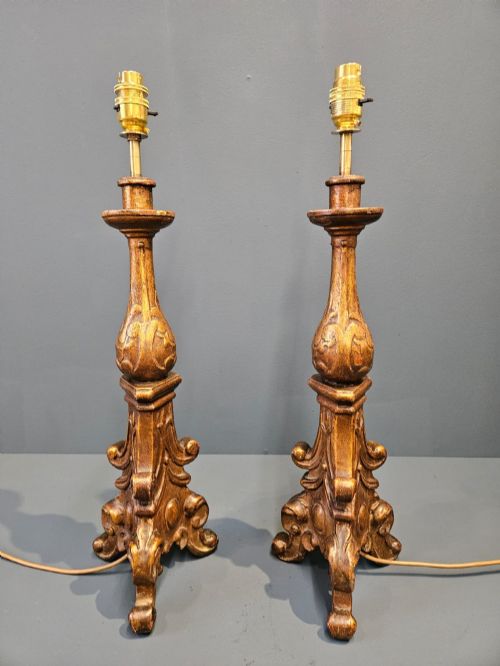
A gold gilt wood lamp combines carved timber bases with metallic leaf, ranging from table models to tall floor standards. The selection frequently includes pieces adapted from earlier candlesticks, pricket sticks, and architectural urns.
Originating across multiple periods, these pieces show heavy Italian, Spanish, and French influences in styles such as Baroque, Neoclassical, and Victorian. Many examples date from the nineteenth and early twentieth centuries, reflecting diverse regional carving traditions.
Makers utilised various timber forms, transforming candle holders and altar pieces into functional lighting while retaining their original decorative character. Buyers encounter both diminutive boudoir designs and substantial floor-standing standards suited for larger spaces.
Materials and construction
Artisans carved pine, timber, and other woods into complex shapes before applying layers of gesso to smooth the surface for gilding. Gold and silver leaf or liquid gold paint was then laid over the prepared wood to achieve a luminous metallic finish.
Many lighting pieces incorporate brass fittings and fabric elements to complete the conversion from older candle-carrying implements or architectural fragments. Original polychrome paint finishes occasionally survive beneath or alongside the exterior gilding.
Listings for this phrase include items spanning the eighteenth century through to the 1930s, utilising materials such as carved pine, gesso, and brass.
Quality variations
The depth and execution of the hand-carving distinguish finer examples from simpler production, particularly in floral motifs, figurative elements, and architectural mouldings. Crisp detail in the woodcut directly reflects the skill of the original workshop.
The integrity of the original gilt surface and gesso foundation determines the visual richness of the piece over time. Uniform application of gold leaf and the survival of authentic polychrome details elevate the status of an antique standard.
Whytock and Reid·E. Daligny
The Gold Gilt Wood Lamp Glossary
- Giltwood
- Wood that has been coated with thin sheets of gold leaf or powder over a prepared ground. This technique provides a durable metallic sheen while preserving the underlying carved wooden structure.
- Gesso
- A plaster mixture applied to carved wood to create a smooth surface for gilding. It allows artisans to render sharp details before laying the gold leaf.
- Pricket stick
- A type of candle holder featuring a central spike upon which the candle is mounted. These historic altar pieces are frequently converted into functional lamp bases.
- Parcel gilt
- A decorative treatment where only specific portions of an object are gilded while other areas show painted wood or natural timber. This method creates contrast within Neoclassical and Baroque designs.
- Standard lamp
- A tall floor-standing lighting fixture designed to illuminate a room from a vertical post. These pieces often feature heavy carved bases for stability.
Gold Gilt Wood Lamp: Frequently Asked Questions
What is a gold gilt wood lamp?
A gold gilt wood lamp is a lighting fixture constructed from carved timber and finished with gold leaf or metallic paint. These items often originate from older candlesticks, altar pieces, or decorative columns converted for modern electric use.
They appear in various forms, including tall floor standards, boudoir models, and table lamps. The construction draws upon traditional woodworking and gilding techniques developed across European artisan centres.
How do I date a gilt wood lamp?
Dating these lamps involves examining the underlying wood, the composition of the gesso layer, and the style of the carving. Pieces from the eighteenth century often display hand-carved pine and structural wear consistent with heavy age.
Later Victorian and early twentieth-century examples frequently adopt historical revival styles such as Italian Baroque or French Chateau. Hardware components and wiring methods also provide clues regarding when an older object was converted into a lamp.
Were these always lamps originally?
Many examples began life as candlesticks, altar pricket sticks, architectural urns, or decorative figures before being converted into lamps. Artisans adapted these items to accommodate electrical fittings while preserving the original carved wooden body.
This practice explains why some lamp bases exhibit proportions typical of handheld lighting or church furnishings rather than standard twentieth-century electric bases.
How do I care for gilt wood?
Gilt wood requires gentle maintenance to protect the delicate gold leaf and underlying gesso foundation from damage. Dusting should be performed softly with a dry, non-abrasive cloth without applying chemical cleaning agents.
Keeping the pieces away from excessive moisture and direct sunlight prevents the metallic surface from tarnishing or flaking over time. Careful placement ensures the historic finish remains intact.
What styles are common in these lamps?
The available selection heavily reflects European design movements, particularly Italian, Spanish, and French Baroque styles. Neoclassical motifs and Victorian interpretations also appear frequently among the listed items.
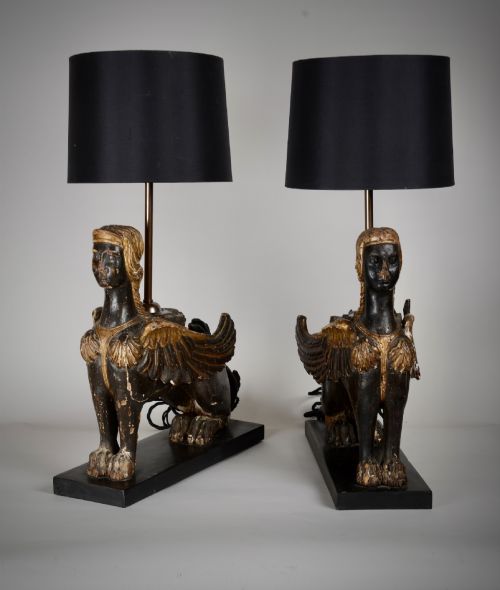
These designs often incorporate elaborate scrollwork, fluted columns, or figurative elements like sphinxes and putti. The aesthetic leans toward ornate historical forms rather than plain modern minimalism.