


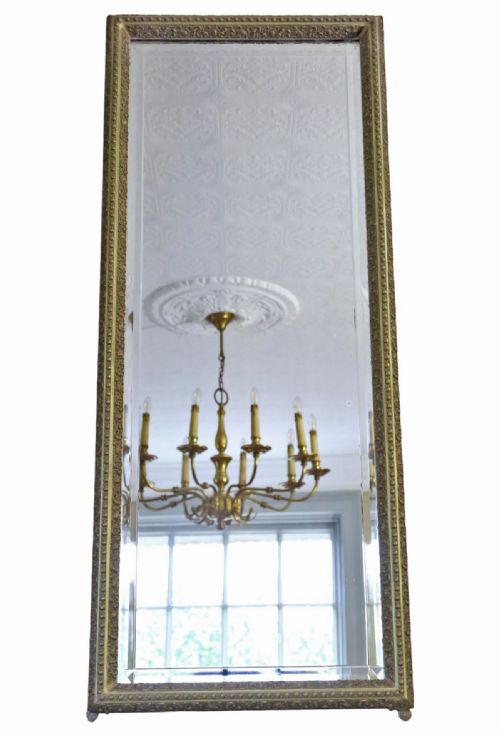


Gold Gilt Standing Mirror
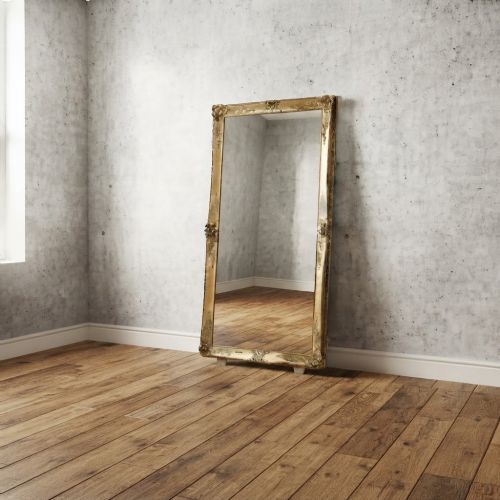
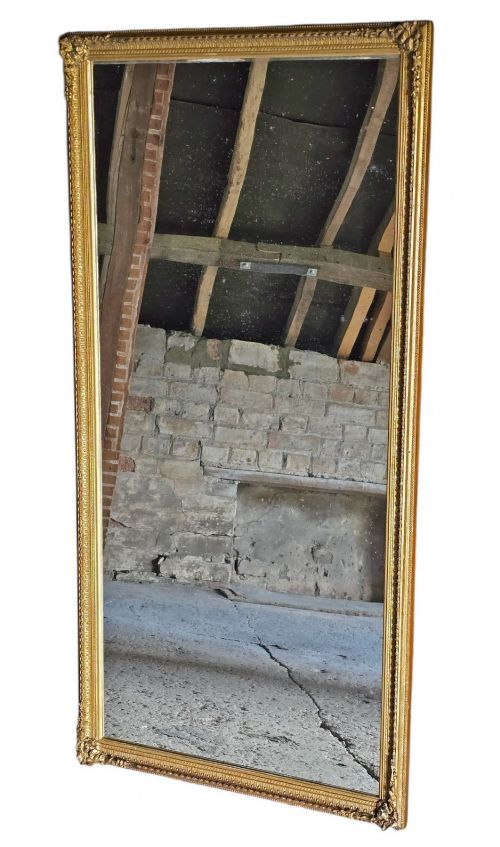
A gold gilt standing mirror brings a commanding sense of light and proportion to a room, whether in a tall floor-standing leaner format or upon a dressing table.
Gold Gilt Standing Mirror
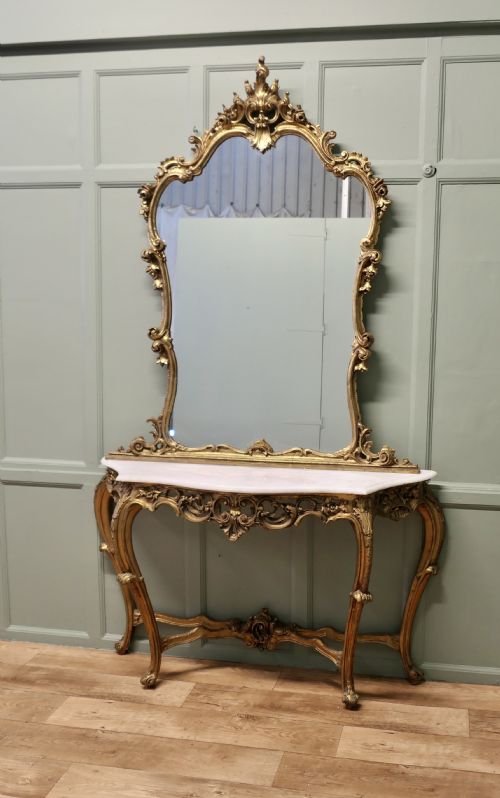
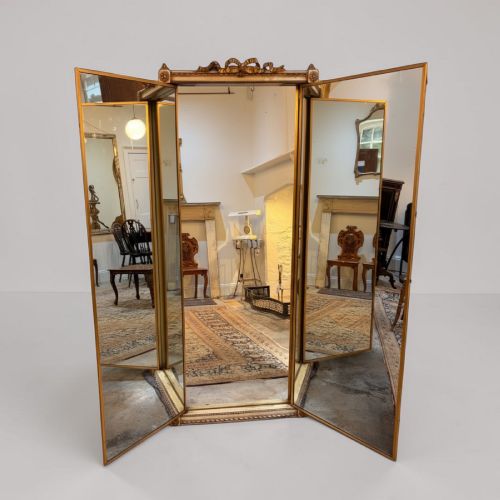
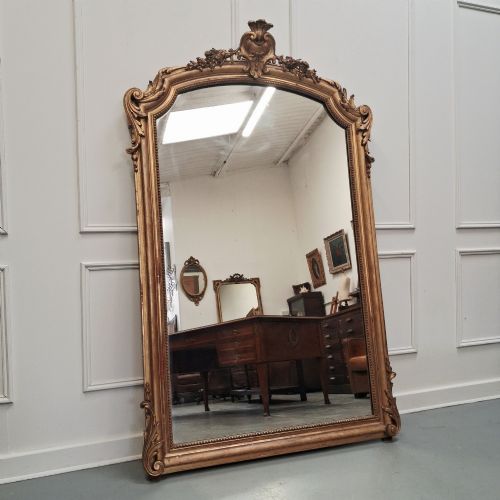
A gold gilt standing mirror combines functional glass with decorative framing, encompassing formats from full-length floor mirrors and cheval frames to smaller tabletop and dressing table variants. When searching for a gold gilt standing mirror, buyers encounter pieces spanning the Victorian and Edwardian eras alongside French chateau and Rococo revival styles.
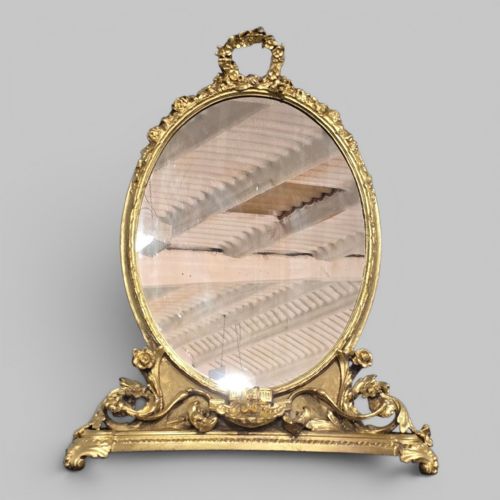
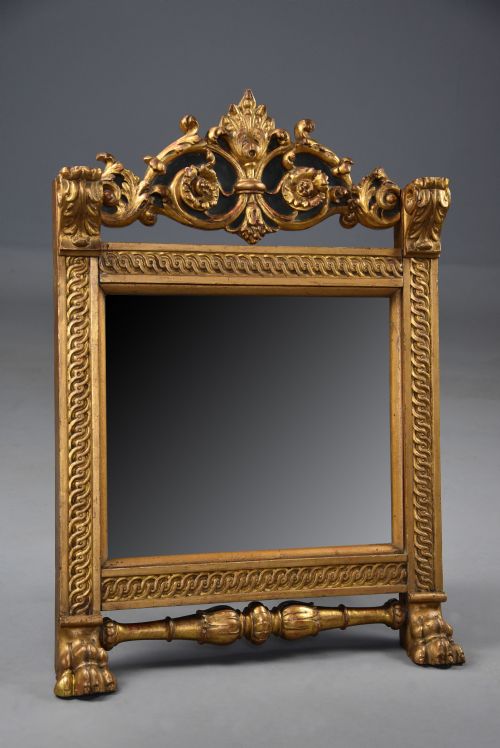
The selection ranges from tall floor-standing leaner mirrors and cheval dressing mirrors to compact oval vanity and toilet mirrors meant for tables. Many examples incorporate easel backs or wooden stands designed to support the glass upright without requiring wall fixings.
Materials and construction
Frames are constructed from carved wood, giltwood, or composition material, coated with gesso and finished with gold leaf or gilding. Many pieces combine traditional wood carving with moulded ornamentation to achieve ornate architectural or floral motifs.
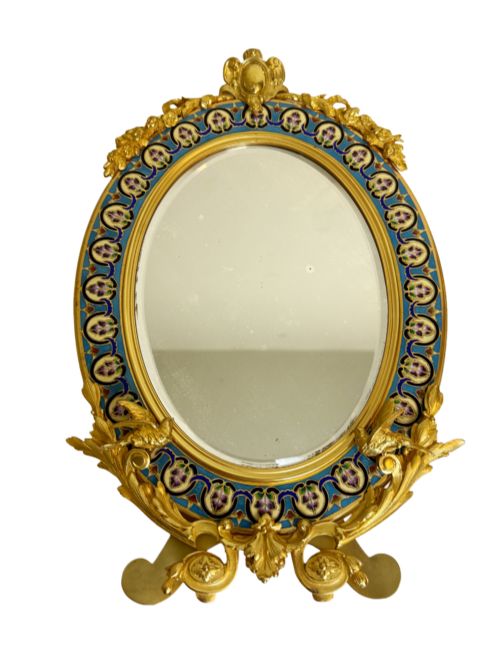
Mirrors utilise silvered mirror glass, occasionally paired with decorative bronze, ormolu, champleve, and enamel insets. Easel stands and structural mounts rely on sturdy timber backings and metal hinges to sustain the weight of the glass.
One exceptional vanity mirror includes Limoges enamel signed by F. Bienvue, proving that even a quick glance in the glass involved fine art.
Assessing quality
Quality rests in the crispness of the carved wood and gesso details, where hand-tooled depth outperforms cast composition ornaments. The application of gold leaf and the preservation of the original gilding dictate the visual richness of the surface.
The clarity and weight of the mirror glass, alongside the structural integrity of the easel stand or frame joints, separate robust workshop execution from simpler production.
The Gold Gilt Standing Mirror Glossary
- Giltwood
- Wood that has been coated with gold leaf or gilt preparation. This finish provides a warm, reflective surface characteristic of formal period frames.
- Gesso
- A plaster-like mixture applied to wood frames to create a smooth surface for gilding and carving. It allows artisans to shape intricate relief ornamentation.
- Cheval mirror
- A full-length mirror hung in a frame that allows it to swing or tilt. These freestanding pieces typically stand on four feet.
- Champleve
- An enamelling technique where troughs are sunk into a metal surface and filled with vitreous enamel. It appears on decorative mounts of nineteenth-century dressing mirrors.
- Ormolu
- Gilded bronze used for decorative mounts and decorative hardware. The technique yields a rich metallic lustre on luxury table mirrors.
Gold Gilt Standing Mirror: Frequently Asked Questions
How do I place a floor mirror?
Leaner mirrors rest securely against a vertical wall, anchoring large rooms by reflecting light and expanding visual space without permanent installation.
Ensure the floor surface provides stable friction to prevent slipping, or utilise hidden wall tethers for added stability.
Where were table mirrors used?
Tabletop and dressing mirrors found placement on mahogany or walnut chests of drawers and dressing tables in nineteenth-century bedrooms.
Their adjustable easel stands allowed users to alter the angle for grooming and dressing under natural window light.
How do I clean giltwood frames?
Dust giltwood frames gently with a soft dry brush to prevent abrasive particles from scratching the delicate gold leaf surface.
Avoid liquid cleaners entirely, as moisture penetrates old gesso and strips the historical gilding over time.
What defines Rococo style?
Rococo revival pieces feature asymmetrical scrolls, C-scrolls, and naturalistic floral motifs carved into the wood and gesso frame.
Originating in eighteenth-century France, this decorative language returned with vigour during the nineteenth century on grand mirrors.