
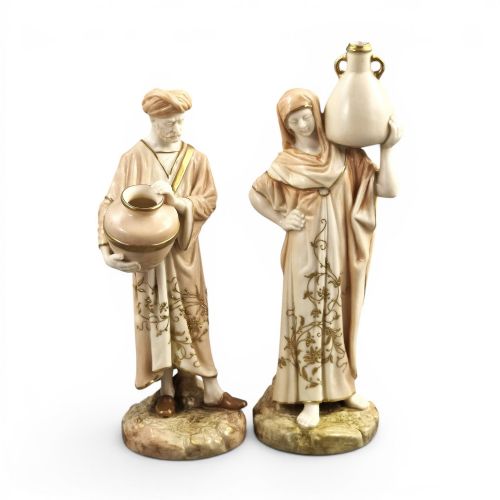
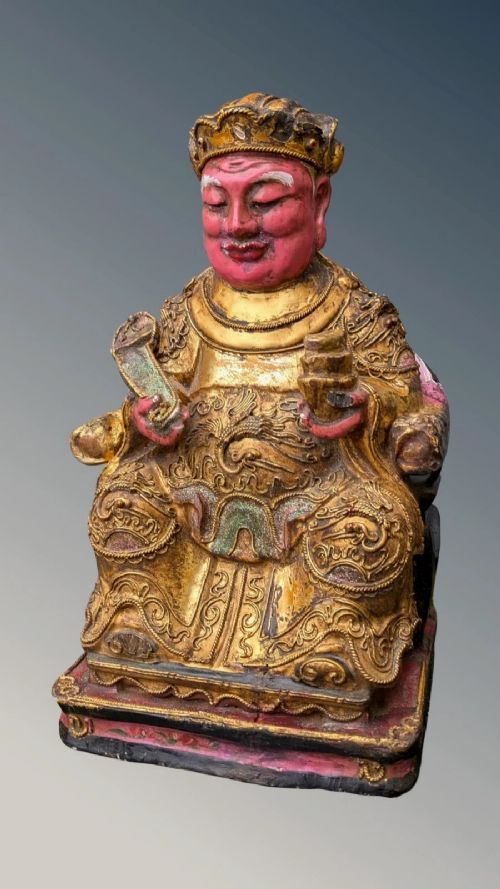




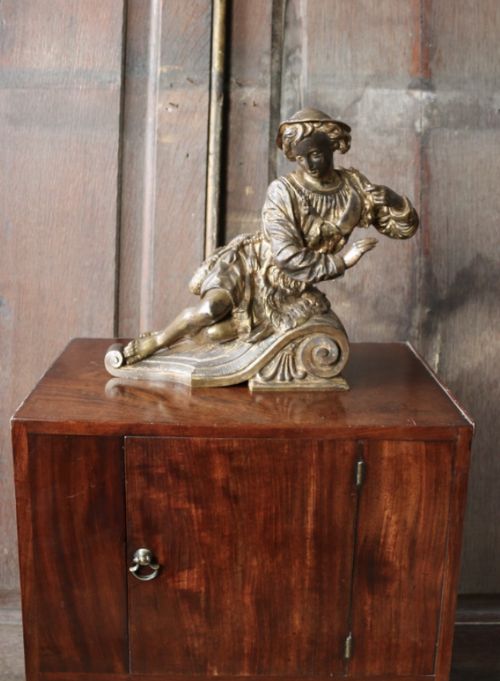


Gold Gilded Statue
Gold gilded statue pieces bring classical weight and luminous surface to a room, ranging from small devotional figures to grand bronze deities.
Gold Gilded Statue
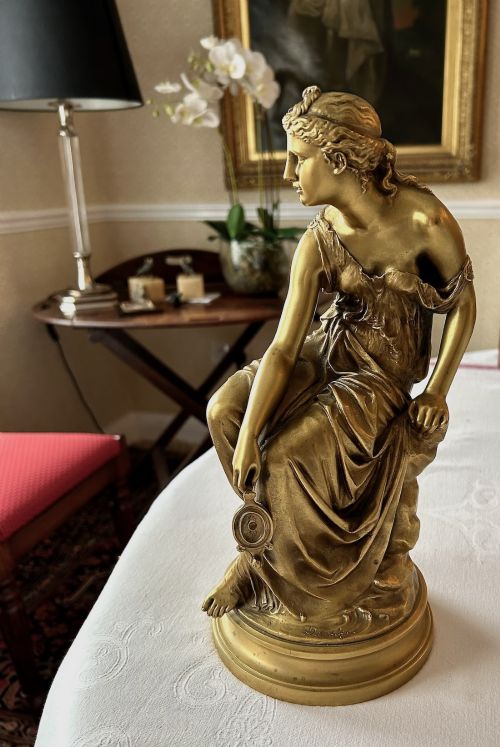
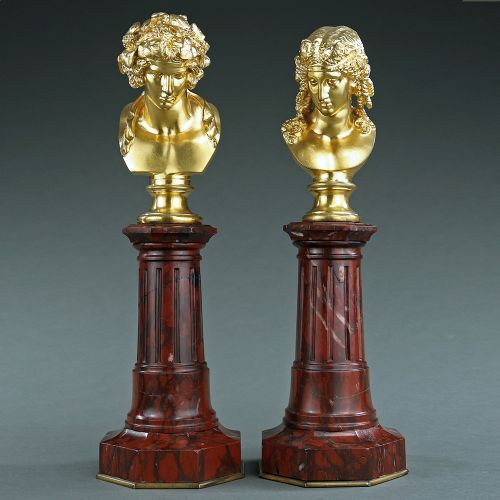
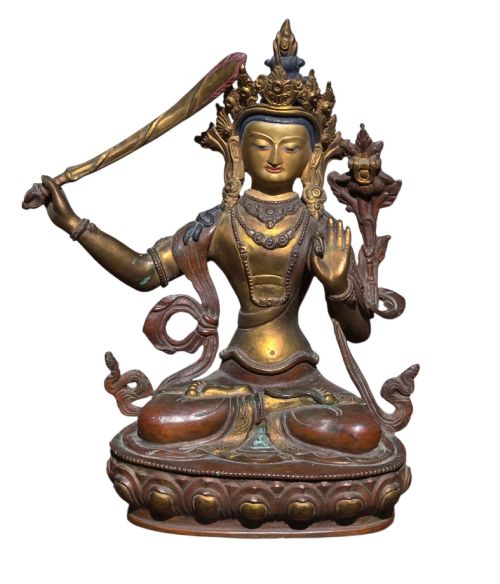
A gold gilded statue is a sculptural object coated in a layer of gold leaf, gesso, or ormolu, capturing forms from classical European history and Eastern traditions alike. When searching this phrase, a buyer encounters everything from French neoclassical bronze figures and Grand Tour busts to Sino-Tibetan and Burmese wooden Buddhas.
The versions met most frequently on this page span the eighteenth and nineteenth centuries, alongside Edwardian and Art Deco interpretations. These range from porcelain figures by factories such as Royal Worcester and Chelsea to heavy gilt bronze representations of deities, animals, and mythological subjects.
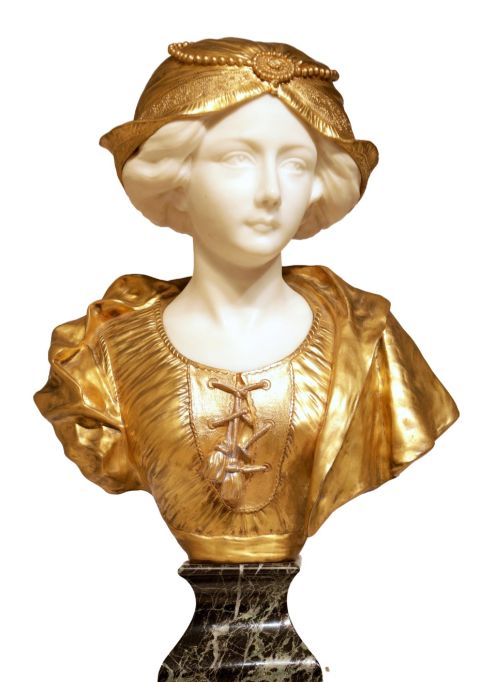
Makers and ateliers across France, Italy, Britain, and Asia shaped these works in distinct regional styles, incorporating materials like carved wood, marble, and polychrome finishes. Every piece carries the sculptural conventions of its period, whether Baroque, Neoclassical, or Art Nouveau.
Materials and construction methods
Sculptors utilised bronze cast through the lost-wax method, then finished the metal with ormolu or gilding to create a deep, metallic lustre. Other makers carved timber, applying gesso and gold leaf over a prepared wooden base to achieve rich, light-reflecting surfaces.
Porcelain and earthenware figures received painted glazes and gold accents, fired in kilns to lock the metallic decoration onto the ceramic body. Stone and marble were frequently mounted on wooden or metal plinths, combining solid mineral weight with delicate surface ornamentation.
Among the gilded figures stand faithful metal dogs and a dentist bear, proving that historical sculptors enjoyed portraying animals with human professions.
Distinctions in craftsmanship and preservation
Quality rests in the crispness of the initial cast or the depth of the hand-carved detail beneath the metal leaf. Fine chisel work on bronze or precise carving on wood allows light to catch the edges sharply, separating accomplished studio output from simpler commercial production.
The survival of the original gilding or polychrome pigment dictates the integrity of a piece. Examples retaining undisturbed layers of gold leaf or original ormolu show the maker's intended contrast between matte and burnished areas without heavy modern restoration.
Etienne-Henri Dumaige·Affortunato Gory·James Hadley·Louis Riche·Christophe Fratin·Ernst Wahliss·Claire Colinet
The Gold Gilded Statue Glossary
- Gilt bronze
- Metal cast in bronze and treated with a gold wash or mercury gilding. This technique provides the heavy, durable foundation seen in numerous nineteenth-century French figures.
- Ormolu
- Finely ground gold applied to a bronze base using a mercury amalgam. The resulting surface gives a bright, golden finish characteristic of decorative objects and clock mounts.
- Gesso
- A plaster mixture applied to wood or canvas as a prepared base before gilding. It provides a smooth white ground that allows gold leaf to adhere evenly.
- Bodhisattva
- An enlightened being destined for buddhahood who helps others attain salvation. These figures appear frequently in gilt bronze and carved wood from Asian traditions.
- Polychrome
- Decoration employing several colours on a single object. Painters used this method alongside gilding on wooden saints, angels, and temple guardians.
Gold Gilded Statue: Frequently Asked Questions
How do I clean a gilded surface?
Dust gently with a soft, dry brush to prevent scratching the delicate metal leaf or ormolu. Avoid water, harsh chemicals, and abrasive cloths that strip the gold layer.
Heavier grime requires professional conservation rather than household cleaning agents. Preserving the original surface maintains the historical integrity of the piece.
What is the difference between bronze and giltwood?
Bronze involves metal casting, offering substantial weight and sharp metallic detail. Giltwood uses carved timber coated in gesso and gold leaf, providing lighter mass with intricate organic carving.
Both materials received gilding to simulate solid gold, but their underlying structures and ageing processes differ entirely.
How can I tell the period of a statue?
Examine the casting quality, tool marks, and the style of the base or plinth. Neoclassical and Baroque pieces display specific classical motifs, while Art Nouveau and Art Deco introduce flowing lines or geometric bases.
Maker marks, signatures stamped into the metal, or painted factory stamps on porcelain also help pinpoint the exact era.
Where were these statues displayed originally?
European figures often sat on mantelpieces, desks, or wooden pedestals within wealthy drawing rooms and libraries. Asian and religious figures occupied temples, household shrines, or altars.
Today, they function as focal points on sideboards, tables, or specialised display stands in domestic interiors.