



Gilded Marble Bust
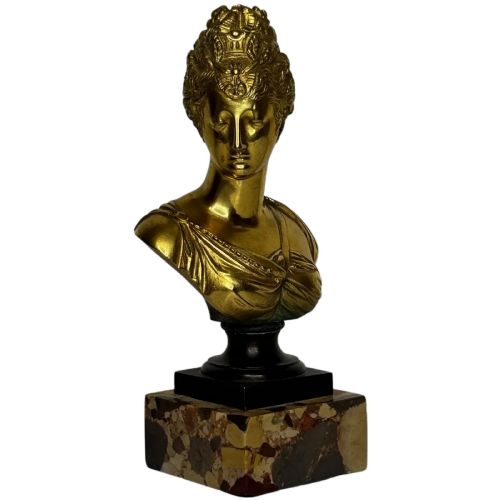
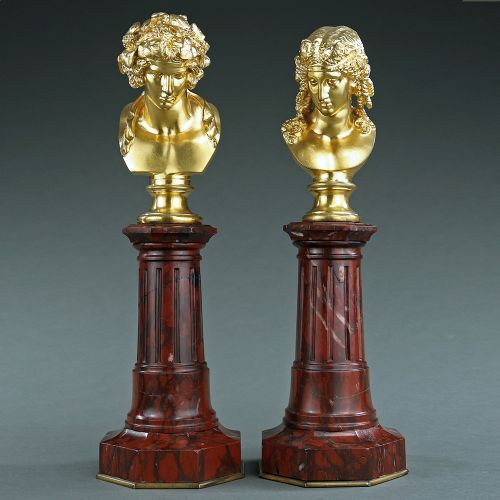
These gilded marble bust pieces combine carved stone with gilt bronze and ormolu mounts, offering classical presence for an interior.
Gilded Marble Bust
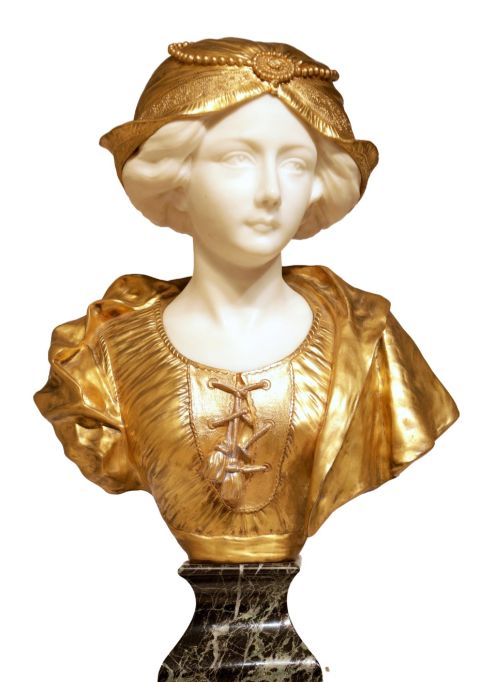
A gilded marble bust brings together carved stone and metalwork, often taking the form of historical figures, mythological subjects, or young girls. When you search for a gilded marble bust, you find works that span the 19th Century, Victorian period, and Regency era.
The versions you meet most frequently on this page include French gilt bronze examples and Italian marble sculptures set on portoro marble or mounted rotating pedestals. These objects function as sculptures, inkstands, and decorative busts.
Makers and sculptors such as Affortunato Gory and G.V. Vaerenbergh shape these pieces across Art Nouveau, Neoclassical, and French Empire styles. The materials range from plain marble and red marble to alabaster, wood, and paint.
How they were made
Metalworkers cast bronze and ormolu to create gilt mounts, collars, and pedestals that frame the stone portraits. These bronze elements receive a gilt finish to contrast with the white or dark marble of the bust.
Gilded Marble Bust Retail Price Guide 2026
Typical asking prices for gilded marble bust among the pieces listed under this phrase on Sellingantiques today, from the lower quarter to the upper quarter. They describe what is for sale here now, not the wider market.
At least one historical emperor makes an appearance here in inkwell form, keeping a watchful eye over your correspondence.
What varies in quality
The weight and finish of the gilt bronze or ormolu mounts separate superior pieces from standard production. Rich gilding and solid metal casting elevate works such as Grand Tour subjects and signed pieces.
Affortunato Gory·G.V. Vaerenbergh·Gianni Versace
The Gilded Marble Bust Glossary
- Ormolu
- A gilded bronze technique used for mounts and decorative accents. This process gives a rich gold-coloured finish to cast metal.
- Portoro
- A black Italian marble with distinctive gold veins. It frequently forms the base for Art Nouveau and classical sculptures.
- Grand Tour
- A traditional travel itinerary through Europe undertaken by 19th-century collectors. Pieces from this context often depict classical deities and historical figures.
- Alabaster
- A fine-grained stone used for carving soft, translucent sculptures. It provides a warmer texture than standard marble.
Gilded Marble Bust: Frequently Asked Questions
What is a gilded marble bust?
A gilded marble bust is a sculptural portrait carved from stone and paired with gilt bronze, ormolu, or painted details. These pieces often represent historical figures, mythological subjects, or young girls.
They date primarily from the 19th Century, Victorian period, and Regency era, reflecting styles from Neoclassical to Art Nouveau.
Where were these pieces made?
Many of these pieces originate from France and Italy, reflecting European sculpture traditions and Grand Tour travels. Workshops in Paris and Italian studios produced works featuring local marble and cast bronze.
Artists signed certain sculptures, while others remained unsigned as decorative objects for 19th-century interiors.
How do I style a marble bust?
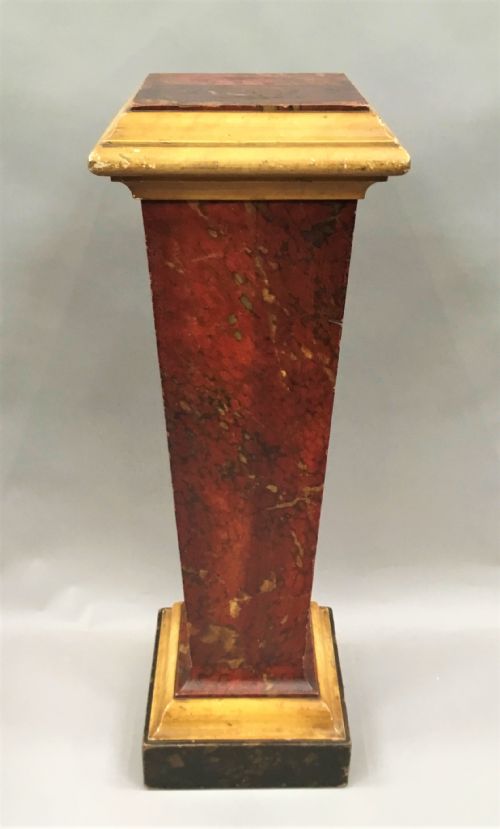
Place a bust on a marble column, rotating pedestal, or heavy wooden table to give the sculpture appropriate height and stability. Pairing them with portoro marble bases or bronze mounts creates a strong visual focal point in a room.
Keep them away from direct heat sources and clean the stone gently with dry cloths to protect the carved surfaces and gilt finishes.
How do I tell periods apart?
Neoclassical and Regency pieces lean towards austere classical subjects and simulated marble finishes, reflecting ancient Greek and Roman ideals. Victorian and later Art Nouveau examples introduce expressive female figures, alabaster, and complex bronze mounts.
Signatures from makers like Gory help date works to the turn of the 20th century.