



Gold Framed Venetian Mirror
These gold framed venetian mirror examples bring glittering Italian craftsmanship into your home, offering centuries of decorative elegance.
Gold Framed Venetian Mirror
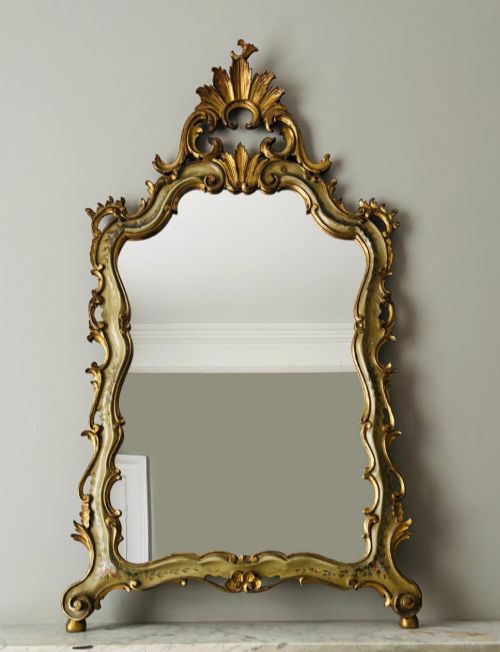
A gold framed venetian mirror brings classic Italian style into a room, taking forms such as wall mirrors and pier glasses. These pieces emerge from periods spanning the eighteenth century through to the twentieth century, encompassing Victorian and Rococo revivals.
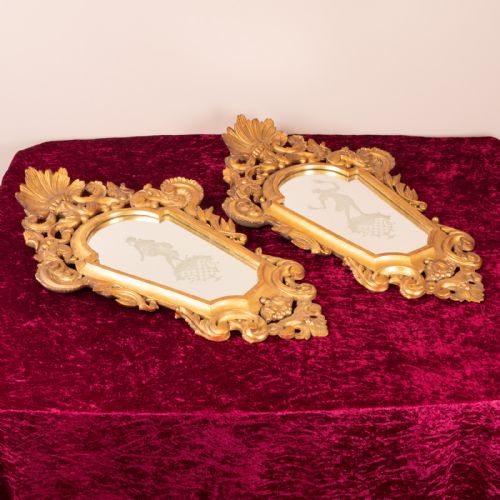
The versions most frequently met on this page include Italian carved gilt-wood Rococo wall mirrors and hand-painted pier glasses. Pieces also feature Venetian and French stylistic influences alongside distinct eglomise and micro-mosaic details.
How they were made
Makers shaped these frames primarily from wood and gesso, applying gold leaf and gilt to achieve rich metallic surfaces. Paint and polychrome finishes frequently adorn the woodwork, especially on hand-painted Italian examples.
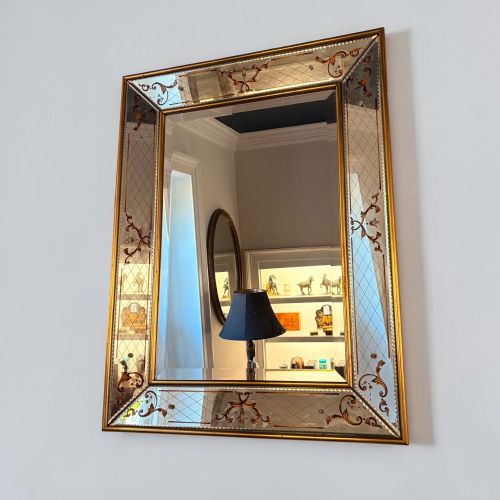
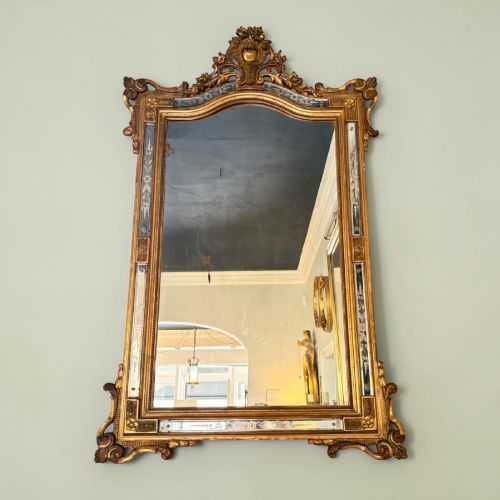
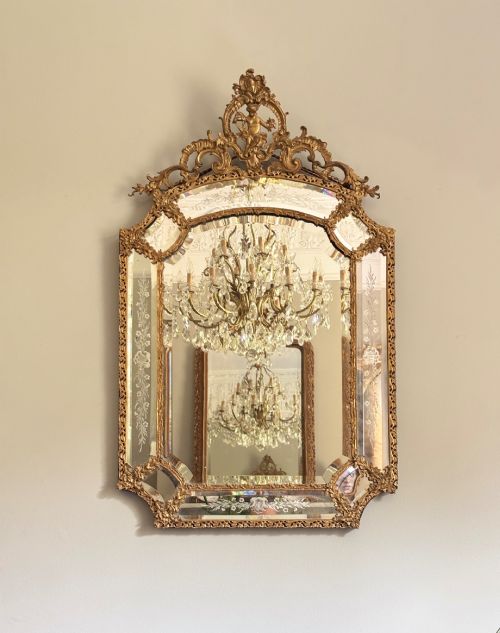
The reflective plates utilise mirror glass, occasionally incorporating engraved plates, etched glass, or cobalt blue glass margin-edges. Artisans also integrated specialised techniques like eglomise and micro-mosaic work into the glass and frame assemblies.
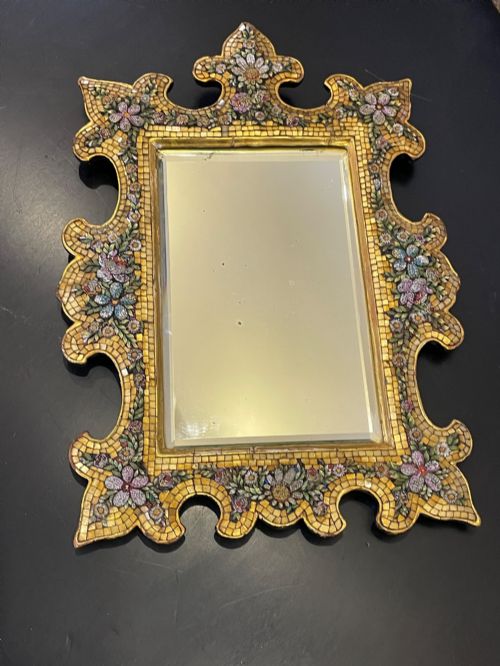
Some nineteenth-century makers hid tiny glass tesserae in micro-mosaic borders, giving small frames secret worlds of microscopic colour.
What varies in quality
The refinement of the carving separates the standard examples from the finest pieces, particularly in intricate gilt-wood frames displaying Italian Rococo styles. Crisp hand-tooling and deeply articulated foliage demonstrate superior workshop execution.
The clarity and condition of the mirror glass, alongside specialised techniques such as engraving, etching, or cobalt blue margin edges, distinguish the more ambitious commissions from simpler decorative wall mirrors.
The Gold Framed Venetian Mirror Glossary
- Giltwood
- Wood that has been coated with gold leaf or a gold-coloured finish. This method creates the bright metallic sheen characteristic of classical wall mirrors.
- Eglomise
- A technique involving the application of gold or silver leaf to glass, combined with painting on the rear face. It produces a reflective panel with ornate decorative borders.
- Pier glass
- A tall mirror designed to hang on the wall between windows. These pieces often feature hand-painted frames and traditional Italian styling.
- Micro-mosaic
- Tiny coloured glass tesserae assembled into intricate pictorial or geometric designs. This meticulous technique appears on specialised nineteenth-century frames.
Gold Framed Venetian Mirror: Frequently Asked Questions
Where should I hang a pier glass?
These tall mirrors work best in spaces between windows or above mantelpieces where they can reflect natural light.
Positioning them at eye level maximises their decorative impact within a room's overall layout.
How do I care for giltwood frames?
Dust the gilded surfaces gently with a soft, dry brush to avoid disturbing the delicate gold leaf. Keep them away from direct moisture and strong heat sources.
Harsh chemical cleaners will strip the metallic finish and damage the underlying gesso preparation.
How do I identify Rococo style?
Look for asymmetrical scrolls, organic leaf motifs, and flowing C-curves carved into the wooden frame. These ornate designs emphasise movement and theatricality.
Italian and French makers adopted these decorative flourishes extensively during the eighteenth and nineteenth centuries.