
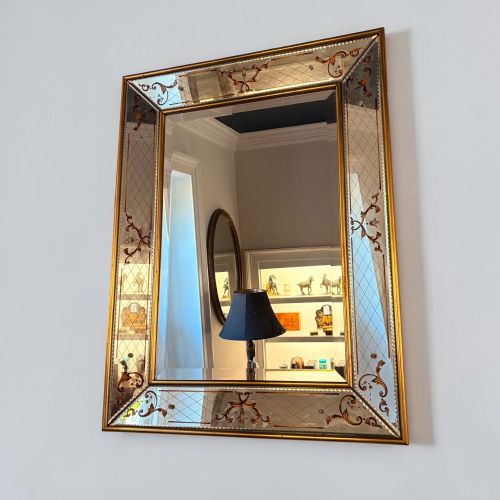
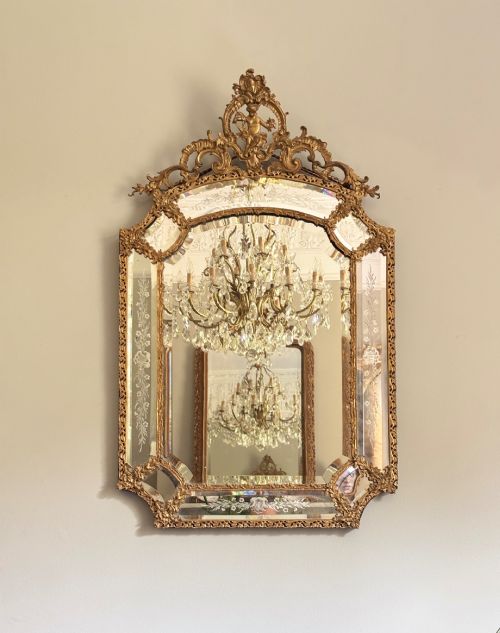

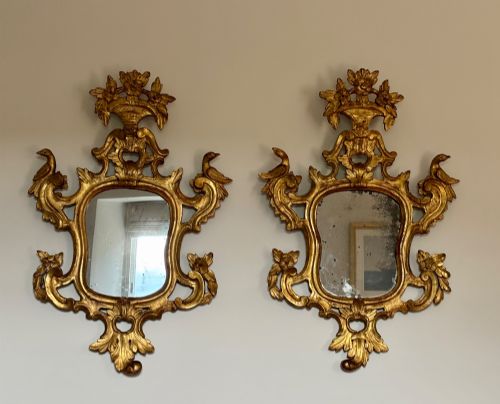
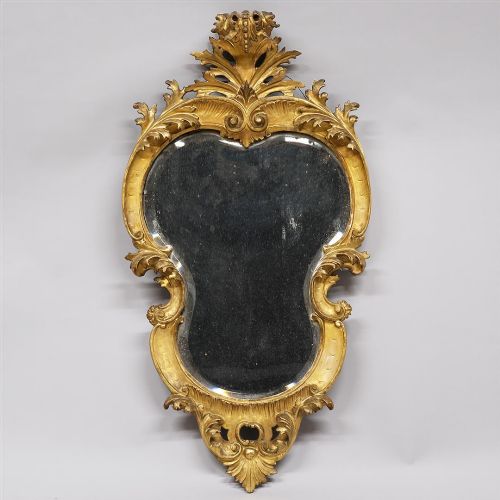


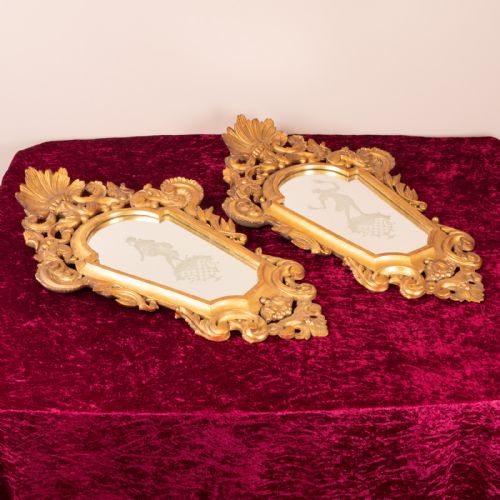
Gilded Venetian Wall Mirror
A gilded venetian wall mirror brings sudden light and elaborate Italian carving into a room, catching the eye with centuries of ornate silvered glass.
Gilded Venetian Wall Mirror
A gilded venetian wall mirror is an exercise in theatrical reflection, created to bounce light across grand Italian interiors through deeply carved and gilded frames. When you search this phrase, you encounter wall mirrors spanning from the eighteenth century into the twentieth century, alongside nineteenth century revivals.
The most common examples on this page date to the nineteenth and twentieth centuries, taking the form of Venetian giltwood mirrors and Italian rococo wall mirrors. These pieces often feature engraved plates and pier glass designs that reflect both historical Venetian craftsmanship and later interpretations.
Origins cluster firmly around Italy, taking shape as single plates or matched pairs intended for grand reception rooms. The forms rely heavily on rococo revival motifs and Italian rococo styles executed in wood, gesso, and gold leaf.
Materials and construction
Makers built these frames using wood and gesso as a base, applying gold leaf or gilt bronze to achieve a brilliant metallic sheen. This layered preparation allowed carvers to execute intricate scrolls and foliate details that define the Italian rococo aesthetic.
The glazing relies on mirror glass, sometimes mirrored glass, with select examples incorporating eglomise panels or hand painted details. Engraved plates appear within the glass itself, adding decorative depth behind the reflective surface.
Some antique mirrors feature secret hand-painted details hiding among the gold leaf scrolls.
Judging quality
Quality rests in the crispness of the hand carving within the giltwood frame and the depth of the gold leaf application. Finer pieces display spirited asymmetry and fluid movement in their rococo scrolls, whereas simpler versions rely on heavier, more mechanical gesso work.
The Gilded Venetian Wall Mirror Glossary
- Giltwood
- Wood carved and coated with gold leaf or metallic powder to create a radiant golden surface. This finish defines the ornate frames of eighteenth and nineteenth century Italian mirrors.
- Eglomise
- A technique where artists apply gold or silver leaf to glass and engrave designs into it from the reverse side. It appears on decorative panels framing the central mirror.
- Pier Glass
- A tall mirror designed specifically to hang on the wall space between windows. These tall glasses maximised daylight in dark rooms.
- Girandole
- A wall mirror featuring attached candle sconces that multiplied the flickering light of candles. The reflective glass amplified the illumination across the room.
- Gesso
- A plaster mixture applied to wood frames to create a smooth surface for subsequent carving and gilding. It allows for sharp relief work in elaborate scroll motifs.
Gilded Venetian Wall Mirror: Frequently Asked Questions
Where should I hang a gilded venetian wall mirror?
These mirrors work best above a fireplace mantel or console table where they can reflect natural light from a window. Their elaborate frames make them natural focal points in living rooms or hallways.
Ensure the wall construction supports the combined weight of the wood, gesso, and glass. Position the mirror at eye level to maximise its decorative impact in the room.
How do I date an older mirror?
Dating relies on examining the construction of the wooden frame, the composition of the gesso, and the manufacturing characteristics of the glass plate. Eighteenth century examples often show hand-beveled edges and distinct hand-carved joinery.
Later nineteenth and twentieth century pieces adopt revival styles with machine-finished backing boards or different silvering techniques. Comparing the frame's carving style to known period motifs clarifies its age.
Are these mirrors fragile?
The combination of heavy wooden frames, delicate gesso relief, and silvered glass requires careful handling during placement. While built to last centuries, protruding carved elements can chip if bumped.
Mounting must use heavy-duty hardware fixed securely into wall studs. Routine cleaning requires gentle dusting with a soft cloth rather than harsh chemical sprays.
What is the difference between rococo and rococo revival?
Original rococo pieces date from the eighteenth century, embodying the authentic asymmetrical scrollwork and exuberant organic forms of the period. Every curve and carved detail reflects contemporary European design movements.
Rococo revival items date from the nineteenth century, recreating those eighteenth century motifs with slightly different tool marks and construction methods. Both styles share a dramatic visual presence on the wall.