


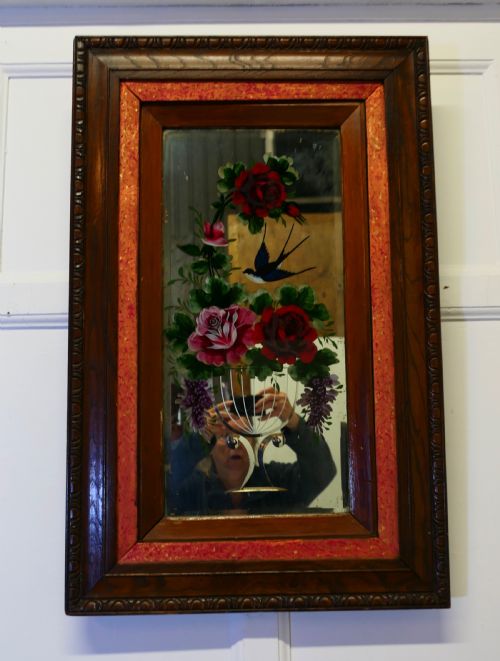


Eglomise Wall Mirror
An eglomise wall mirror brings together gilded frames and reverse-painted glass panels to catch the light in a room.
Eglomise Wall Mirror
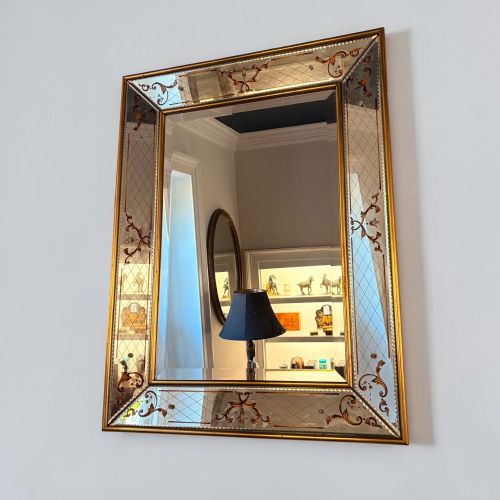
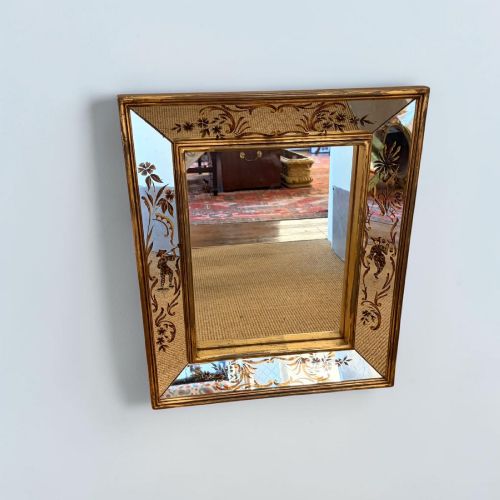
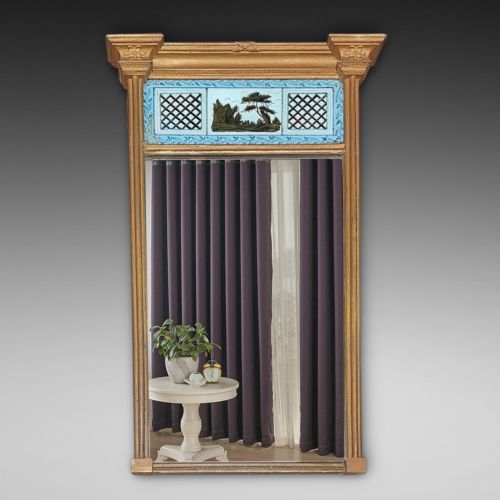
An eglomise wall mirror combines a wooden frame with reverse-painted glass panels, often set above the main looking glass plate. These pieces appear in Regency, Victorian, and early twentieth century formats, including Venetian and French Chinoiserie styles.
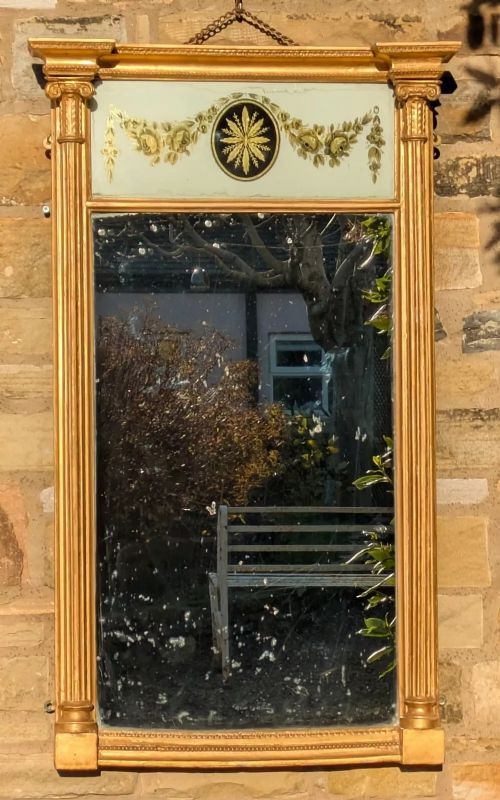
The most common examples on this page date from the Regency and nineteenth century periods, frequently taking the form of pier mirrors with giltwood and gesso construction. Their proportions suit placement above a mantelpiece or between windows where vertical emphasis matters.
How they were made
The frames are formed from wood, coated in gesso, and finished with gold leaf to achieve a bright gilded surface. Carved details give texture to the classical architectural mouldings typical of Regency and nineteenth century examples.
Glass panels utilise verre eglomise techniques, involving painting and gilding directly onto the reverse of the glass. Mirror plates are set alongside these decorated panels to complete the dual surface.
Listings feature periods spanning the Regency era, the nineteenth century, and the early twentieth century, utilising materials such as giltwood, gesso, and mirror glass.
What varies in quality
The crispness of the carved giltwood and the depth of the gesso work determine the visual strength of the frame. Finer examples display sharp architectural lines and carefully burnished gold leaf.
The artistry of the reverse-painted glass panel sets the best pieces apart, particularly where pictorial details or Chinoiserie motifs show careful handwork rather than simple execution.
The Eglomise Wall Mirror Glossary
- Verre eglomise
- A French technique of cold painting and gilding on the reverse side of glass. This method produces a metallic sheen and rich background colours.
- Pier mirror
- A tall vertical mirror designed to hang on the wall space between two windows. These pieces often feature a decorative panel at the top.
- Giltwood
- Timber that has been coated with a thin layer of gold leaf over a prepared base. It provides a reflective surface that catches interior light.
- Gesso
- A plaster mixture applied to wood frames to create a smooth surface for gilding and carving. It allows crisp ornamental details to be formed.
Eglomise Wall Mirror: Frequently Asked Questions
Where should I hang an eglomise wall mirror?
These mirrors suit spaces where vertical proportions work well, such as narrow wall sections between windows or above a fireplace mantel.
Their reflective plates and decorated upper panels help distribute light around a reception room or hallway.
How do I identify a Regency eglomise mirror?
Regency examples typically feature classical architectural elements like giltwood frames, ebonised details, and reverse-painted top panels.
They often take the form of pier glasses designed for specific wall spaces in nineteenth-century interiors.
What is a verre eglomise panel?
A verre eglomise panel is a piece of glass decorated on the back using paint, metal leaf, and etching techniques.
This method protects the delicate metallic decoration behind the glass while creating a luminous finish.
Are these mirrors French or English?
The selection includes both English Regency pieces and examples reflecting French Chinoiserie, Rococo Revival, or Venetian styles.
Craftsmen across Europe utilised eglomise decoration to add ornamental detail to wall mirrors during the nineteenth and early twentieth centuries.