
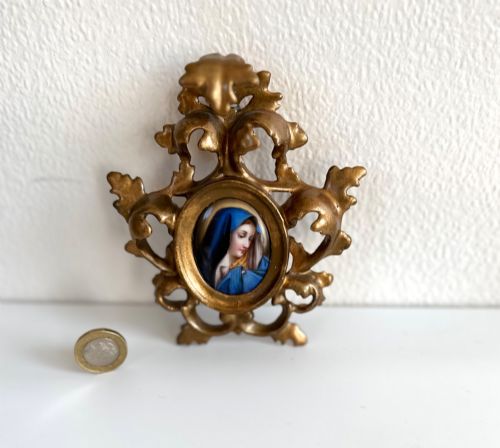
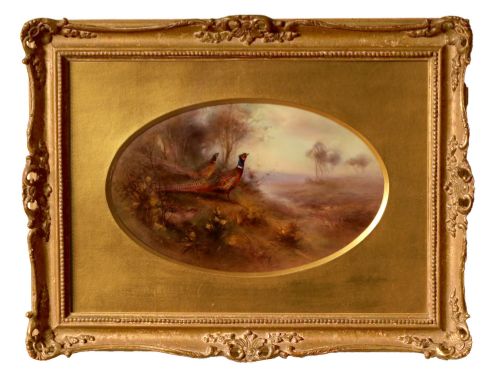


Gold Framed Porcelain Painting
A gold framed porcelain painting brings together fine ceramic work and ornate mounting, offering miniature portraits and classical scenes.
Gold Framed Porcelain Painting
When searching for a gold framed porcelain painting, collectors encounter hand-painted porcelain plaques, panels, and miniatures housed within giltwood, gilt metal, or ormolu frames. These pieces originate from the nineteenth century into the early twentieth century, spanning Victorian, Edwardian, and revivalist periods.
The objects on this page include decorative wall art, miniature portraits, and framed panels. Many pieces reflect European manufacturing traditions, particularly from German, English, and French potteries and studios.
Materials and methods
The core material is hard-paste or soft-paste porcelain, prepared as a flat panel or plaque to receive detailed enamels and mineral pigments. Artisans fired these painted surfaces multiple times in kiln conditions to fuse the colours permanently to the ceramic body.
Frames utilise wood, glass, velvet, and metal components finished with gold leaf or ormolu mounts. Carved giltwood and cast metal surrounds provide structural support and aesthetic contrast to the smooth porcelain surface.
Some nineteenth-century makers hid their factory marks beneath heavy velvet backings, leaving future owners to play detective with a magnifying glass.
Factors of quality
Quality rests upon the skill of the artist and the prestige of the manufacturing porcelain works. Finer examples display meticulous brushwork, subtle shading, and confident execution of portraiture or still life subjects.
The enclosure contributes to the overall standard through the depth of carving in the gilt frame and the harmony between the mounting and the porcelain panel. Signed works and recognisable factory marks add distinct attribution value.
James Stinton·Royal Worcester·KPM·William Rayworth·Sevres
The Gold Framed Porcelain Painting Glossary
- Porcelain plaque
- A flat ceramic tablet fired at high temperatures to serve as a stable ground for painted artwork. These pieces are often mounted directly into decorative frames for wall display.
- Ormolu
- Finely ground high-carat gold applied to a bronze or brass base object through a mercury-gilding process or electroplating. This technique gives frames and mounts a rich metallic sheen.
- Giltwood
- Wood carved and coated with thin layers of gold leaf or gold paint to simulate solid gold. It provides ornate framing for nineteenth-century panels.
- Enamel
- Powdered glass fused to a ceramic or metal surface under high heat to produce durable coloured details. Miniature paintings frequently utilise enamel pigments for longevity.
Gold Framed Porcelain Painting: Frequently Asked Questions
How do I clean a gold framed porcelain painting?
Dust the porcelain gently with a dry, soft brush to remove surface particles without disturbing the painted enamels. Avoid using liquid cleaners or abrasive cloths on the ceramic panel.
Clean the gold frame using a dry microfiber cloth to protect the gilt surface. Keep moisture away from any exposed wood or velvet backing materials.
Are these pieces hand painted?
Many examples on this page record hand-painted techniques by named artists and regional studios. Artisans applied mineral colours by hand before kiln firing.
Closer inspection reveals individual brushstrokes and tonal gradations unique to each painted plaque. Signed pieces offer clear evidence of individual maker attribution.
How do I date a porcelain plaque?
Dating relies on factory marks stamped or painted on the reverse of the ceramic panel. Style indicators such as Victorian revival frames also help narrow the period.
Comparative study of known artist signatures provides further chronological context. Material analysis of the frame and backing assists in confirming the era of production.
Where should I hang these artworks?
Display these framed pieces away from direct sunlight to prevent fading of the delicate enamel pigments. Stable indoor humidity protects both the porcelain and the wooden frame.
Choose wall spaces with secure fixings suited to the weight of cast metal or giltwood frames. Adequate spacing allows the fine details of the miniature art to be appreciated.