


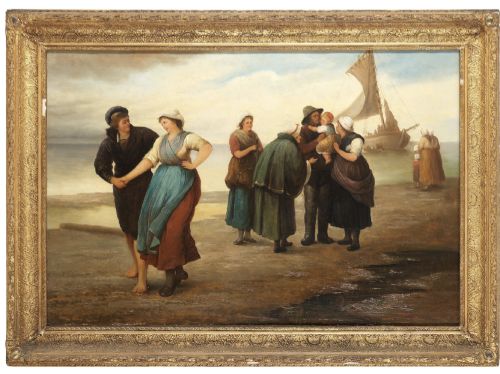
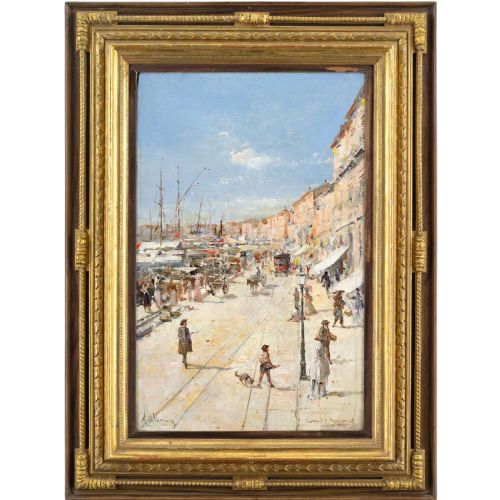
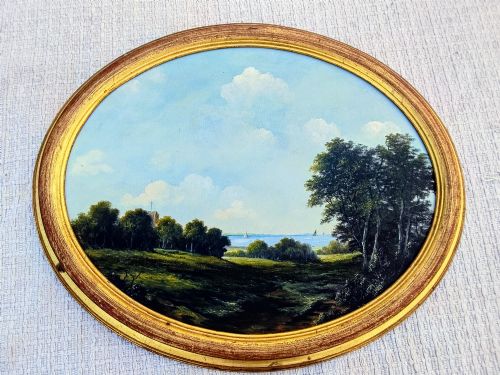
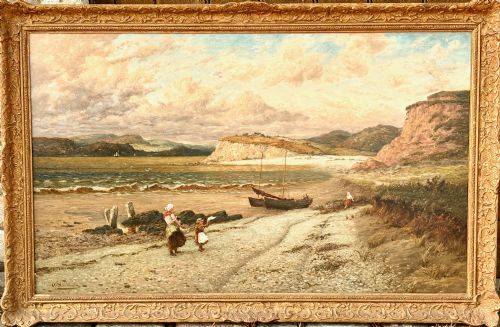

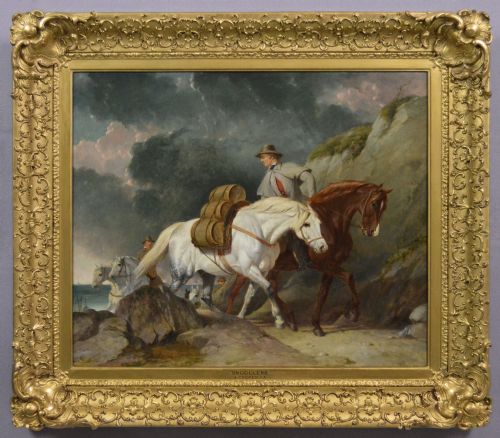
Gold Framed Coastal Painting
A gold framed coastal painting brings the salt air and shifting light of the shoreline directly onto an interior wall.
Gold Framed Coastal Painting
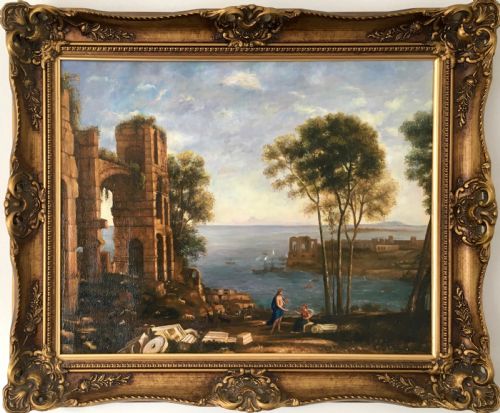
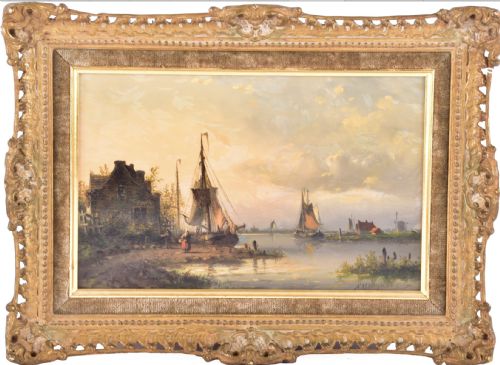
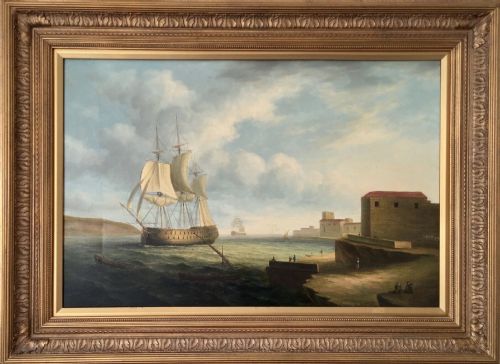
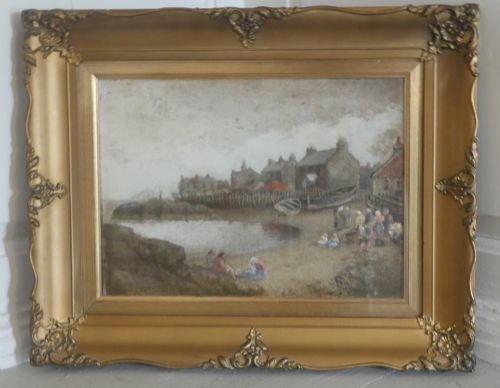
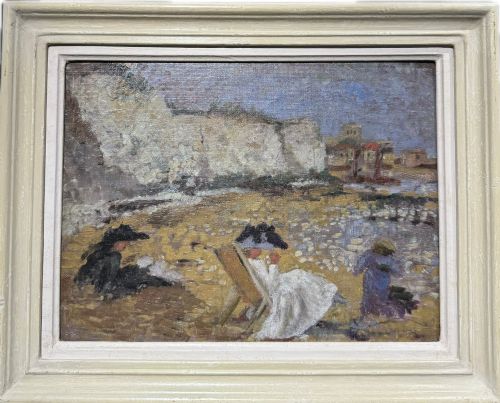
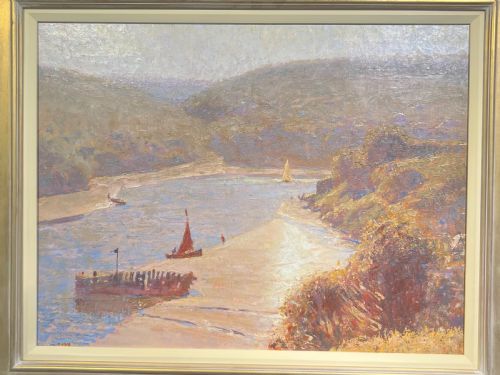
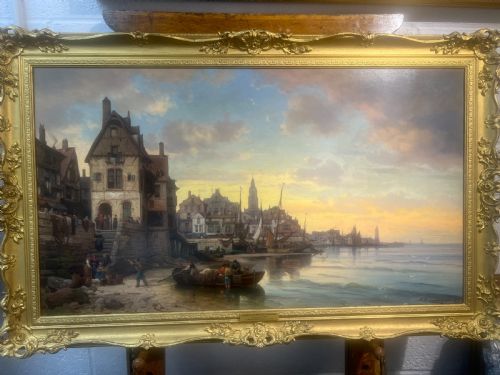
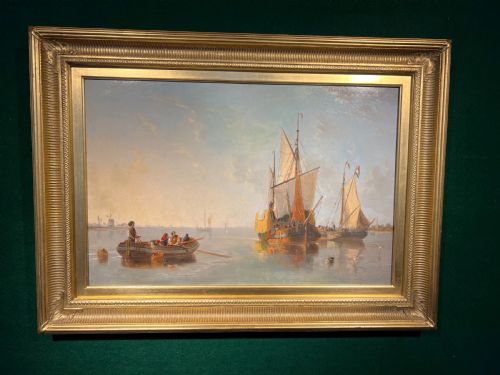
When you search for a gold framed coastal painting, you encounter maritime scenes, harbour views, and seaside gatherings captured across the nineteenth and twentieth centuries. The selection on this page spans traditional Victorian marine art, Post-Impressionism, and early twentieth-century British and French school works.
Most examples combine oil on canvas, oil on board, or watercolour with substantial giltwood or gilt frames. Subjects range from busy fishing ports like St Ives and North Shields to quiet sandy stretches and dramatic gales at sea.
Makers and painters represented include established nineteenth-century marine artists alongside regional painters of harbour scenes. The formats vary from intimate oval views to large-scale gallery canvases.
How they were made
The physical objects rely on traditional oil paint or watercolour applied to stretched canvas, wooden panel, paper, or board. Pigments capture the particular atmospheric tones of the sea, sky, and coastal path.
Surrounding these works are moulded wood frames finished in gilt or giltwood, designed to reflect light and separate the painted surface from the room. These surrounds range from deep, ornate Victorian plaster-on-wood mouldings to simpler twentieth-century profiles.
Listings feature works spanning the nineteenth century through the 1960s, executed in oil and watercolour.
What varies in quality
The ability of the hand to render movement in water, light on wet sand, and the rigging of vessels distinguishes accomplished marine works from generic topographical views. Stronger pieces convey genuine atmosphere and depth rather than stiff architectural recording.
The integration between the painting and its gilt frame matters significantly, as original or period-matching surrounds maintain the visual balance intended by the maker or later framer.
Edward Mills·William Banks Fortescue·Augusto Alberici·Bonaventura Peeters·Bernard Benedict Hemy·Charles Euphraisie Kuasseg·John Wilson Carmichael·Abraham Cooper·Joseph Farquharson·Erich Mercker·William Henry Williamson·John Holland·George Stanfield Walters·Abraham Hulk I·John Moxon·John Bedloe Goddard·Raymond Moritz·William Edward Webb·Charles Napier Hemy·Gustave Vidal·George Turland Goosey·Gustave De Bréanski·Pieter Cornelis Dommersen
The Gold Framed Coastal Painting Glossary
- Giltwood
- Wood carved or moulded and coated with gold leaf or metallic gilt finish. This material forms the bright outer boundary typical of traditional picture framing.
- Marine art
- Painting or visual representation that depicts ships, harbours, coastal views, or the open sea. This genre encompasses both calm domestic shorelines and dramatic maritime gales.
- Post-Impressionism
- An artistic movement developing roughly from the late nineteenth century that explores light and brushwork beyond strict academic realism. Works in this style prioritize expressive colour and surface texture over rigid detail.
- Watercolour
- Pigment suspended in a water-based, translucent solution applied to paper. This medium produces light, luminous coastal studies often protected behind glass within a gilt frame.
Gold Framed Coastal Painting: Frequently Asked Questions
What subjects appear in these paintings?
The works depict working harbours, sailing vessels, rocky cliffs, and sandy beaches across British and continental coasts. Scenes range from calm moorings to turbulent seas under stormy skies.
Many compositions record specific maritime locations, such as St Ives, North Shields, and European ports, populated by fisherfolk, boats, and coastal walkers.
Are the frames original to the artworks?
Some pieces retain their period giltwood frames from the nineteenth or early twentieth century, while others have been matched with complementary surrounds later.
The weight and gilding style usually reflect the era in which the painting was produced or exhibited.
How do I care for a framed oil painting?
Keep the artwork away from direct sunlight, high humidity, and rapid temperature changes to protect both the canvas and the wooden frame. Dust the gilt surfaces gently with a dry, soft brush.
Avoid using liquid cleaners on either the painted surface or the gilded moulding.
How can I tell the period of a piece?
Dating relies on stylistic clues in the brushwork, the clothing of figures in the scene, and the construction of the canvas or board support. Framed works also display period-specific framing techniques and backing materials.
Signatures, dates inscribed on the reverse, and artist records provide additional chronological markers.