





Gold Frame Maritime Art
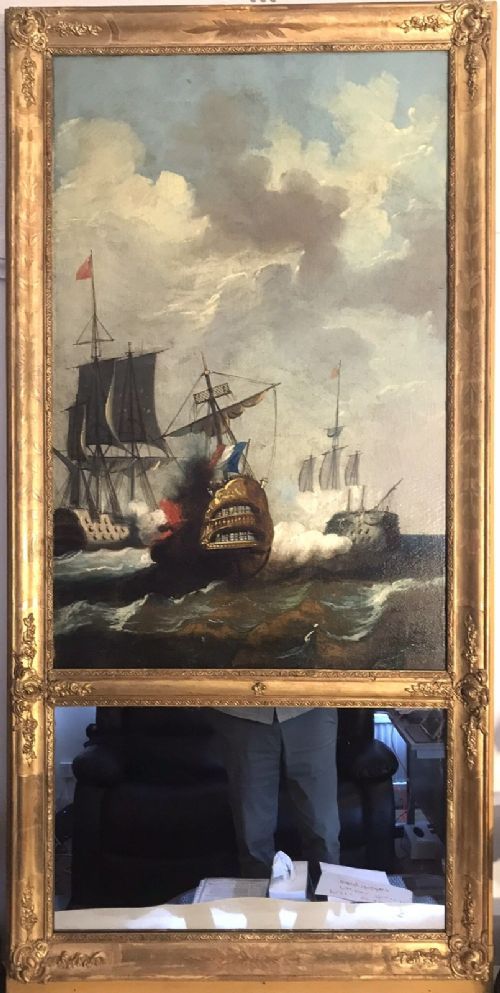
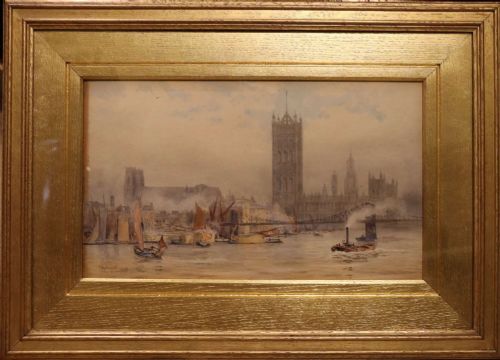
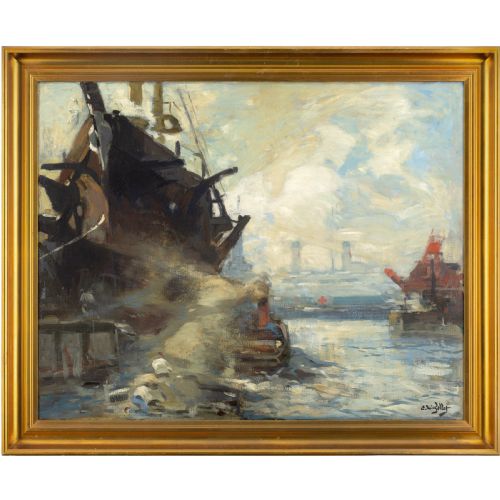
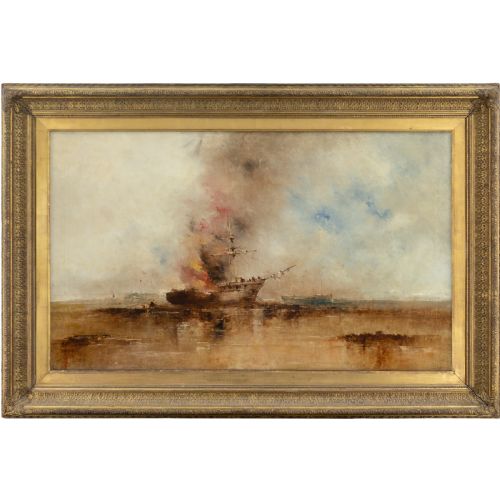
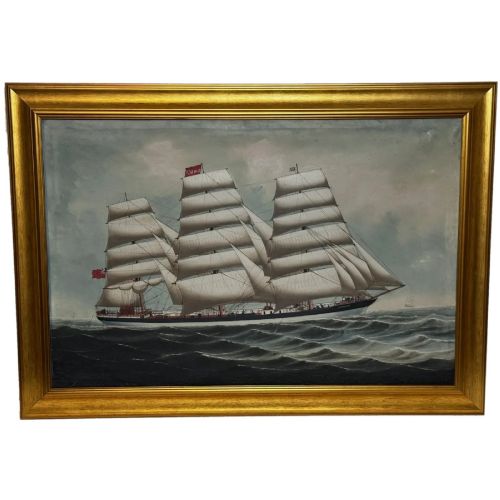
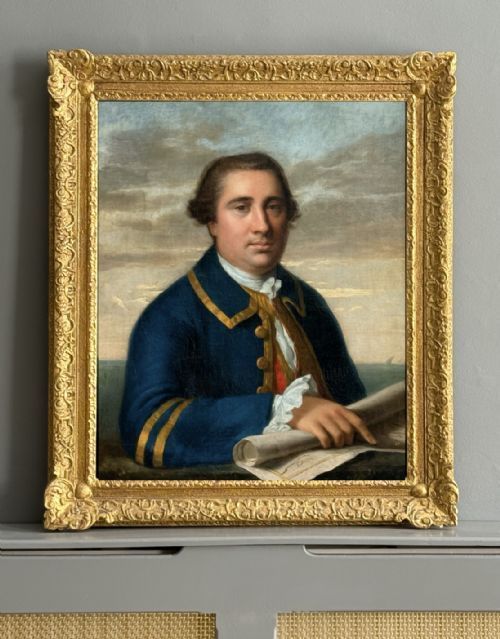
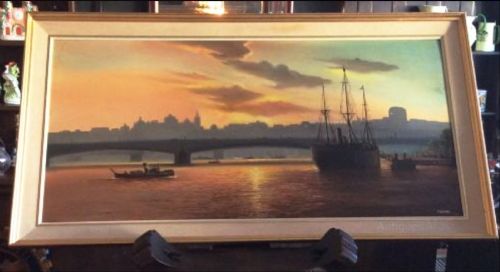
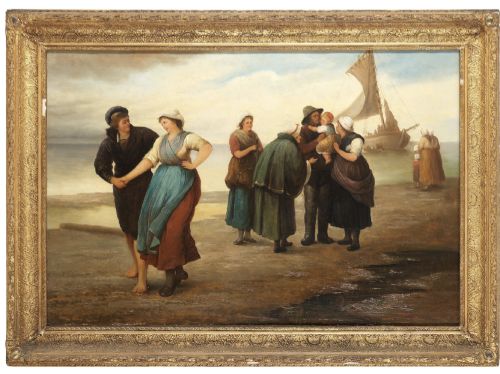
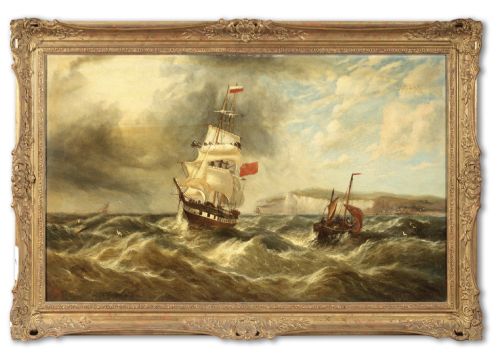
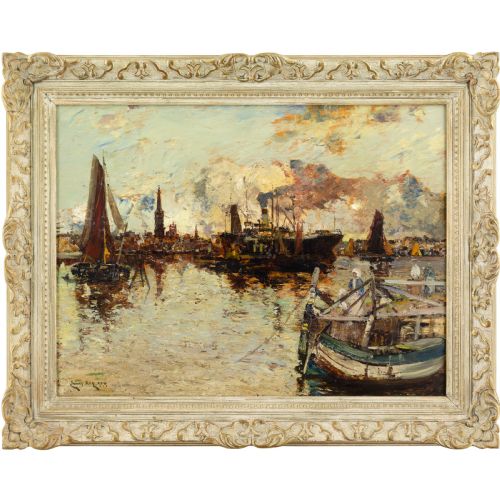
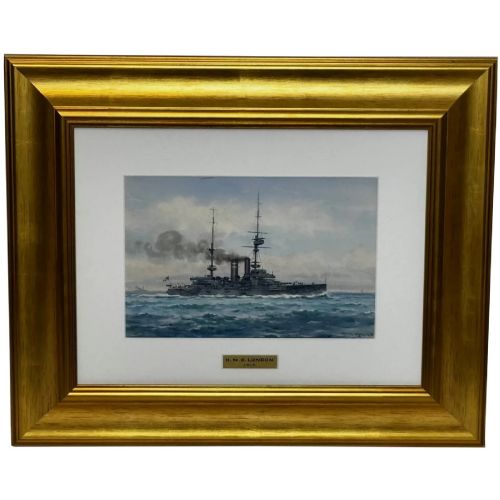
Gold frame maritime art brings together historical naval battles, rugged coastal scenes, and bustling harbour views encased in ornate gilded surrounds.
Gold Frame Maritime Art
Gold frame maritime art encompasses oil paintings and watercolour works depicting ships, seascapes, and coastal ports. These pieces span from the eighteenth century through to the mid-twentieth century, capturing naval history and domestic seafaring life.
Buyers will find works created across various European schools, including British, French, and Dutch traditions. The subjects range from calm river estuaries to dramatic gales on the open ocean.
The most common formats on this page are oil paintings on canvas or board, alongside period watercolour paintings. Each piece is housed in a wooden frame finished with gold leaf or giltwood.
How They Were Made
Artists painted primarily using oil paint on stretched canvas, wooden panels, or heavy paper for watercolours. Canvases were prepared with gesso grounds before the application of pigments to build depth in sky and water.
The enclosing frames consist of carved or moulded wood finished with layers of gold leaf or giltwood. Gilding techniques involved applying thin sheets of metal over a prepared bole base to create a bright, reflective surface.
Several artists captured vessels navigating waters as varied as the River Thames, the Venetian lagoon, and the stormy Dutch coast.
What Varies in Quality
Quality rests in the handling of light, atmosphere, and maritime detail by the artist. Superior works demonstrate an accurate understanding of vessel rigging, water movement, and spatial perspective.
The execution of the accompanying gilt frame contributes significantly to the overall piece. Hand-carved wooden mouldings and intact original gilding distinguish finer examples from later or simpler replacements.
Reginald Arthur Borstel·Eugène-Louis Gillot·Bernard Gribble·Francis Moltino·Bonaventura Peeters·George Stanfield Walters
The Gold Frame Maritime Art Glossary
- Giltwood
- Wood that has been coated with gold leaf, gold paint, or powdered gold. This finish provides a bright and durable border for traditional oil paintings.
- Seascape
- A work of art that depicts the sea, ships, or coastal views. These subjects formed a major category in British and European painting traditions.
- Watercolour painting
- A method where the paints are made of pigments suspended in a water-based solution. Artists typically applied these onto paper to create luminous coastal scenes.
- Panel painting
- A painting executed on a flat wooden panel rather than canvas. This method was common in earlier periods to provide a rigid support for oil pigments.
Gold Frame Maritime Art: Frequently Asked Questions
What periods do these paintings cover?
The works span from the seventeenth century through the Georgian, Victorian, and Edwardian eras up to the mid-twentieth century. Each period brought distinct stylistic approaches to maritime subjects.
Victorian and late nineteenth-century pieces are particularly common, reflecting a strong national interest in shipping and naval power during that time.
What mediums were used for these artworks?
The selection consists primarily of oil paintings on canvas or wooden boards, alongside works executed in watercolour on paper.
Oil paint allowed artists to capture heavy seas and shifting light, while watercolours offered a lighter touch for coastal landscapes.
How should I care for a gilt-framed oil painting?
Keep the artwork away from direct sunlight and sources of extreme heat or humidity to protect both the canvas and the wooden frame.
Dust the gilt frame gently with a dry, soft brush and avoid using liquid cleaners on the gold leaf surface.