





Coastal Genre Scene Painting
A coastal genre scene painting captures daily maritime life, offering a glimpse into nineteenth-century coastal communities through traditional artistry.
Coastal Genre Scene Painting
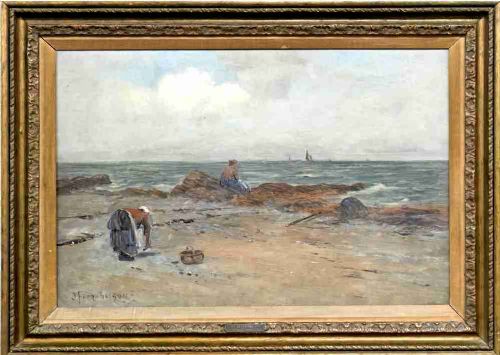
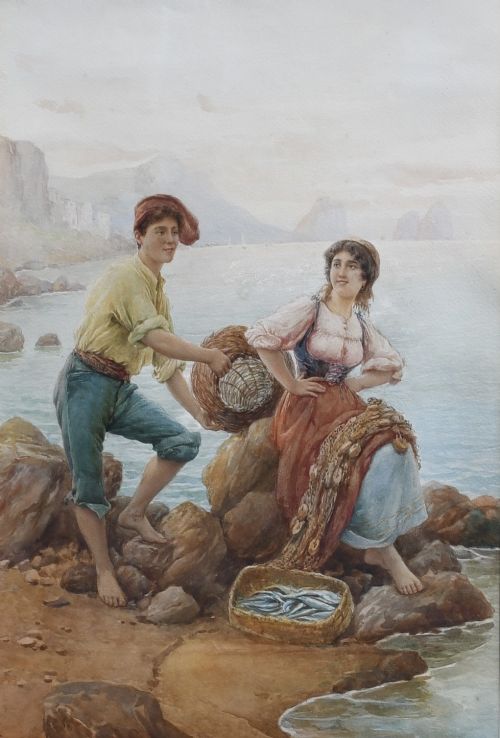
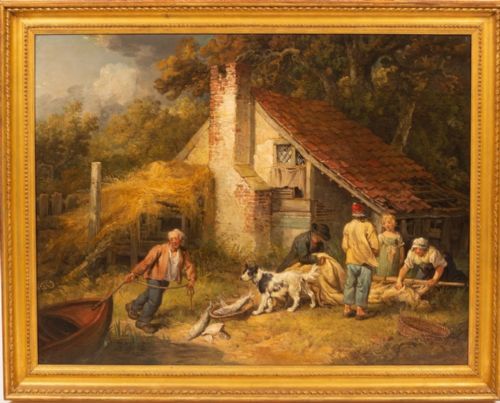
A coastal genre scene painting depicts the daily lives and labour of fisher folk, gatherers, and coastal communities. These works bridge landscape and figure painting, focusing on human activity beside the sea.
The pieces available span the nineteenth century into the mid-twentieth century, capturing British, French, Italian, and Dutch shores. Most examples present traditional coastal occupations such as net spreading, gathering shellfish, and returning from voyages.
Buyers encounter both intimate watercolour paintings on paper and substantial oil paintings on canvas or panel. Many retain their period gilt wood frames, preserving their original aesthetic presentation.
Materials and technique
Artists built these compositions primarily using oil paint on canvas or panel, alongside watercolour pigment on paper. These traditional mediums allowed painters to render atmospheric coastal light and textures.
Canvas supports received layered oil applications to capture the weight of sea air and heavy work clothing. Watercolour works on paper relied on translucent washes to depict coastal atmospheres and shoreline light.
Framing utilised gilt wood and gold leaf to complement the palette of the paintings. These finishes enhanced the visual depth of the maritime scenes.
Coastal Genre Scene Painting Retail Price Guide 2026
Typical asking prices for coastal genre scene painting among the pieces listed under this phrase on Sellingantiques today, from the lower quarter to the upper quarter. They describe what is for sale here now, not the wider market.
Listings feature works spanning the nineteenth century, Victorian era, nineteen-hundreds, nineteen-tens, nineteen-thirties, and nineteen-fifties.
Quality and execution
Quality rests upon the artist's ability to render the human form and natural light convincingly within a maritime setting. Stronger works demonstrate confident brushwork and anatomical accuracy in figures such as fisher folk and gatherers.
The handling of atmosphere and coastal weather distinguishes finer paintings from simpler topographical records. Compositional balance between the figures and the surrounding shore defines the success of each piece.
Joseph Farquharson·Carlo Ferranti·James Kyd·Kate E Booth·Ralph Todd·Madeline Hughes·Robert Farren·James Ward·Arthur David Mccormick·William Shayer·James G Faulds
The Coastal Genre Scene Painting Glossary
- Genre painting
- Depiction of aspects of everyday life by portraying ordinary people occupied in common activities. These works provide historical insight into working-class life.
- Watercolour
- Painting method in which the paints are made of pigments suspended in a water-soluble vehicle. This technique creates luminous translucent washes.
- Gilt wood
- Wood that has been treated with gold leaf or gold paint. This finish frames and highlights the artwork.
- Oil on canvas
- Pigment mixed with drying oil applied to stretched fabric. It remains a durable and adaptable medium for fine art.
- Seascape
- A type of fine art that depicts the sea. These works focus primarily on marine environments and coastal views.
Coastal Genre Scene Painting: Frequently Asked Questions
What is a coastal genre scene painting?
A coastal genre scene painting portrays everyday activities of people living and working near the sea. These works focus on human labour rather than pure landscape.
They record historical maritime occupations such as fishing, gathering, and shore life across the nineteenth and twentieth centuries.
How were these maritime paintings created?
Artists used traditional mediums including oil paint on canvas or wood panel, and watercolour pigment on paper. These materials captured changing coastal light and weather.
Many examples feature original gilt wood framing that complements the period aesthetic of the artwork.
How do I date a coastal painting?
Dating relies on stylistic evidence, artist signatures, costume details of the figures, and framing materials. Nineteenth-century works often reflect Victorian realism and regional schools.
Later pieces extend into the early and mid-twentieth century, showing shifts in palette and technique while maintaining traditional maritime subject matter.
Where were these coastal scenes painted?
These works depict shorelines across Britain, France, Italy, and the Netherlands. Artists recorded specific local communities such as Yorkshire, Newlyn, and Neapolitan shores.
Each region offered distinct coastal topography and local working attire that shaped the composition.