

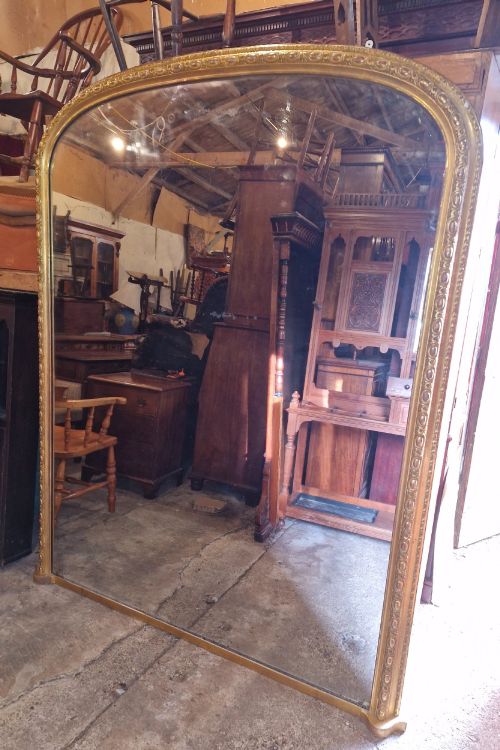
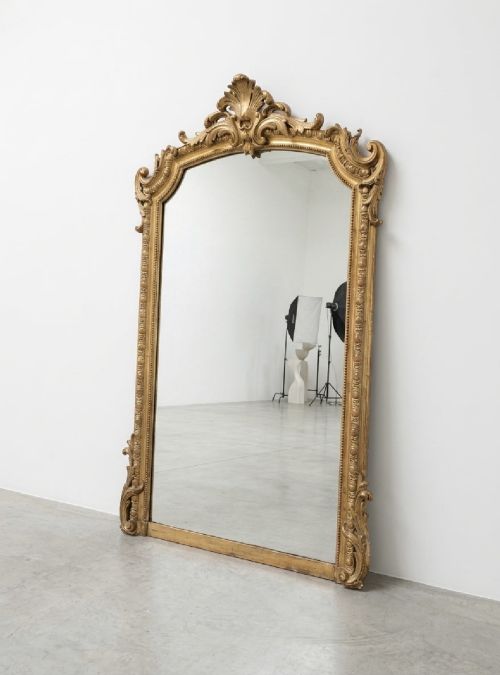
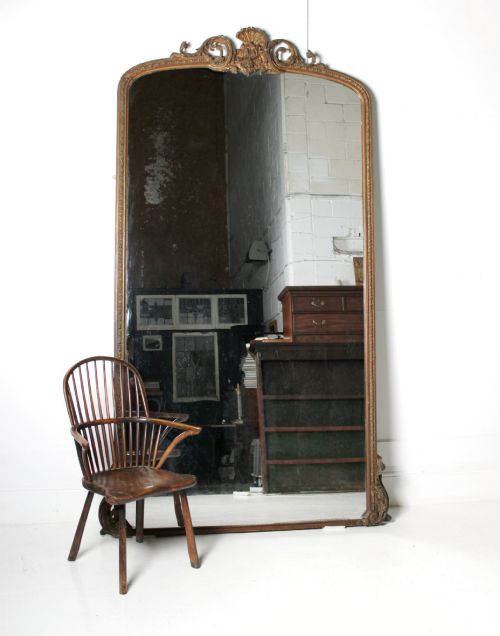
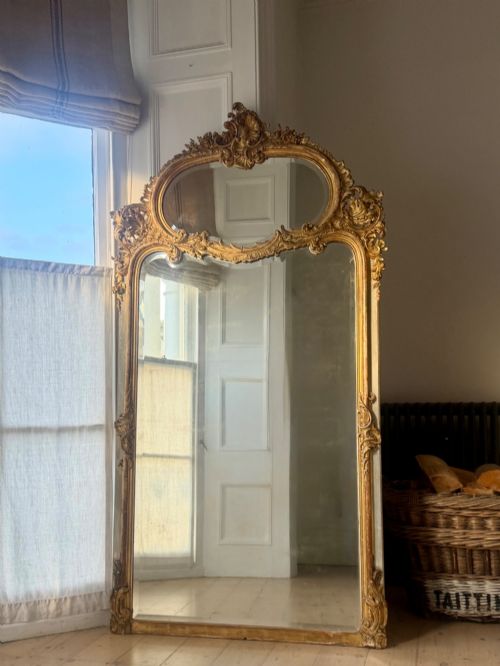
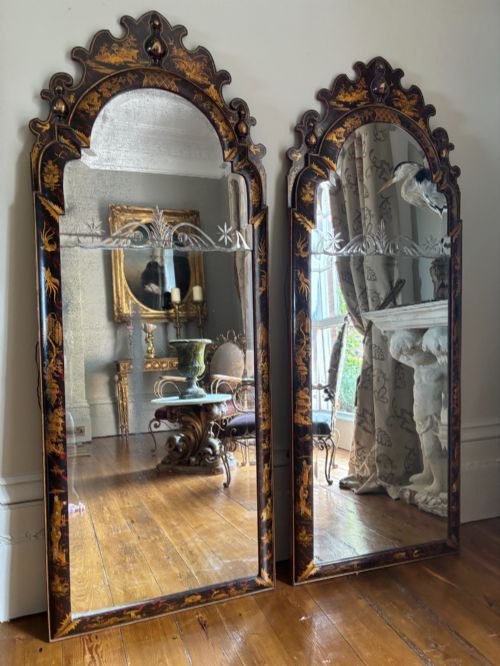
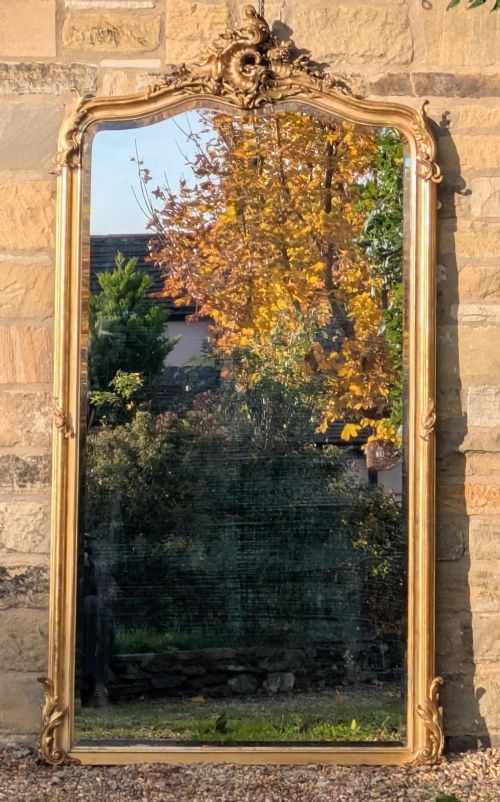
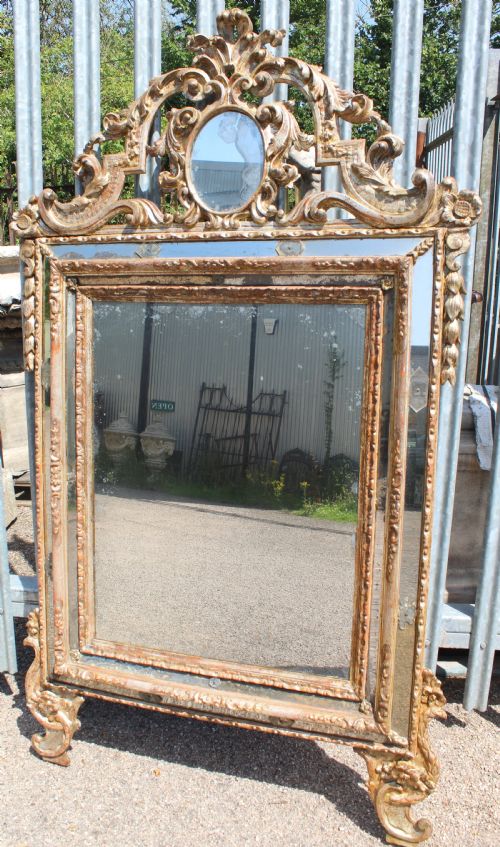

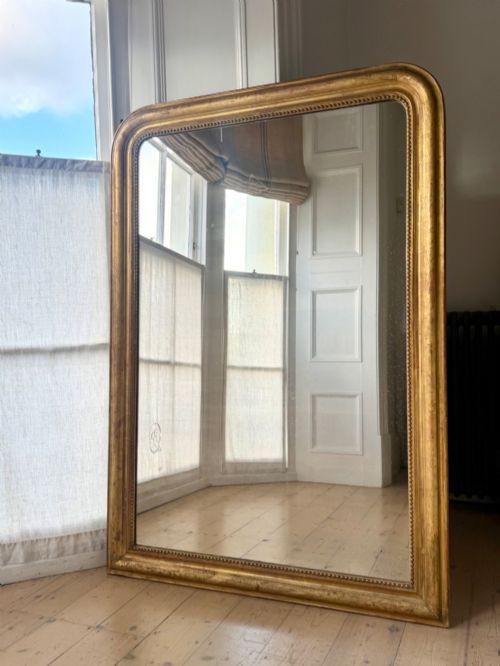
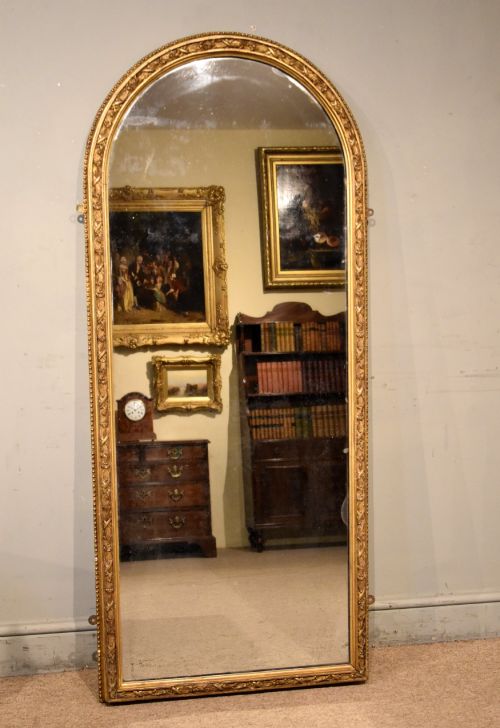
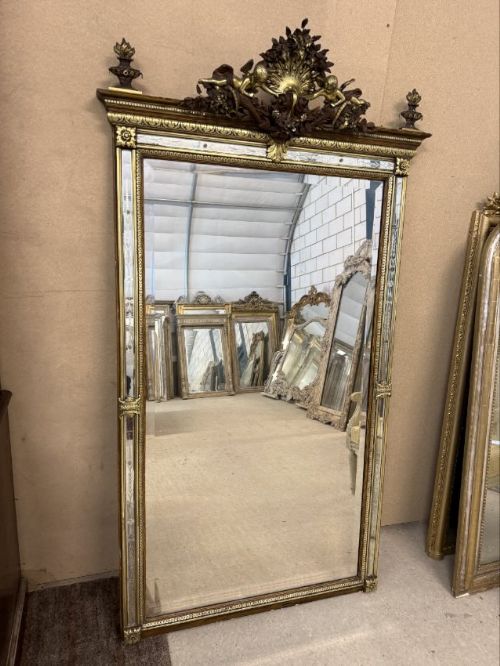
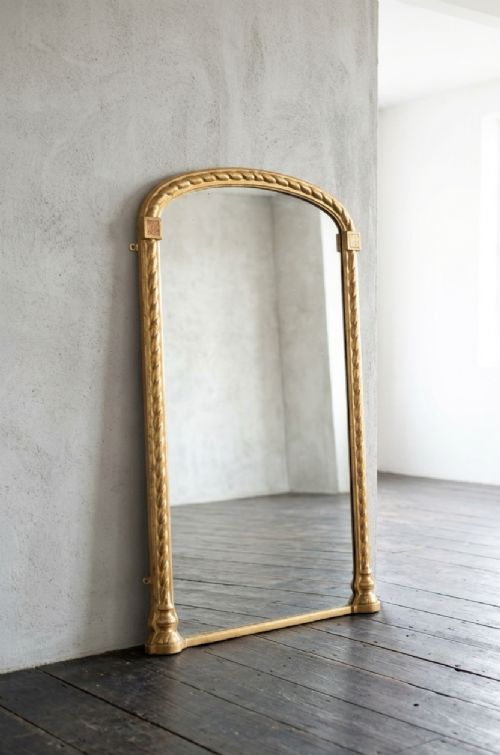
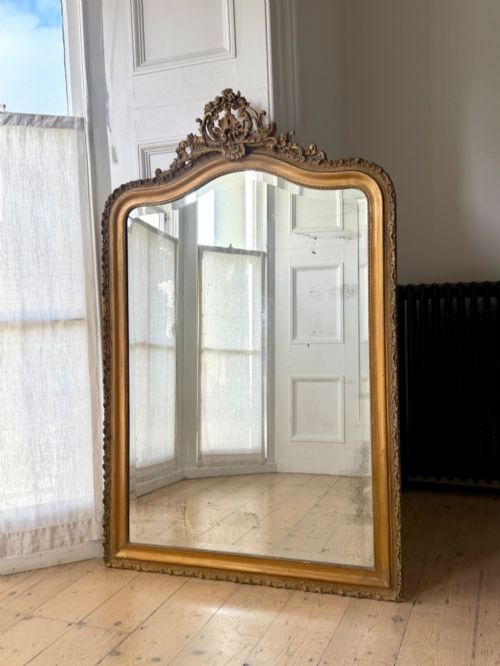
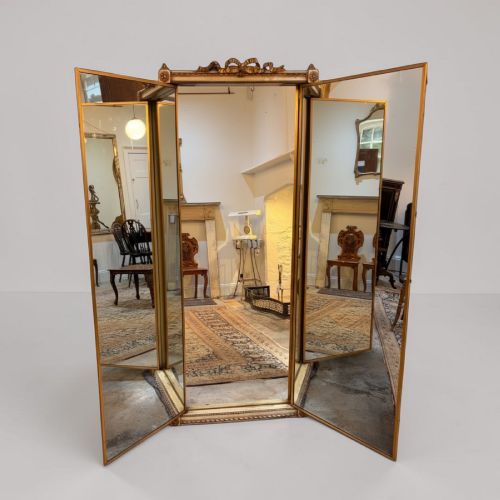
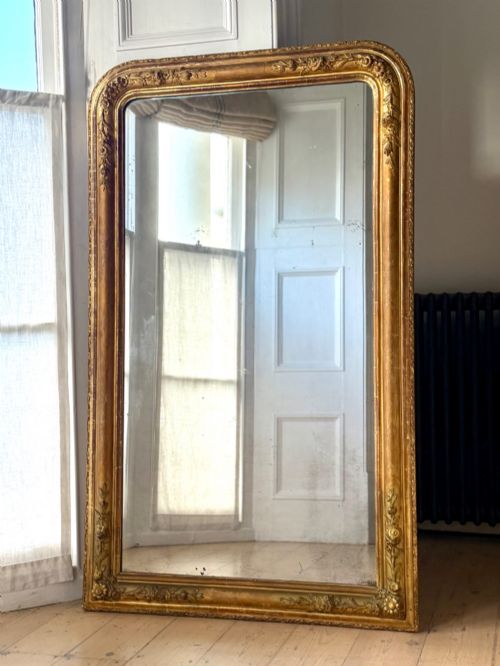
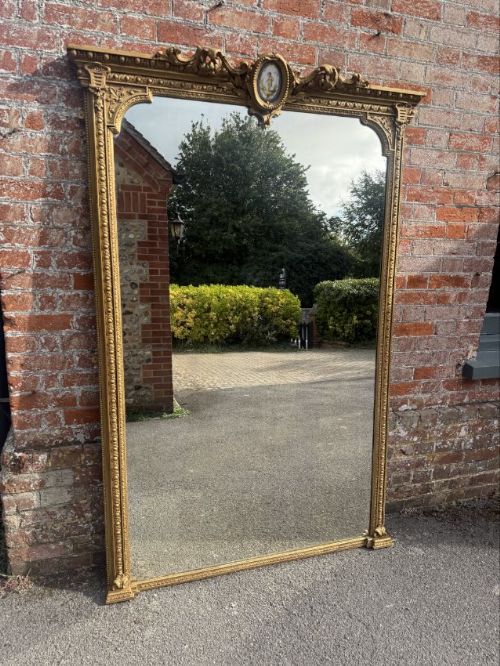
Gold Floor Mirror
A gold floor mirror brings scale and reflected light to a room, drawing the eye upwards through tall proportions and gilded frames.
Gold Floor Mirror
A gold floor mirror stands as a substantial furnishing designed to reflect interior spaces while adding a decorative focal point to a room. These pieces appear in tall rectangular formats, arched tops, and leaner styles intended to rest directly against a wall.
The selections span English and French traditions from the eighteenth, nineteenth, and early twentieth centuries, encompassing overmantel, pier, cheval, and full-length dressing mirrors. French chateau and Louis Philippe designs sit alongside ornate Rococo revival and Neoclassical examples.
Most items rely on nineteenth-century origins, capturing a period when large-scale looking glasses formed centrepieces of formal reception rooms and grand dressing spaces.
Materials and construction
Makers built frames primarily from carved wood, applying layers of gesso to smooth the surface before laying gold leaf, silver gilding, or paint. Composition ornament was frequently moulded and applied to timber frames to achieve intricate relief decoration.
Mirrors utilised traditional glass, occasionally featuring mercury glass or foxed surfaces that show age and oxidation. Frames incorporated structural pine or hardwoods supporting heavy glass panels secured from the rear.
Gold Floor Mirror Retail Price Guide 2026
Typical asking prices for gold floor mirror among the pieces listed under this phrase on Sellingantiques today, from the lower quarter to the upper quarter. They describe what is for sale here now, not the wider market.
Early glass makers sometimes added actual mercury to the silvering mix, trapping ancient alchemy inside your morning reflection.
Quality and craftsmanship
The distinction between standard and superior examples lies in the crispness of the wood carving and the depth of the gesso mouldings. Hand-carved wooden details and refined gilding separate master-carved frames from simpler commercial production.
Originality of the glass and framing components dictates the integrity of the piece, where untouched mercury plates and stable structural joints preserve historical authenticity.
Charles Nosotti
The Gold Floor Mirror Glossary
- Giltwood
- Timber coated with gold leaf applied over a prepared gesso ground. This finish provides the characteristic metallic brilliance seen on antique frames.
- Gesso
- A mixture of gypsum and glue binder applied to wood frames to create a smooth surface for gilding and relief carving. It allows intricate decorative details to be formed before applying gold leaf.
- Mercury glass
- An early form of double-walled glass blown with a silvering mixture inside. It creates a distinctive mottled reflection with dark spots and Foxing.
- Leaner mirror
- A tall mirror designed to rest against a vertical wall without hanging from brackets. These pieces rely on their substantial weight and height for stability.
- Pier mirror
- A tall, narrow looking glass traditionally hung on the wall space between windows. They often match console tables positioned below them.
Gold Floor Mirror: Frequently Asked Questions
How do I secure a heavy leaner mirror safely?
Heavy leaner mirrors require securing to the wall using discreet earthquake straps or anti-tip brackets fixed to the upper frame. This prevents the tall glass from shifting forward or tipping.
Positioning the base on a stable floor surface with adequate friction also helps maintain proper balance against the wall.
What is mercury glass?
Mercury glass refers to double-walled blown glass silvered with a liquid mercury or silver solution sealed inside. It produces a soft, atmospheric reflection rather than a harsh modern mirror finish.
Over time, exposure to air creates foxing, which appears as dark spots and cloudiness across the reflective surface.
Where should I place a floor mirror in a room?
Placing a floor mirror opposite a window maximises natural light distribution and opens up smaller living spaces. They function effectively in hallways, bedrooms, and reception rooms.
Ensure the surrounding furniture allows enough distance for a full-length view without obstruction.
How do I clean an antique gilt frame?
Dust antique gilt frames gently using a soft, dry brush to prevent disturbing fragile gesso and gold leaf layers. Avoid liquid cleaners and chemical sprays entirely.
Moisture can damage nineteenth-century composition ornaments and lift the original gilding from the wood beneath.