
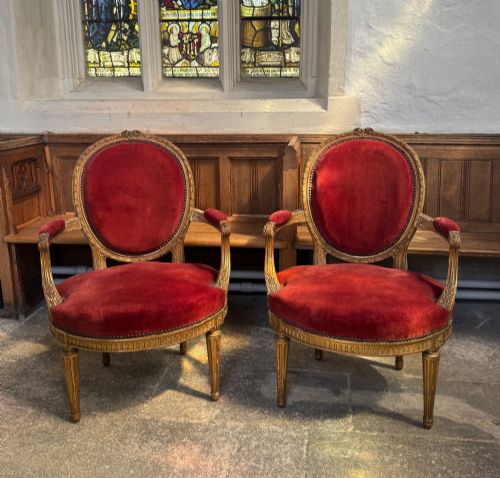
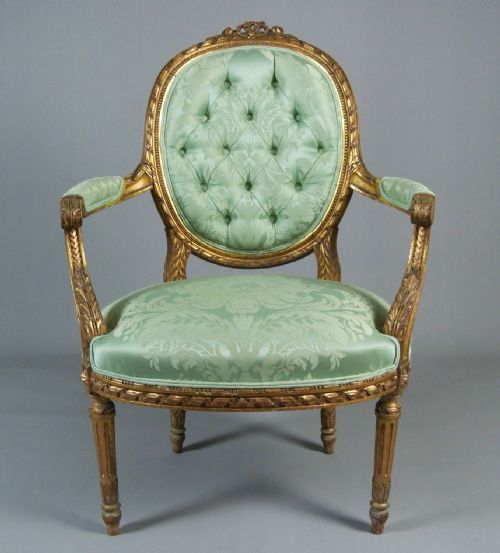
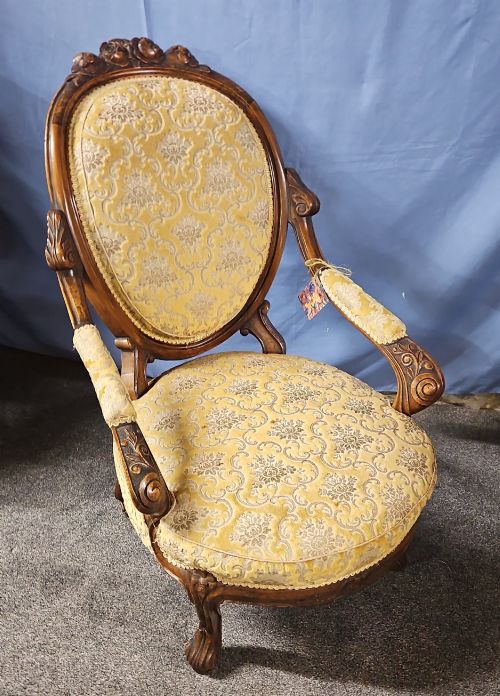
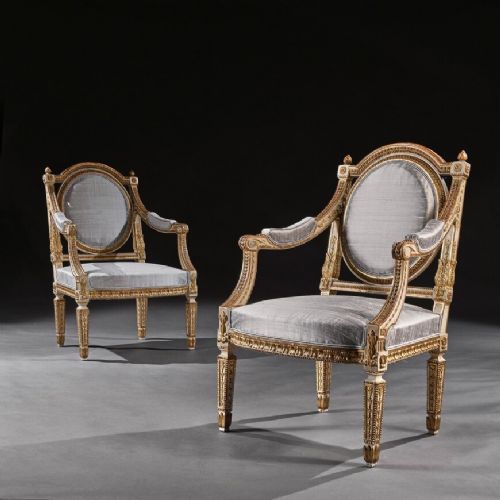
Gold Fauteuil Armchairs
Gold fauteuil armchairs bring French and English grandeur into a room, offering upholstered comfort within carved wooden frames.
Gold Fauteuil Armchairs
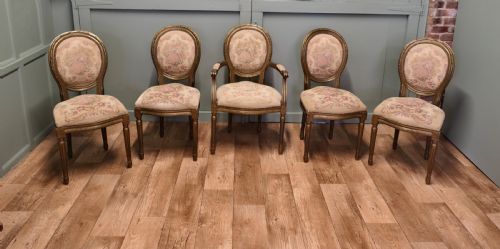
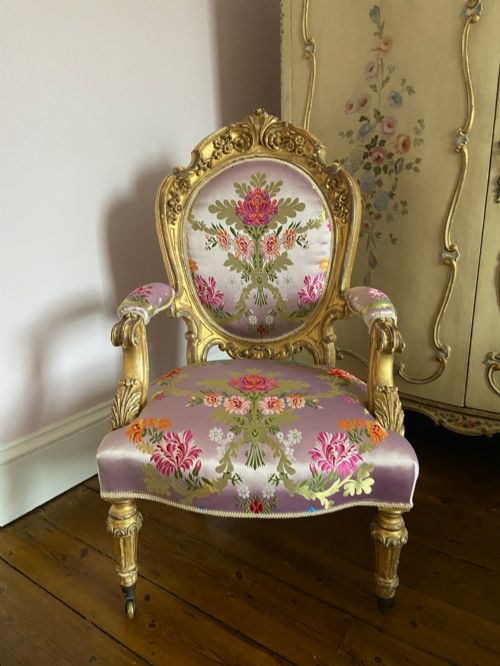
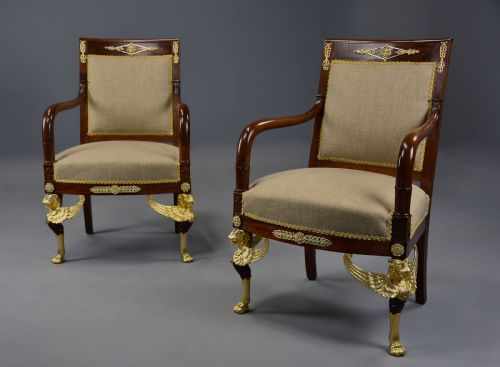
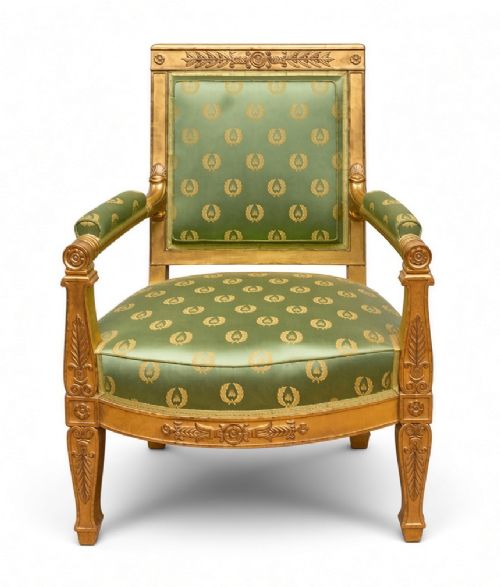
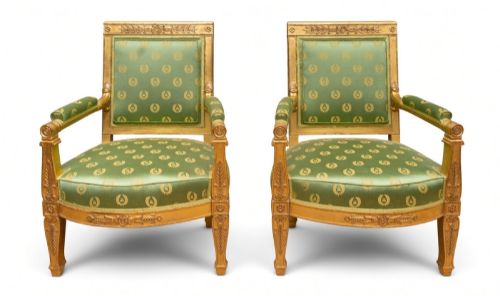
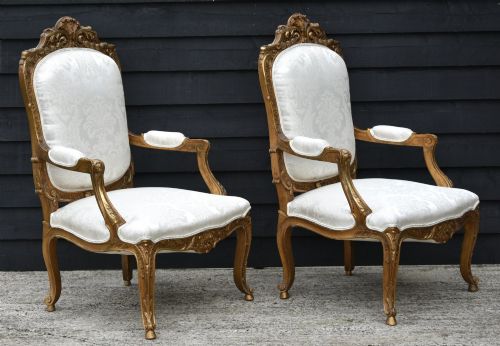
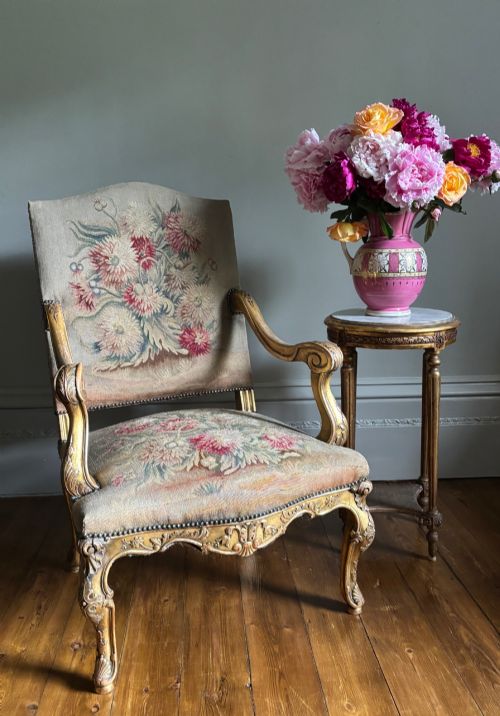
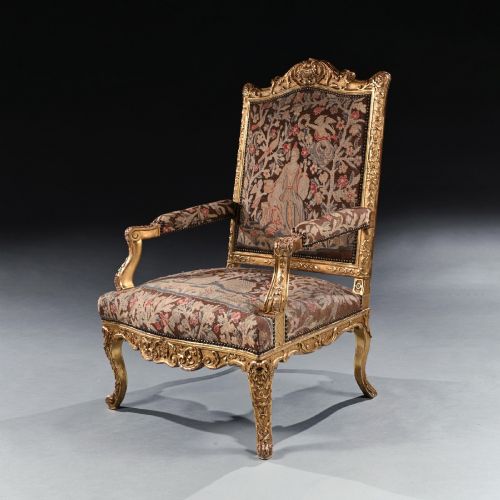
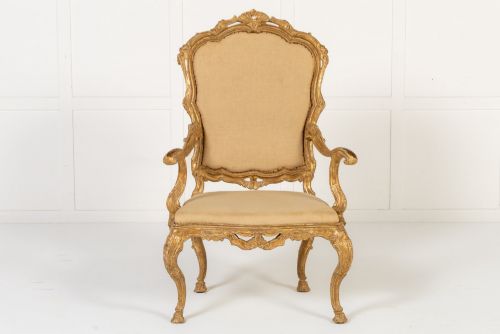
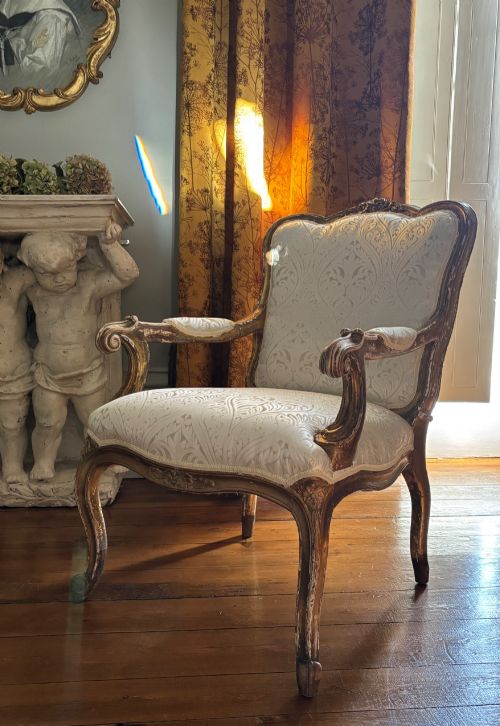
Gold fauteuil armchairs are open-armed seating forms originating in French and English traditions across the eighteenth and nineteenth centuries. Buyers encounter salon suites, pairs, and individual armchairs styled in Revival, Empire, and Rococo designs.
The materials span giltwood, beech, walnut, and mahogany, frequently upholstered in velvet, silk fabric, or textile. These seating pieces function as salon chairs, throne chairs, and decorative bedroom chairs.
How They Were Made
Carved wooden frames of beech, walnut, or mahogany receive a gilt finish through the application of gold leaf or paint over gesso. Artisans shape open armchairs using traditional joinery before applying upholstery in silk, velvet, or contemporary textile.
Makers incorporate brass elements and carved details following classical and revivalist patterns, maintaining structural integrity across salon suites and individual chairs.
Several listings include children's salon chairs, proving that miniature seating received the exact same gilded grandeur as adult thrones.
What Varies in Quality
The refinement of the wood carving and the depth of the gilding dictate the visual impact of each armchair. Crisp detailing on giltwood frames distinguishes workshop-produced pieces from simpler decorative seating.
The harmony between the original frame construction, the choice of upholstery fabric, and documented attribution elevates specific pairs and suites above standard production.
Jacob Desmalter·Thomas Chippendale·Holland and Sons·Blaise Maucuy
The Gold Fauteuil Armchairs Glossary
- Fauteuil
- An open-armed upholstered armchair originating in France, typically featuring an exposed wooden frame. This form provides formal seating for salons and parlours.
- Giltwood
- Timber coated with gold leaf or powder applied over a prepared gesso ground. This finish defines the reflective surface of many formal European armchairs.
- Rococo
- An ornate design style characterised by asymmetrical scrollwork and natural motifs. It heavily influences nineteenth-century revival seating.
- Louis XVI Style
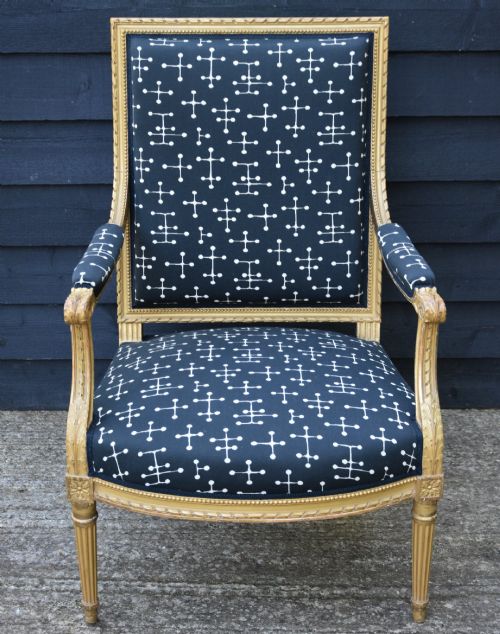
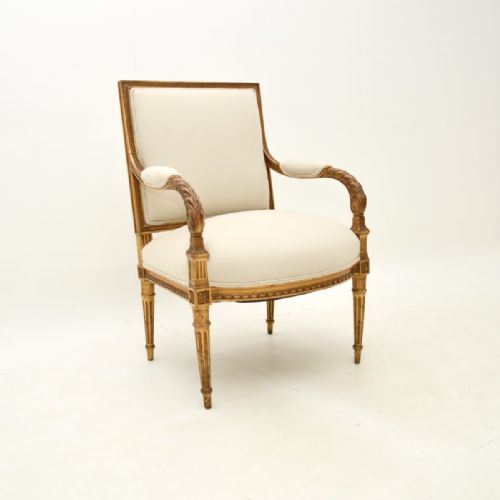
- A neoclassical design aesthetic marked by straight tapered legs, geometric symmetry, and classical ornamentation. It appears frequently in nineteenth-century French seating.
Gold Fauteuil Armchairs: Frequently Asked Questions
What is a fauteuil armchair?
A fauteuil is an open-sided upholstered armchair with exposed wooden armrests and frame elements. It provides formal seating designed for drawing rooms and reception spaces.
These chairs developed through various French design periods, retaining an open structure that distinguishes them from fully upholstered armchairs.
How do I identify Louis XVI style?
Louis XVI style pieces display straight tapered legs, rectilinear structures, and classical ornamentation such as fluting and floral ribbons. This aesthetic contrasts with earlier curved Rococo designs.
Furniture from this tradition emphasises geometric balance and symmetry across the frame and armrests.
Where were these armchairs used?
These armchairs served in formal drawing rooms, Parisian salons, and grand English residences. They provided movable seating for entertaining and social gatherings.
Pairs and suites furnished conversational groupings around fireplaces or within reception rooms.
How do I care for giltwood frames?
Giltwood surfaces require gentle dusting with a soft dry cloth to protect the delicate gold leaf layer. Avoid moisture and chemical cleaning agents that degrade the gesso and metallic finish.
Maintaining stable indoor humidity prevents the underlying timber from shifting and cracking the gilt surface.