


Gold Damask Sofa
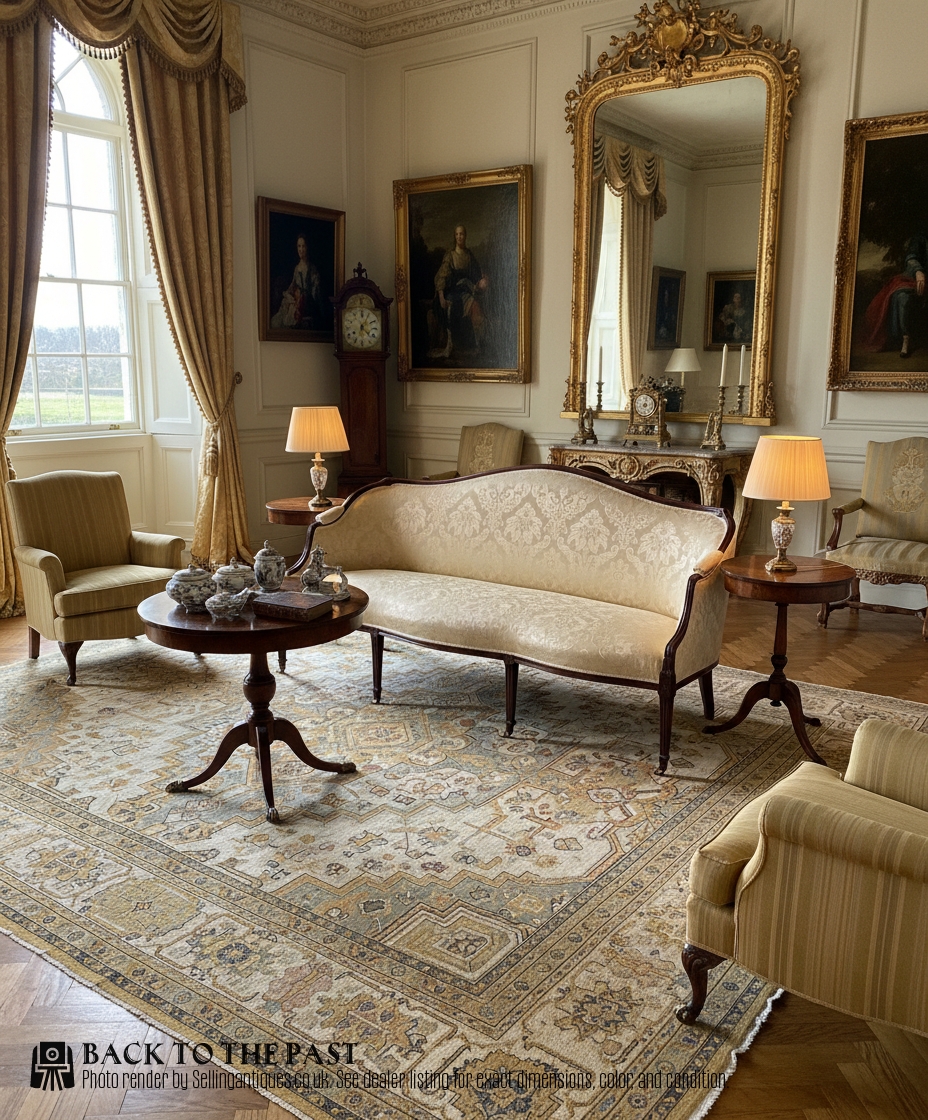
A gold damask sofa brings rich woven pattern and historic elegance into a room, offering both comfortable seating and striking visual presence.

Gold Damask Sofa
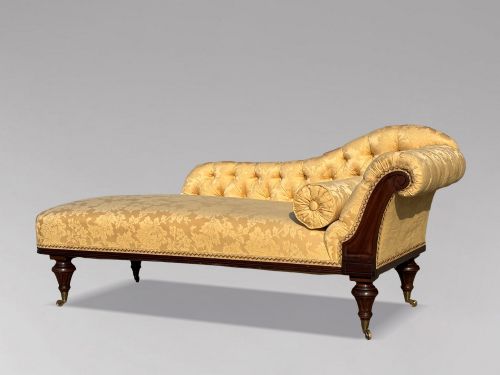
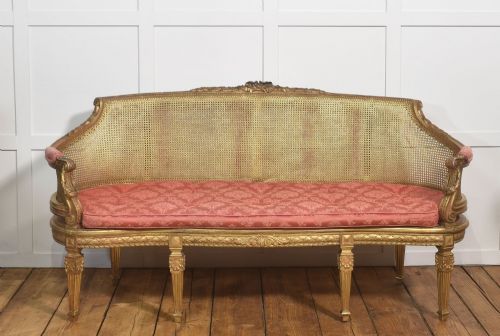
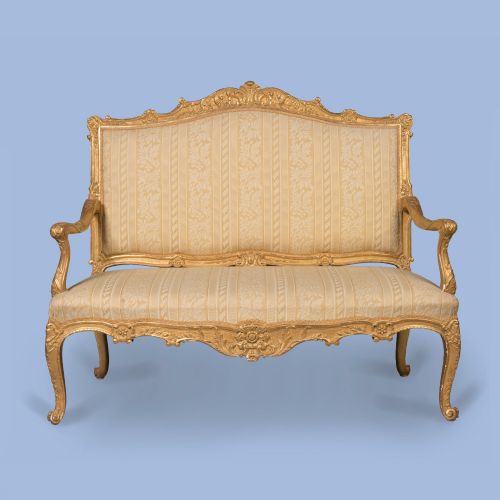
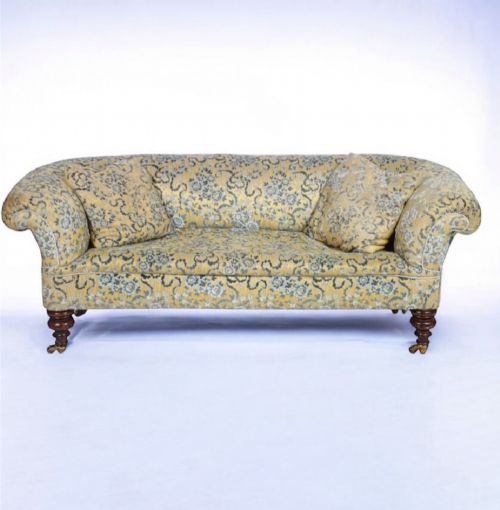
When you search for a gold damask sofa, you encounter seating upholstered in patterned silk or textile fabrics paired with frames from the nineteenth century, the Edwardian era, and earlier revival periods. These pieces range from Victorian Chesterfields and Knole sofas to French giltwood canapés and Louis XVI style settees.
You are most likely to meet nineteenth century pieces on this page, including walnut and mahogany frames alongside giltwood salon suites. Forms vary from twin high back sofas and camel backs to small salon suites comprising a small sofa and matching armchairs.
The aesthetic bridges English country house comfort and continental French revival styles, often featuring turned walnut legs, brass details, and carved timber structures. Each piece combines functional seating with distinct period craftsmanship.
How they were made
Makers constructed the structural frames of these sofas using solid timbers such as mahogany, walnut, and giltwood. Carvers shaped the timber for Louis XV and Louis XVI style canapés, while joiners built sturdy mahogany and walnut frames for English Victorian and Edwardian models.
Upholsterers then applied damask fabric over traditional stuffing and springing, securing the textile to the timber frame. Brass elements and painted or gilded finishes completed the decoration on French and English salon suites.
One salon suite arrives complete with its original small sofa and matching armchairs, ready for a very formal tea party.
What varies in quality
Quality rests upon the crispness of the timber carving on giltwood and walnut frames, where hand-carved detail distinguishes superior pieces from simpler production. The choice of wood and the retention of original paint or gilding elevate the standing of a canapé or salon suite.
The proportion of the sofa and the integrity of the damask upholstery further define the upper tier of the range. Cohesion between the frame style, such as Grand Regency or Louis XVI revival, and the textile determines the overall success of the piece.
The Gold Damask Sofa Glossary
- Damask
- A reversible figured fabric with patterns woven into the cloth, frequently utilised for historic upholstery. It provides the characteristic sheen seen on these gold sofas.
- Giltwood
- Timber that has been coated with leaf gold or a gold-coloured finish. This material defines many French salon suites and canapés.
- Canapé
- An ornamental sofa or settee, particularly one designed in a French eighteenth-century style. These pieces often feature exposed carved wooden frames.
- Knole sofa
- A historic sofa type featuring adjustable hinged arms, traditionally associated with Knole House. Examples appear upholstered in patterned textiles.
- Salon suite
- A matched set of seating comprising a small sofa and accompanying armchairs. These sets furnished formal reception rooms in the nineteenth century.
Gold Damask Sofa: Frequently Asked Questions
How do I clean damask upholstery?
Damask fabric requires gentle surface cleaning with a soft brush or low-suction vacuum attachment to remove dust from the woven pattern.
Liquid cleaners should be avoided unless recommended by a professional textile restorer to prevent water marks on the silk or textile.
Are these sofas comfortable for daily use?
Nineteenth-century and Edwardian sofas offer varying depths and back heights depending on whether they originate from English country house or French salon traditions.
Firmness relies on the internal traditional stuffing and springing, which provides a supportive sit distinct from modern foam cushions.
How do I distinguish Louis XV from Louis XVI style?
Louis XV style frames display asymmetrical curves, cabriole legs, and flowing floral carvings that create an organic silhouette.
Louis XVI style shifts towards neoclassical straight lines, fluted legs, and geometric symmetry inspired by classical antiquity.
Will a giltwood sofa suit a modern interior?
A giltwood canapé introduces reflective metallic warmth and historic texture that contrasts effectively against neutral contemporary walls.
Pairing an ornate nineteenth-century frame with minimalist surroundings highlights the quality of the carved timber and woven damask.