




Gold Cherub Candlestick
A gold cherub candlestick brings classical French elegance to a room, casting warm light from gilded figures that collectors treasure for their sculptural charm.
Gold Cherub Candlestick
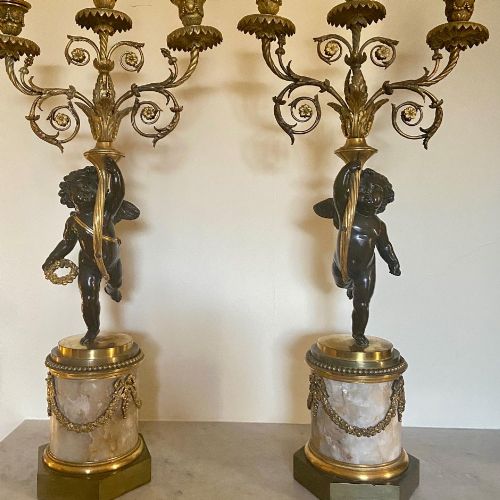
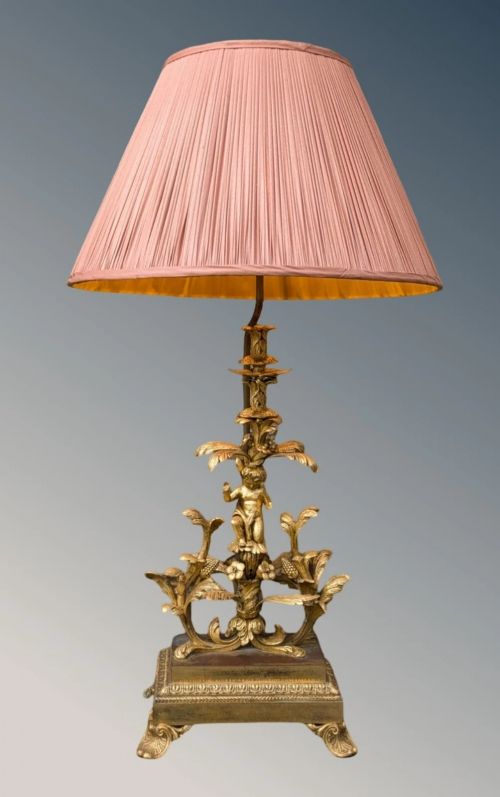
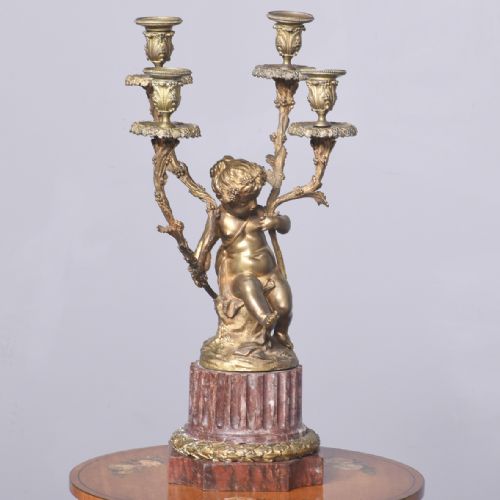
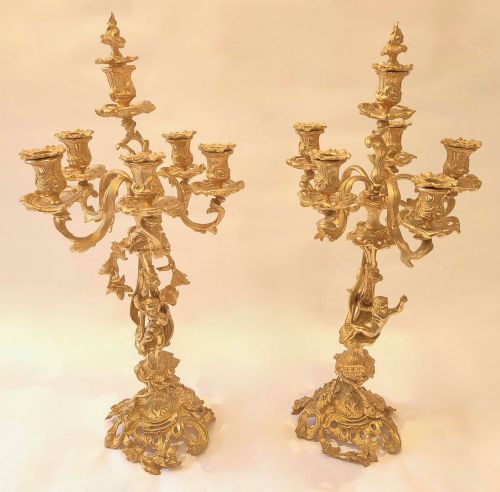
A gold cherub candlestick or candelabra depicts winged putti in gilded bronze, ormolu, and brass, often paired with marble bases or fluorspar details. These pieces originate predominantly from French workshops across the eighteenth and nineteenth centuries, spanning periods from Louis XVI to Napoleon III and the Victorian era.
Buyers encounter single desk sticks alongside matched pairs and multi-branched candelabra standing on marble plinths. The forms range from small tabletop candleholders to large, multi-light figural arrangements designed for prominent display.
Materials and construction methods
Foundries created these figural pieces using bronze casting methods before applying mercury gilding or modern electroplating to achieve the rich gold ormolu finish. Artisans combined patinated dark bronze with bright gilt elements to create tonal contrast on the cherub figures.
Many examples incorporate carved marble plinths or bases, sometimes fitted with candleholders or drip pans cast in complementary metal alloys.
These gilded cherubs hold up candles with expressions of solemn duty, despite their plump, mischievous toddler proportions.
Assessing quality and craftsmanship
Integration with materials like white or black marble and decorative stone bases alters the visual weight and stability of the object, reflecting the ambition of the original workshop.
Francois Redmond·Claude Clodion
The Gold Cherub Candlestick Glossary
- Ormolu
- Gilt bronze produced by applying a mercury-gold amalgam to cast bronze and heating it to drive off the mercury. This technique creates a durable, warm golden surface found on many French candlesticks.
- Putto
- A plump, often winged male child figure frequently depicted in classical art and sculpture. These cherubic figures form the central sculptural element of figural candelabra.
- Patinated bronze
- Bronze that has been chemically treated to produce a dark, uniform surface colour. This dark finish highlights the bright gilt details placed alongside it.
- Fluorspar
- A colourful mineral occasionally used for decorative bases or urn details in eighteenth-century and revival pieces. It adds distinct natural patterns beneath the metalwork.
Gold Cherub Candlestick: Frequently Asked Questions
How do I date a cherub candelabra?
Stylistic clues such as the form of the marble base and the casting technique help determine the period. Nineteenth-century revival pieces often emulate eighteenth-century models with heavier brass and bronze construction.
Examining the underside of the base and the method used to join the metal components provides further confirmation of the manufacturing era.
Were these made as pairs?
Many examples survive as matched pairs designed to sit symmetrically on a mantelpiece or sideboard. Single pieces also appear, often intended for intimate desk use.
Pairs generally command higher interest among collectors who wish to preserve historical domestic arrangements.
How should I clean ormolu?
Gentle dusting with a soft, dry cloth is usually sufficient to maintain the surface. Moisture and chemical polishes can damage the historic mercury gilding or patinated bronze.
Professional conservation advice is recommended if deeper cleaning becomes necessary.