

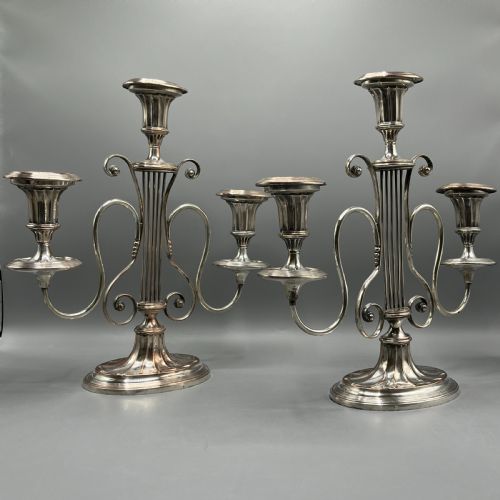


Neoclassical Candelabra
Neoclassical candelabra bring formal symmetry, classical restraint and grand lighting to a room through balanced proportions and antique metalwork.
Neoclassical Candelabra
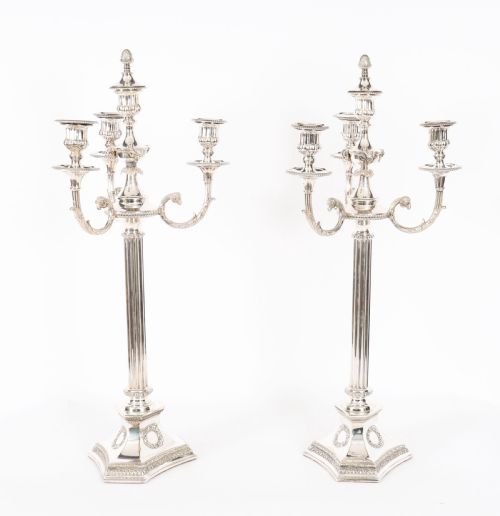
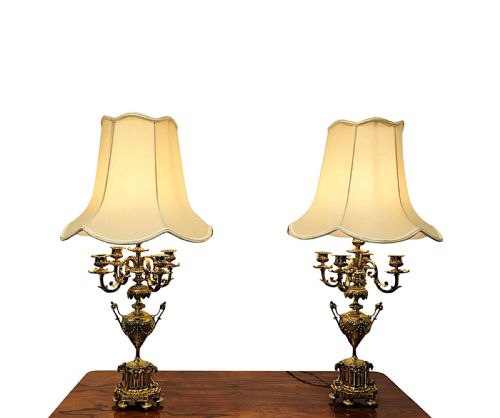
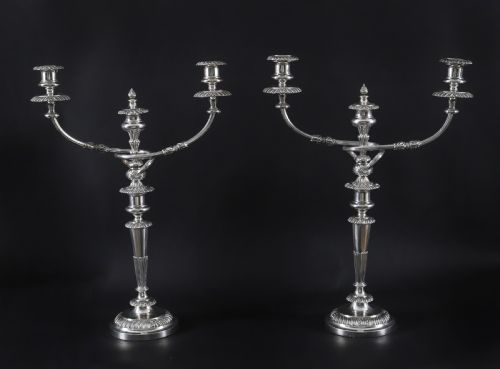
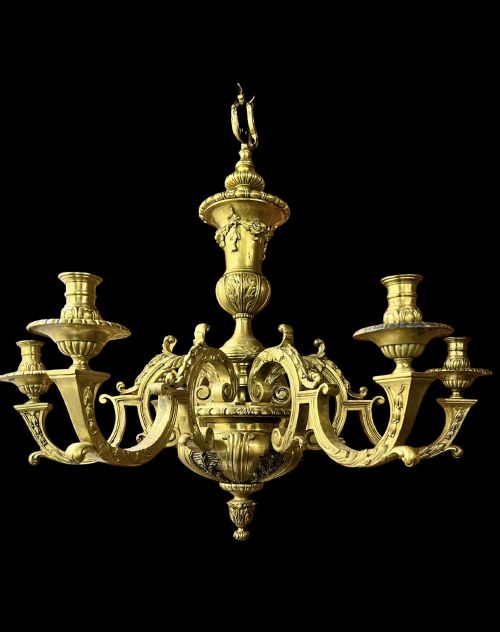
Neoclassical candelabra embody the revival of Greek and Roman aesthetic ideals, typically taking the form of multi-branch candle holders designed for dining tables, sideboards and mantelpieces. Buyers searching for neoclassical candelabra will encounter matched pairs shaped by 18th and 19th-century European design principles, encompassing French Empire, Louis XVI, George III and Regency styles.
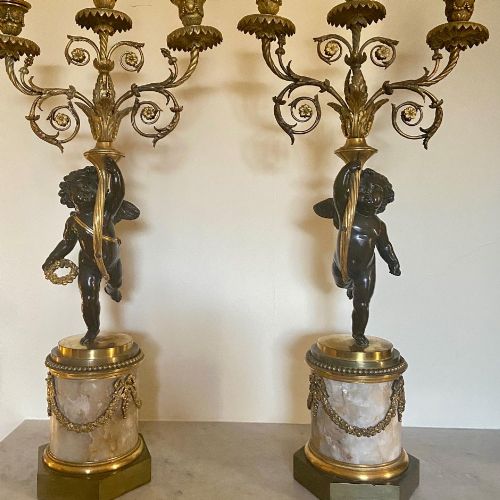
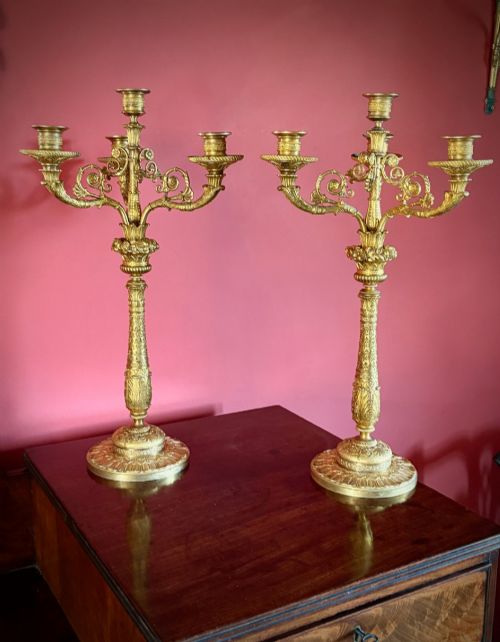
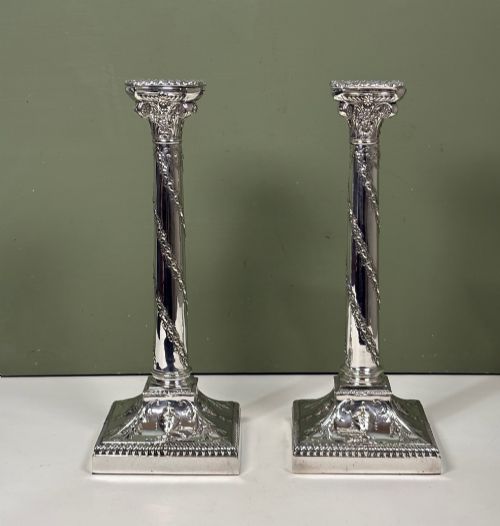
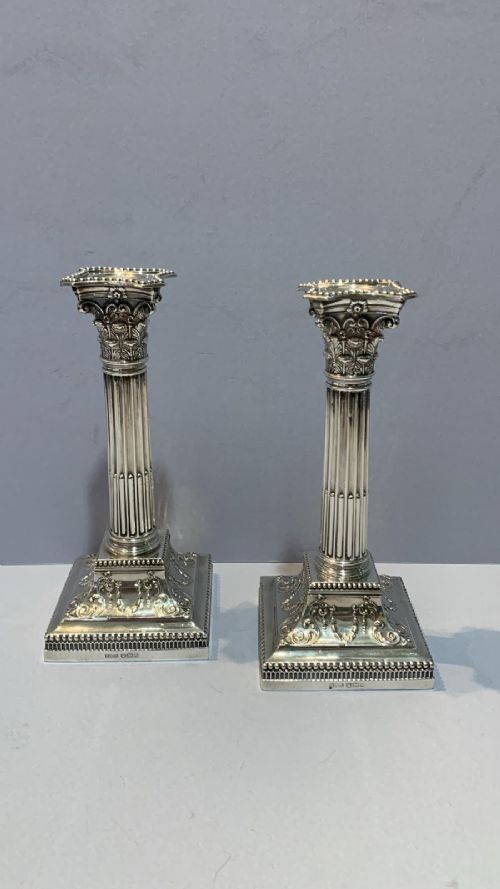
The objects combine functional branching arms with classical ornamentation such as fluted columns, urn motifs, putti and acanthus leaves. Most examples on this page are cast in bronze, brass or silver plate, frequently paired with white marble, slate or ormolu mounts to create structured architectural silhouettes.
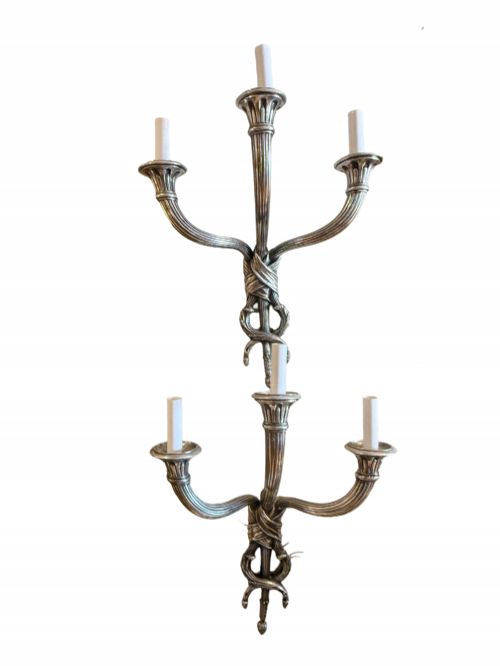
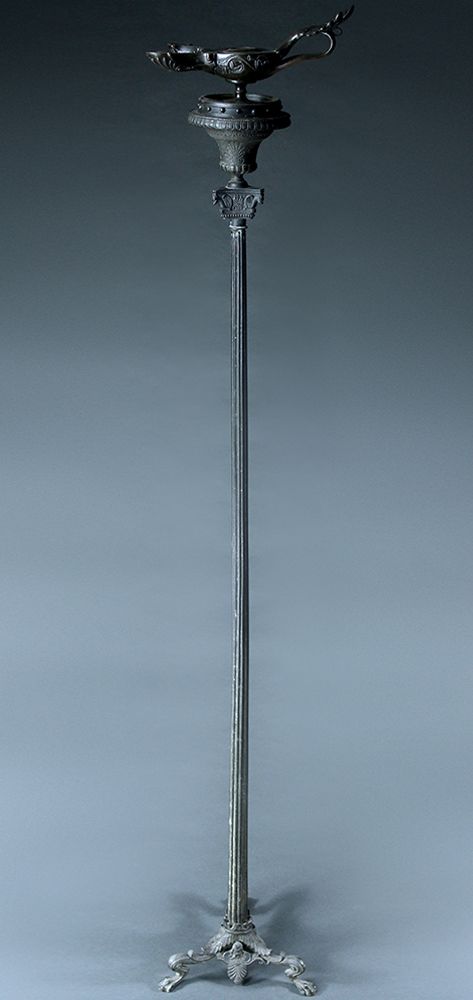
Beyond standard tabletop lighting, related forms appear as wall sconces, clock garnitures and floor-standing torcheres sharing the same classical vocabulary. These pieces reflect periods from the late Georgian era through to late 19th-century revivals, offering robust metal construction and formal decorative schemes.
How they were made
Foundry work and metal casting form the structural foundation of these pieces, utilising bronze, brass, ormolu and silver plate shaped through sand casting or lost-wax techniques. Individual components like branches, drip pans and figurative elements were cast separately before being chased, filed and assembled with threaded pins or screws.
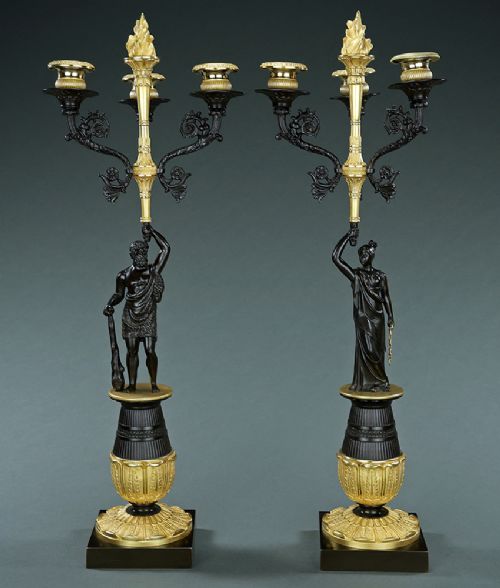
Contrasting textures were achieved by combining patinated dark bronze with polished gilt-bronze, or by mounting metalwork onto bases of white marble, slate and fluorspar. Surface enrichment involved mercury gilding for ormolu, silver plating over base metals, and occasionally enamel detailing on spelter or bronze bodies.
Winged putti occasionally hold aloft candle branches with remarkably stern expressions, balancing celestial innocence with serious duty.
What varies in quality
Structural integrity and material selection dictate the tier of a piece, with solid bronze and heavy marble bases providing stability absent in lighter alloy or spelter alternatives. Maker attribution, balanced proportions across multiple candle arms and matching components throughout a pair elevate the standing of an individual set.
Matthew Boulton·Francois Redmond·Rabiat·Humphrey Hopper·Barker Ellis·Claude Clodion·Hunt And Roskell
The Neoclassical Candelabra Glossary
- Ormolu
- Gilded bronze produced by applying a mixture of gold and mercury to a bronze base and heating it to drive off the mercury. This technique creates a durable, matte-gold finish characteristic of fine French and English decorative metalwork.
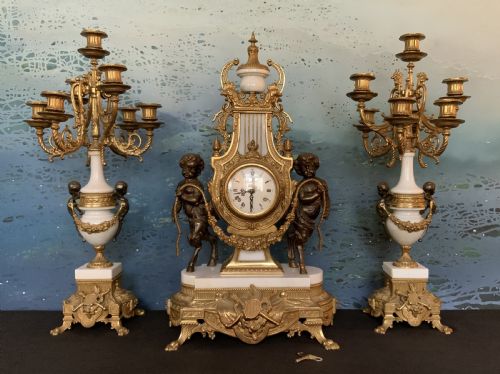
- Garniture
- A set of three or more matching ornamental objects, typically comprising a mantel clock flanked by matching candelabra or vases. These sets were designed to create a symmetrical display on a fireplace mantel or sideboard.
- Patinated bronze
- Bronze that has been chemically treated to develop a darkened, aged surface finish ranging from deep brown to near black. This dark tone provides visual contrast against bright gilt-bronze mounts.
- Old Sheffield plate
- An early form of composite metal made by fusing a thin sheet of sterling silver to a thicker copper base before rolling them together. This process predates modern electroplating and produces a rich, deep metallic surface.
- Torchere
- A tall ornamental stand or floor lamp designed to hold lights at an elevated level. In classical interiors, these often took the form of classical columns or figures bearing torches.
Neoclassical Candelabra: Frequently Asked Questions
What is a candelabra garniture set?
A garniture set groups a central mantel clock with matching side pieces, usually candelabra or urns, designed to sit together as a unified decorative arrangement on a fireplace mantel.
This tradition gained popularity during the 18th and 19th centuries, ensuring that formal reception rooms presented a completely balanced aesthetic across key focal points.
How do I distinguish French Empire from George III styles?
French Empire pieces often lean toward heavy, militaristic or classical antiquity motifs with dark patinated bronze and bright ormolu, inspired by Napoleon's regime. George III examples tend to reflect British neoclassical elegance with lighter proportions, silver plating, Sheffield plate, or refined brass work.
Both styles share classical roots, but the French variants typically emphasise dramatic figural work like putti, sphinxes or mythological heroes.
Were these pieces converted to electricity?
Many antique candelabra and torcheres have been adapted for modern use by running electrical wiring through the central column or candle sockets.
Such conversions allow historic metalwork to function as table lamps or standard lamps while preserving the decorative bronze, brass or marble structure of the original piece.
How should I clean antique bronze and ormolu?
Maintenance requires only gentle dusting with a soft, dry brush or cloth to prevent dust accumulation in the crevices of the chased metalwork.
Harsh chemical polishes, abrasives or liquids must be avoided because they can strip away original patination, silver plating or delicate mercury gilding.