
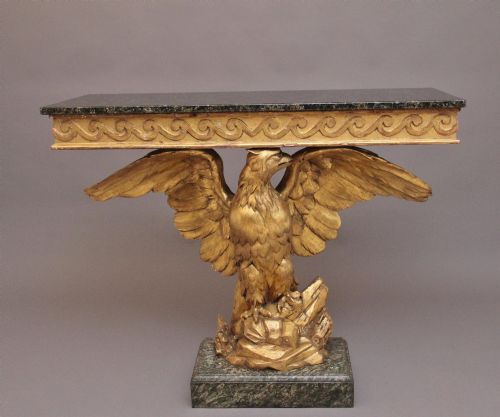
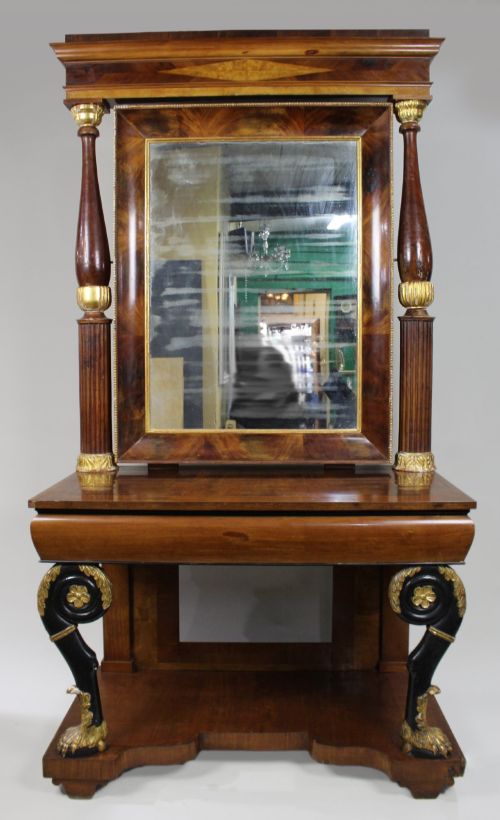
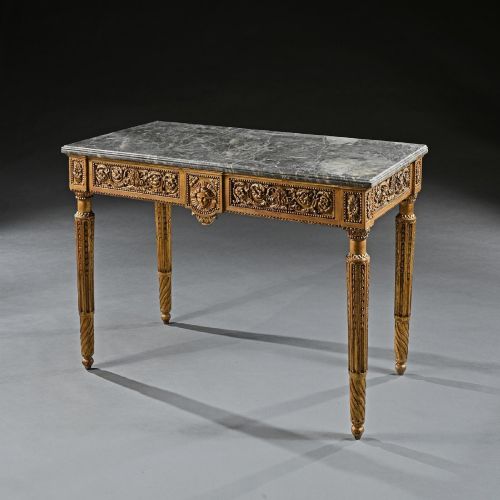
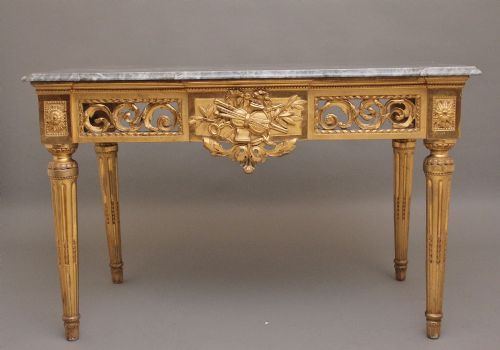
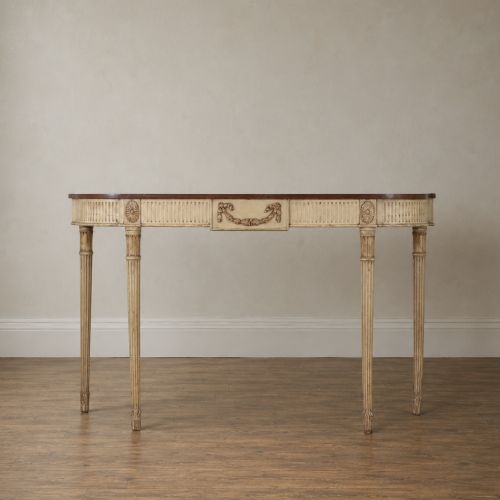
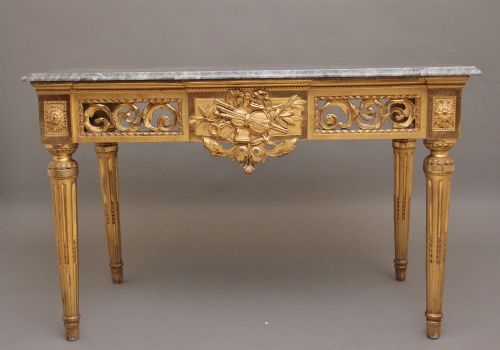
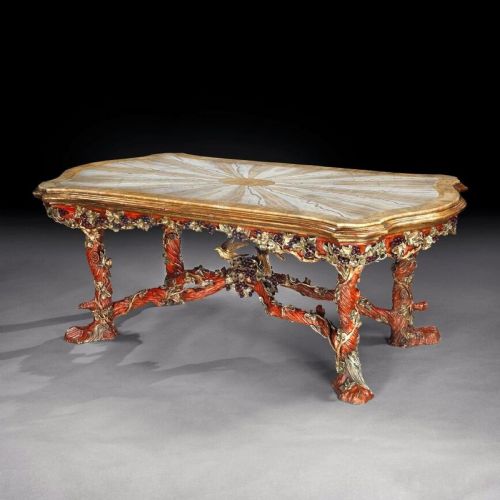
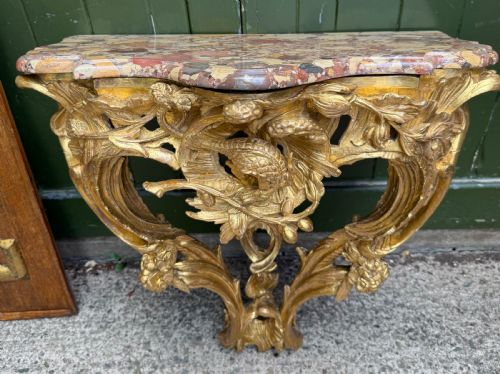
Gold Carved Console Table
A gold carved console table brings architectural presence and gilded surface to a hallway or drawing room.
Gold Carved Console Table
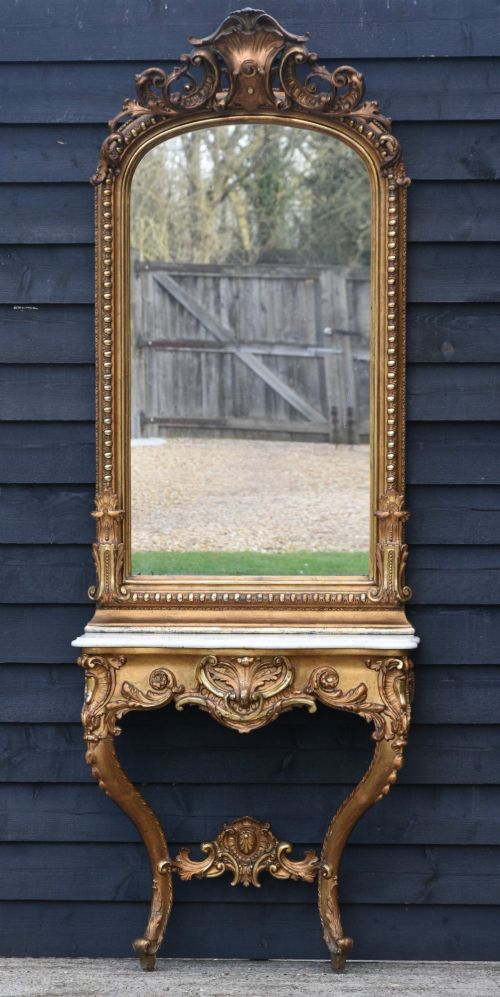
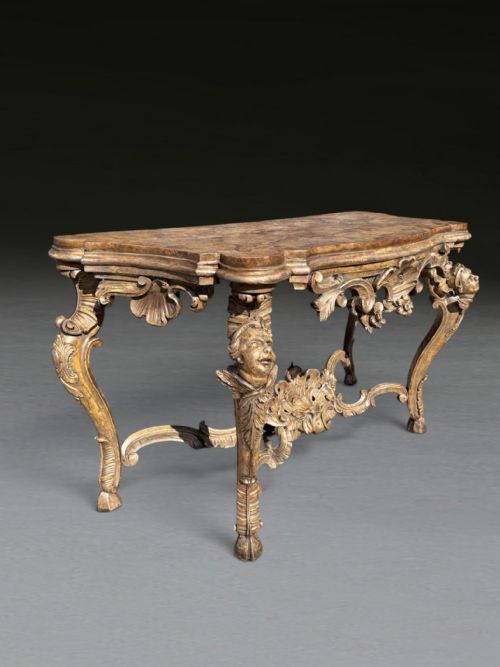
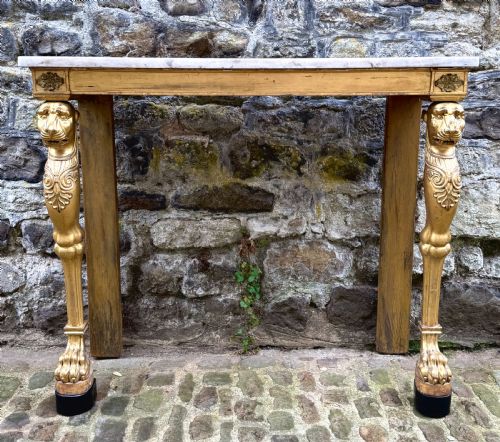
A gold carved console table is a wall-mounted or freestanding ledge designed to sit against a wall, frequently paired with a matching pier mirror.
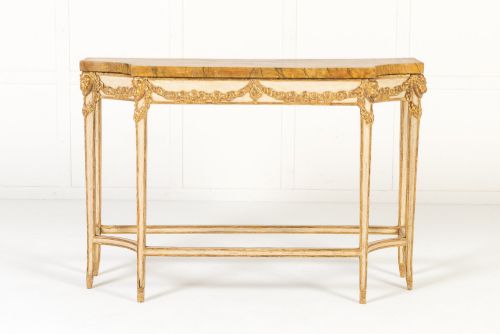
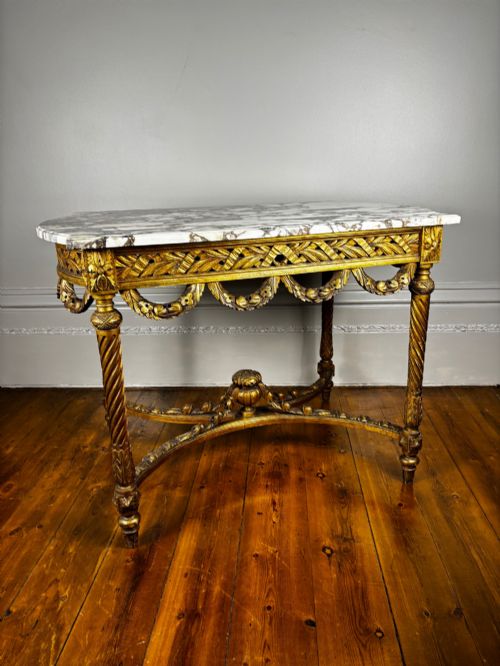
The pieces appearing on this page span the eighteenth, nineteenth, and early twentieth centuries, drawing heavily on French Rococo, Louis XVI, and Italian design vocabularies.
Marble and onyx tops feature regularly, paired with frames shaped in serpentine outlines or demi-lune forms.
How they were made
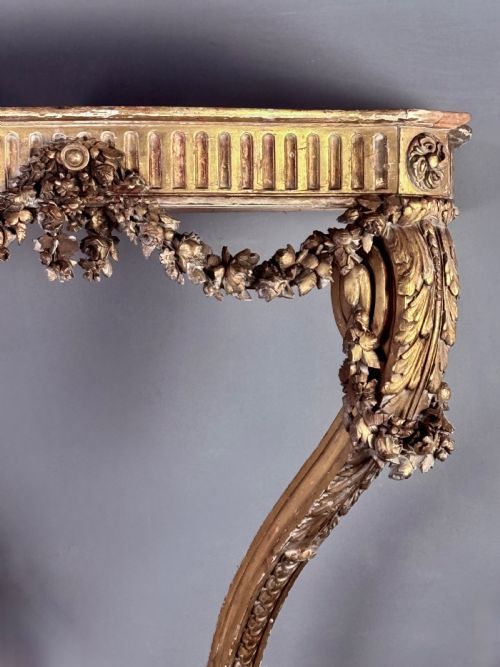
Maker's hands relied on wood and gesso as a base, applying gold leaf, paint, or gilt to build the reflective surface.
Breccia and figured marble slabs were cut to fit the shaped wooden frames, often resting unsecured on the carved supports.
Listings span the eighteenth century through to the nineteen-twenties, incorporating Italian, French, and Swedish regional interpretations.
What varies in quality
The depth and crispness of the wood carving dictate the visual weight of the piece, separating robust workshop output from simpler production.
The integrity of the original gilding and the weight of the fitted marble top indicate the original cost and ambition of the commission.
Felix-Alfred Ternisien·Amleto Bertoni·François Linke
The Gold Carved Console Table Glossary
- Giltwood
- Timber coated with gold leaf or powder over a prepared gesso ground. This technique creates a luminous, warm surface that catches interior candlelight.
- Console Table
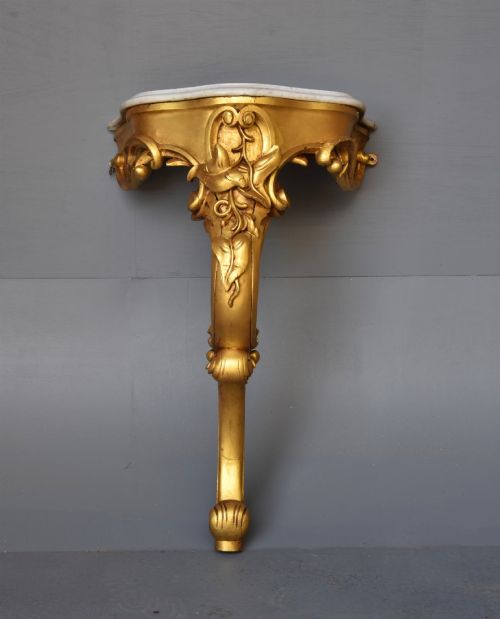
- A table designed to stand against a wall, originally supported by brackets or console legs. Many examples require wall attachment for stability.
- Pier Mirror
- A tall mirror designed to hang on the pier, the wall space between two windows. They are frequently found paired with matching tables.
- Breccia Marble
- A multi-coloured marble composed of angular fragments embedded in a contrasting matrix. It provides a heavily patterned surface for table tops.
Gold Carved Console Table: Frequently Asked Questions
Are these tables freestanding?
Many console tables require attachment to the wall for proper support because their front legs carry the main load while brackets anchor the back.
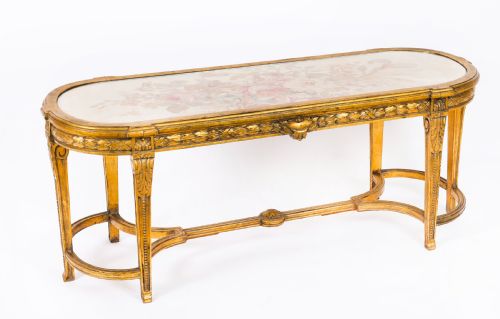
Freestanding versions do exist within the selection, often designated as centre tables or side tables rather than traditional wall consoles.
How do I identify French styles?
French Rococo and Louis Revival pieces display asymmetrical scrollwork, naturalistic foliage, and serpentine outlines that curve organically.
Louis XVI style pieces shift towards geometric symmetry, straight fluted legs, and neoclassical motifs like urns and swags.
What marble types appear?
Listings feature stone tops including breche d'alep, rouge marble, and onyx, each offering distinct natural veining and colouration.
These heavy stone slabs sit directly onto the wooden framework, often secured simply by their own weight.
How do I care for giltwood?
Giltwood surfaces require gentle dusting with a dry, soft brush because moisture and harsh cloths damage the delicate gold leaf layer.
Direct sunlight and heavy heat sources should be avoided to prevent the underlying gesso from cracking.