
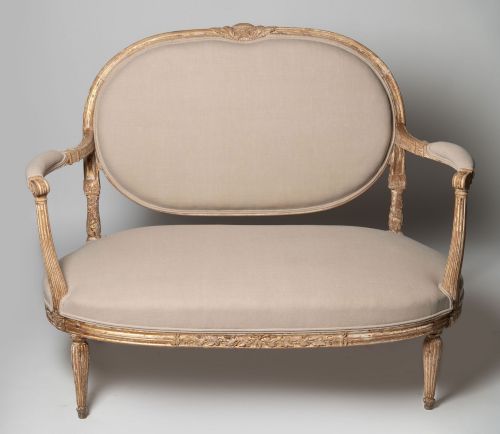
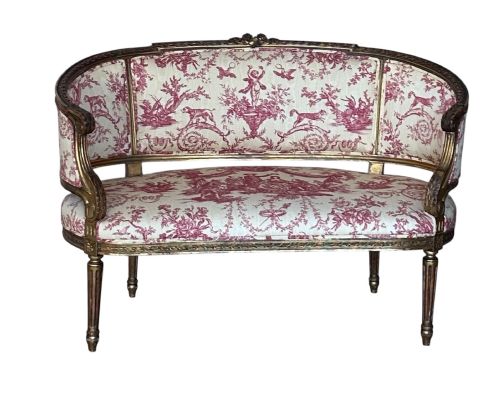
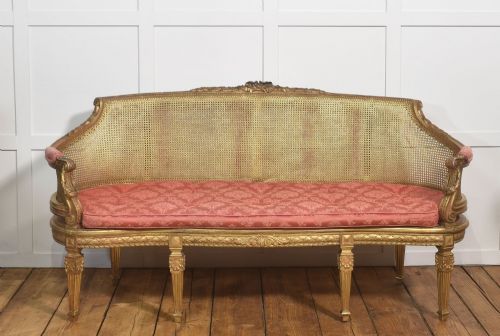
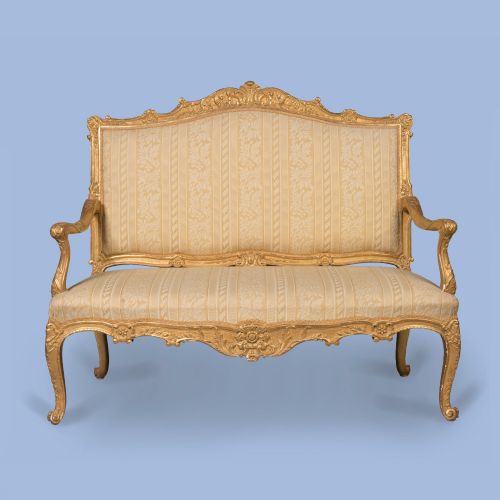


Gold Carved Canape
A gold carved canape brings French salon elegance to a room with its gilded frame and generous two-seater proportions.
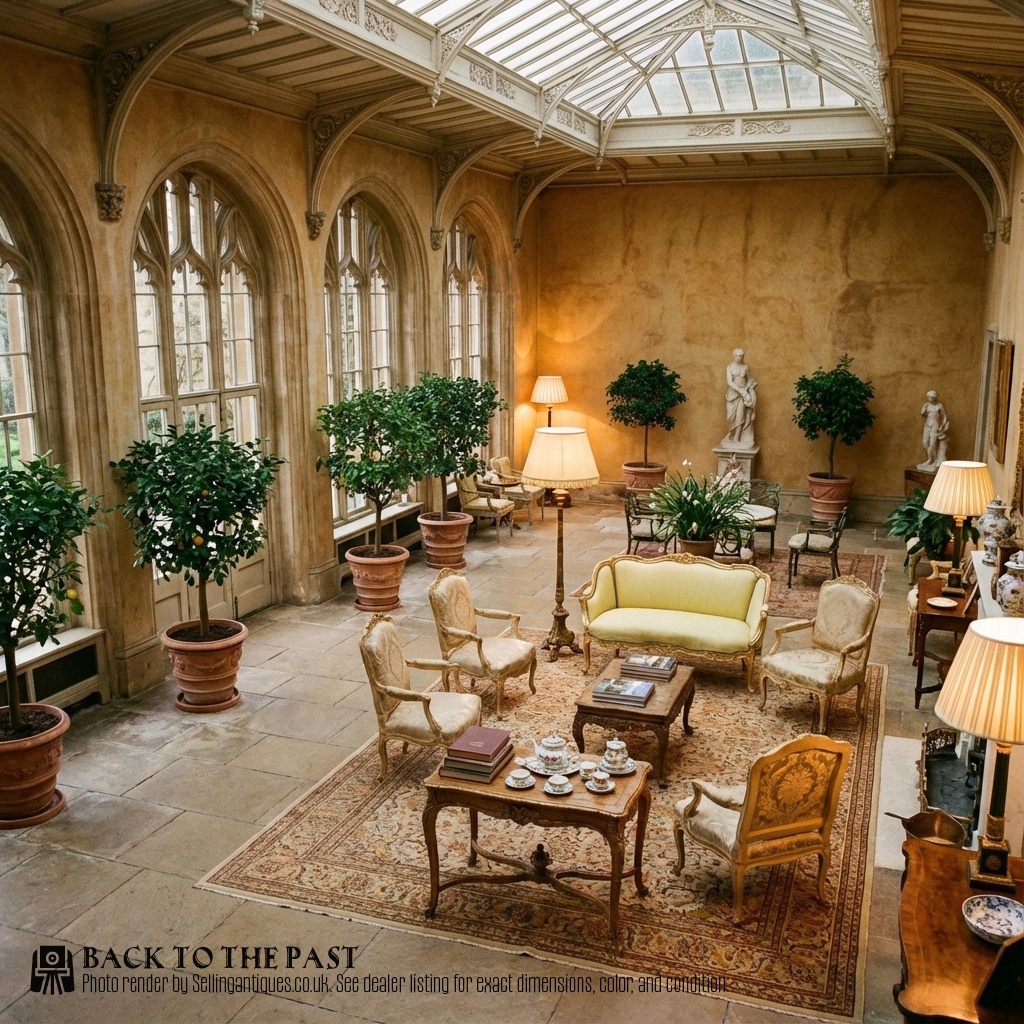
Gold Carved Canape
A gold carved canape is an upholstered French-style settee designed for formal reception rooms and grand sitting areas. These pieces typically seat two or three people and feature ornate wooden frames finished in gilt or gold paint. Buyers searching for a gold carved canape encounter nineteenth-century examples drawing heavily on Louis XV and Louis XVI aesthetic traditions.
The selections span various iterations including Louis XVI style giltwood settees, Louis XV manner couches, and occasional salon suites incorporating matching armchairs. Most items originate from French workshops or follow distinct French provincial and revival designs. The forms range from compact boudoir seats to large three-seater settees with exposed carved woodwork.
Makers and manufacturers during the Victorian era and early twentieth century reproduced these French seating forms using traditional joinery and carving methods. Period pieces often exhibit classic decorative motifs such as fluted legs, ribbon twists, and floral crestings. Selecting the right example depends on matching the specific revival style and woodwork finish to your interior space.
Materials and construction
Carved wooden frames form the structural backbone of these settees, with craftsmen utilising beech, walnut, fruitwood, and mahogany beneath the surface finishes. Giltwood, gilt paint, and cream or pale paint applications provide the signature golden appearance characteristic of the style. Gilding techniques involve applying thin metal leaf or metallic paint over a prepared gesso and bole base on the carved timber.
Upholstery materials play a defining role in both comfort and visual appeal, featuring traditional textiles such as silk damask, velvet, and woven cane panels. Cane work involves intricate hand-weaving of rattan strips to form breathable backrests or seat inserts on lighter frames. Joinery relies on traditional mortise and tenon techniques to ensure the structural integrity of the curved wooden armrests and cabriole legs.
Stylistic influences on this page draw predominantly from French Louis XV and Louis XVI revival traditions across various salon suites.
Assessing quality in carved gilt seating
The refinement of the hand-carved ornamentation separates standard production from exceptional pieces. Crisp, deeply undercut floral motifs and sharply defined scrolls indicate skilled artisan craftsmanship rather than mechanical copying. The quality of the underlying timber work dictates how well the frame maintains its rigidity over generations of use.
The application and preservation of the gilt surface also determine the overall standard of an example. Intact original gilding with subtle patination shows superior material longevity compared to crude modern repainting. Additionally, the integration of high-grade upholstery fabrics and supportive internal webbing completes a well-executed build.
The Gold Carved Canape Glossary
- Canapé
- An upholstered French sofa or settee, typically featuring an exposed wooden frame and seating for two or more occupants. These pieces serve as both functional seating and decorative focal points.
- Giltwood
- Timber coated with gold leaf or gold powder applied over a prepared base layer. This finish creates a luminous metallic surface that defines classic salon furniture.
- Louis XV Style
- A decorative aesthetic characterised by asymmetric curves, naturalistic floral carvings, and graceful cabriole legs. Originating in eighteenth-century France, it experienced major revivals during the nineteenth century.
- Louis XVI Style
- A neoclassical design movement marked by straight lines, symmetry, fluted columns, and geometric restraint. Furniture from this tradition often displays rectangular backs and carved rosette motifs.
- Cane
- Woven rattan material utilised for seat panels and chair backs. It provides a lightweight, resilient surface popular in warmer climates and lighter seating designs.
Gold Carved Canape: Frequently Asked Questions
How do I identify a Louis XV style canape?
Look for asymmetric curves, sweeping cabriole legs, and naturalistic floral carvings along the wooden crest rail. These elements reflect the organic, flowing aesthetic popularised during the mid-eighteenth century and revived later.
The frame often lacks straight lines, favouring serpentine shapes and cartouche-shaped backrests that wrap gently around the seated person.
What is the difference between a settee and a canape?
A settee is a broad term for any wide wooden seat designed for multiple people, whereas a canape specifically denotes a French-origin upholstered sofa style. Canape frames typically showcase more elaborate woodcarving and distinct regional French revival characteristics.
Both terms appear interchangeably in many historic and modern listings for nineteenth-century decorative seating.
Are these gold settees comfortable to sit on?
These pieces provide firm, upright support intended for formal social interaction rather than relaxed lounging. The sprung or webbed seats combined with padded armrests offer adequate comfort for sitting during conversation.
Adding matching scatter cushions can adjust the seating depth to suit individual preferences in a modern living space.
How should I care for antique giltwood furniture?
Dust the carved wooden frame gently with a soft, dry microfibre cloth to prevent abrasive particles from scratching the delicate metallic finish. Avoid using liquid polishes, chemical sprays, or water near the gilded surfaces, as moisture can lift the gold leaf.
Keep the settee away from direct sunlight and heat sources to protect the vintage textiles and prevent the timber from drying out.